Sponsored
How monitoring water intake can improve herd performance

Sponsored by

Water is often described as the most important nutrient in a dairy cow's diet, yet it remains a neglected monitored factor on many farms.
Even small changes in drinking behaviour can serve as vital indicators of emerging issues relating to animal health, heat stress, dietary, or the water supply.
With highly precise and unique data straight from the reticulum, smaXtec is able to continuously measure water intake and drinking behaviour directly from the inside of the cow.
This provides farmers with objective data and allows them to identify issues that might otherwise remain unnoticed.
How Irish farmers are benefiting today
Due to the low dry matter content of grazed grass, water is often taken for granted on dairy farms, yet it underpins many of the processes that drive cow health and performance.
With an adult dairy cow's body consisting of around 70% water and milk containing approximately 87% water, adequate water intake is essential for maximising feed intake, optimal rumen function and temperature regulation, thereby helping the cow meet her genetic potential for milk production.
The value of monitoring water intake becomes particularly clear when data leads to practical improvements on farm.
For Paul Ruane, who farms in Co. Galway, monitoring water intake led to a simple change with a noticeable impact.
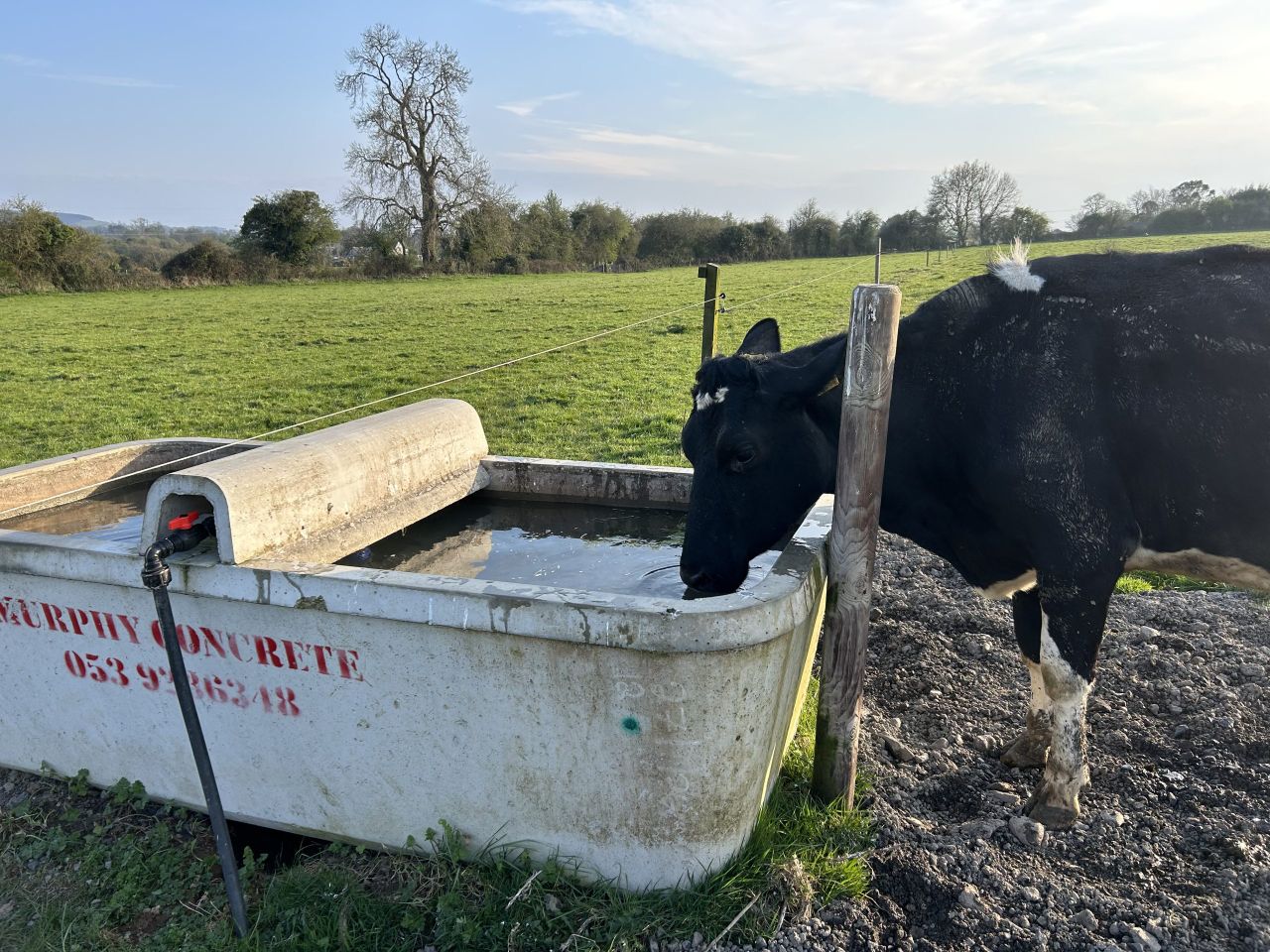
Following an on-farm consultation, he replaced an older, smaller water bowl with a larger, easy-to-clean tip-over trough.
After the change, average water intake rose from circa 95L to 110L per cow per day.
Paul recalled: “Within a couple of days, cows were up 2-3L of milk per day."
Over time, rumination patterns also became more consistent, reflecting the positive impact of increased water intake on feed intake, digestion, and rumen health.
On Donal Lyons’ farm in Lixnaw, Co. Kerry, low water intakes by his cows when housed indoors raised questions.
On average, cows were only drinking approximately 60L per day, even though water access and hygiene appeared good.
Further investigation revealed a problem with the water itself: elevated iron levels and E. coli contamination.
Once the herd was switched to a treated water source, average water intake jumped to around 90L per cow per day.
At the same time, mastitis cases across the herd began to decline and overall herd health improved.
Best technology for best results
The examples above show how water intake data can support practical management decisions on farm.
Through continuous monitoring of individual cows, smaXtec provides insights into drinking behaviour that would otherwise be difficult to obtain.
These insights are derived from the sensor technology that continuously monitors the cow from within.
When a cow drinks, the temperature inside the reticulum temporarily drops due to the cooler water before returning to its normal level.
By analysing these characteristic temperature patterns, smaXtec can identify drinking events and calculate water intake over time.
This allows farmers to monitor individual cows and detect changes in drinking behaviour at an early stage.
Curious how continuous health insights can benefit your herd?
Visit the smaXtec stand at the Tullamore Show and meet the smaXtec team to discover how the unique bolus technology transforms herd data into practical, everyday decisions that improve animal health and farm performance.
Sponsored by