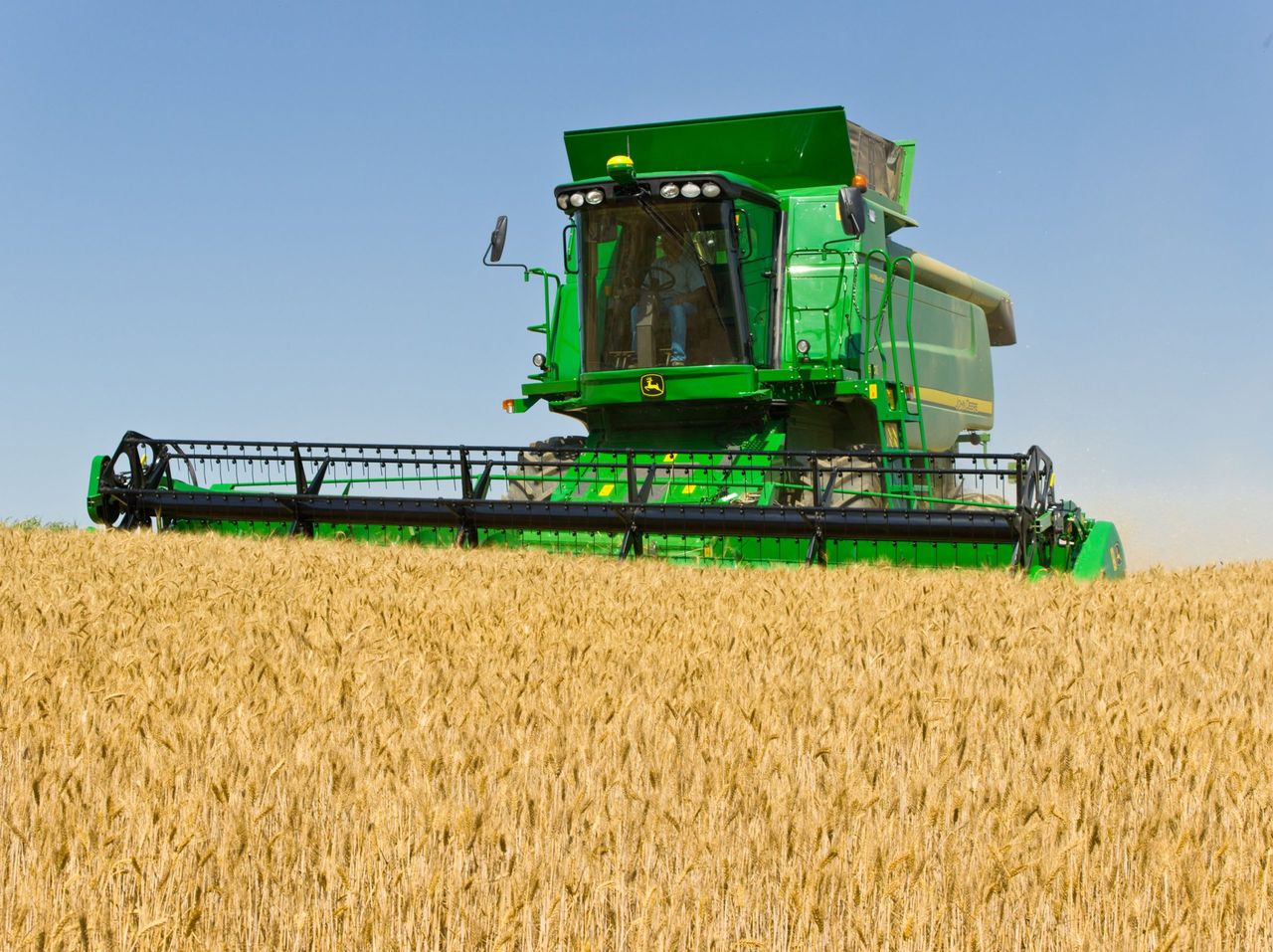
Decrease in number of Farm Assist recipients

There are currently fewer Farm Assist recipients than in previous years, at just over 3,000, according to the Department of Social Protection.
At the end of 2025, there were just over 3,260, while there were over 3,600 at the end of 2024, a department spokesperson said.
In 2025, Co. Donegal had the highest number of recipients, followed by counties Mayo, Galway, Cork, and Kerry.
The spokesperson said provision had been made for €43.8 million in Farm Assist funding for 2026.
Farm Assist
Farm Assist is a means-tested payment for low-income farmers.
To qualify, recipients must:
- Be a farmer in the state;
- Be aged between 18 and 66;
- Satisfy a means test.
Recipients are considered a farmer if they are farming land that they own or lease, for the purpose of husbandry (the cultivation or production of plants or animals).
The means test takes into account most forms of income, assessed in different ways, but disregards specific exclusions, such as owning a home or child benefit.
An amount of €254 for each of the first two children, and €381 for any children after that, is exempted.
Farm income and income from off-farm self-employment is assessed at 70%.
These deductions are applied first and 70% of the balance is then assessed.
Income assessment
Farming income is assessed as gross income, which a farmer, their spouse, civil partner, or cohabitant may be expected to receive, minus any expenses.
Income received over the past 12 months is used to assess likely future earnings.
As farmers may have significant variations in income from year to year, there will be some leeway in this assessment, the Department of Social Protection said.
Any income from self-employment will also be assessed.
The various incomes are then added together, and expenses are subtracted.
Budget 2027
Farm organisations have called for changes to the Farm Assist programme.
In its pre-Budget 2027 submission, the Irish Natura and Hill Farmers' Association (INHFA) said it was a "critical support" for farm families across the country.
"In an analysis of the figures, we see that 70% of participants are over 50.
"Participation has fallen from 11,246 in 2011, with a budget of €113.72 million, to 4,400 farmers in 2023, with a total budget of €49.4 million.
"While we can point to declining participation levels as a positive sign that farmers have improved their circumstances, either at the farm gate or through off-farm employment, we should also be open to other possibilities," the INHFA said.

The INHFA said that when age profile is considered, over time, many participants may have reached retirement age and no longer qualify for Farm Assist.
An increasing level of migration of younger people from rural areas may also be deflating numbers.
The organisation said, however, that another area which needs to be considered is the means test and how it relates to participants in the scheme and those who have considered joining it.
CAP payments
The INHFA also recommended changes to the way payments received under the Common Agriculture Policy (CAP) are assessed.
Under the Common Agricultural Policy (CAP) in Ireland, designated land primarily refers to areas legally protected for environmental reasons (such as Special Areas of Conservation or Special Protection Areas) or land classified under the Areas of Natural Constraints (ANC) scheme due to natural hardships.
For farmers who have more than 10% of their lands designated or up to 30ha, the INHFA said all payments made under the Complementary Redistributive Income Support for Sustainability (CRISS) should be fully disregarded.
For farmers with 40% or more of their lands designated, the INHFA recommended an additional disregard of the first €5,000 of their payment under the Basic Income Support for Sustainability (BISS).
The Irish Farmers' Association (IFA) has also made recommendations for the Farm Assist programme.
It has called for the eligibility to be extended beyond pension age, particularly for those with limited or no pension entitlement.
It has also sought a rolling three-year income test option for long-term recipients to smooth out income volatility.