Advantage Beef Programme
Agriland recently caught up with ABP's agri-sustainability manager Stephen Connolly to hear how the farm has been managing its cattle in the current dry spell.
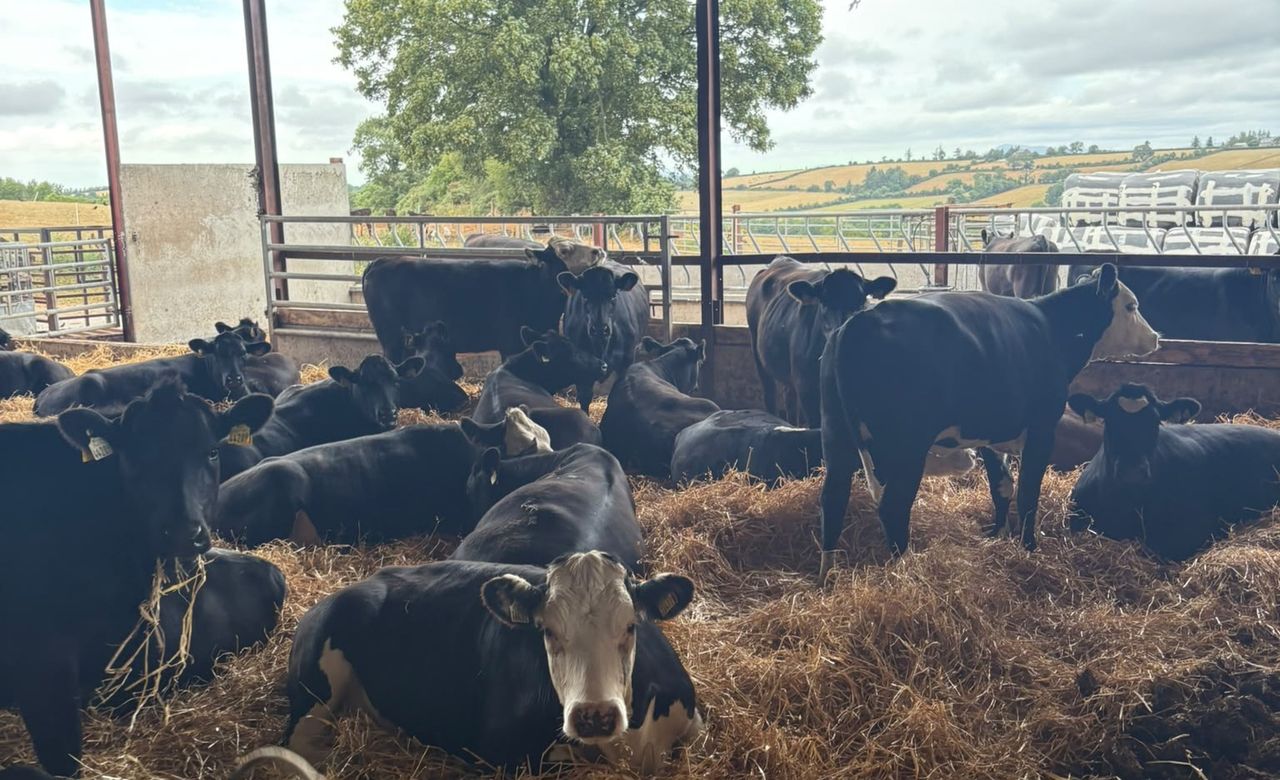
All the 2025-born heifers on the farm have now been housed for finishing, with the last of the heifers housed in the final days of July.
Every year, the ABP Demo Farm sends 50 heifers and 150 steers to the Irish Cattle Breeding Federation's (ICBF's) Tully Progeny Test Centre in Co. Kildare where feed intake and methane emissions are measured.
The 50 heifers have now been sent to Tully and the 150 steers are expected to be sent in September.
The heifers had an average housing weight of 448kg this year, which Connolly said is a similar weight to last year's heifers at housing.
This year's heifers will be fed on high-quality grass silage ad-lib and 5kg concentrates/head/day fed as a total mixed ration (TMR) through a diet feeder.
Steers remain outdoors but all will be on supplementary feeding of silage by the end of the week.
They are going onto a finisher diet approximately a month earlier than usual on the farm.
The more forward-type steers will be housed for finishing also, while the rest will remain at grass until shed space comes available.
Steers that are being housed for finishing will gradually be built up to 8kg concentrates/head/day, with ad-lib grass silage fed through a total mixed ration (TMR).
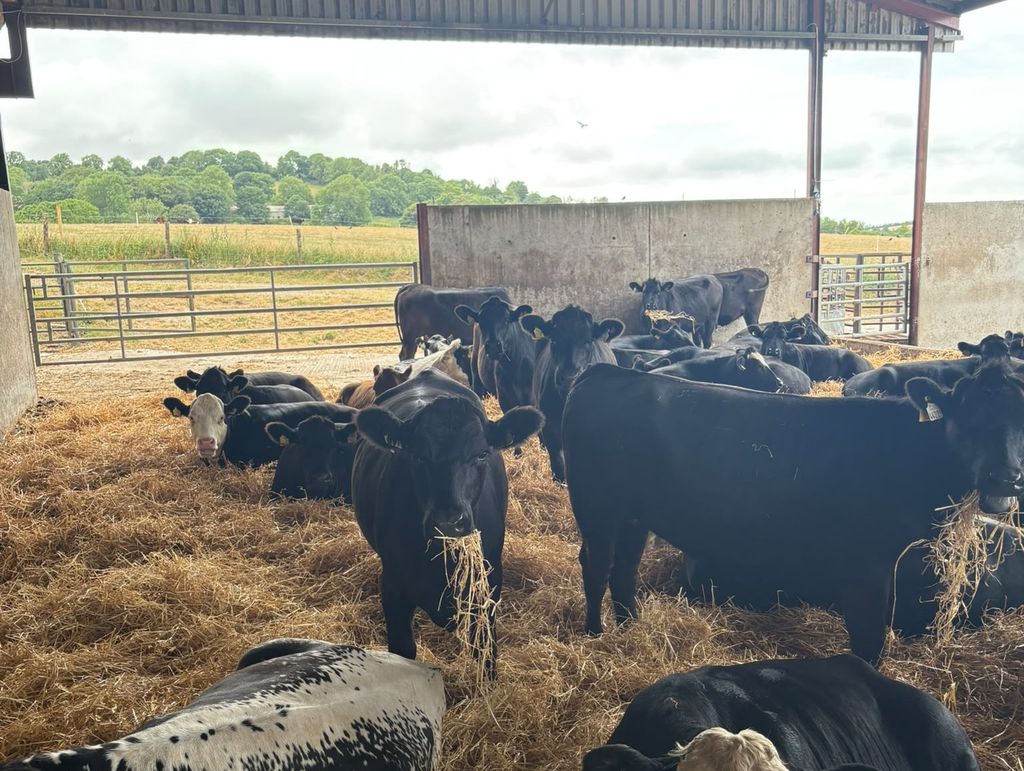
All cattle that are being housed will have their tail-hair clipped, helping to keep them clean.
The steers remaining outdoors will be fed concentrates and silage outdoors.
A strip wire will be used for feeding concentrates to steers at grass.
The remaining grass supplies on the farm will be kept for calves which are also being supplemented with hay and concentrates.
Grass covers
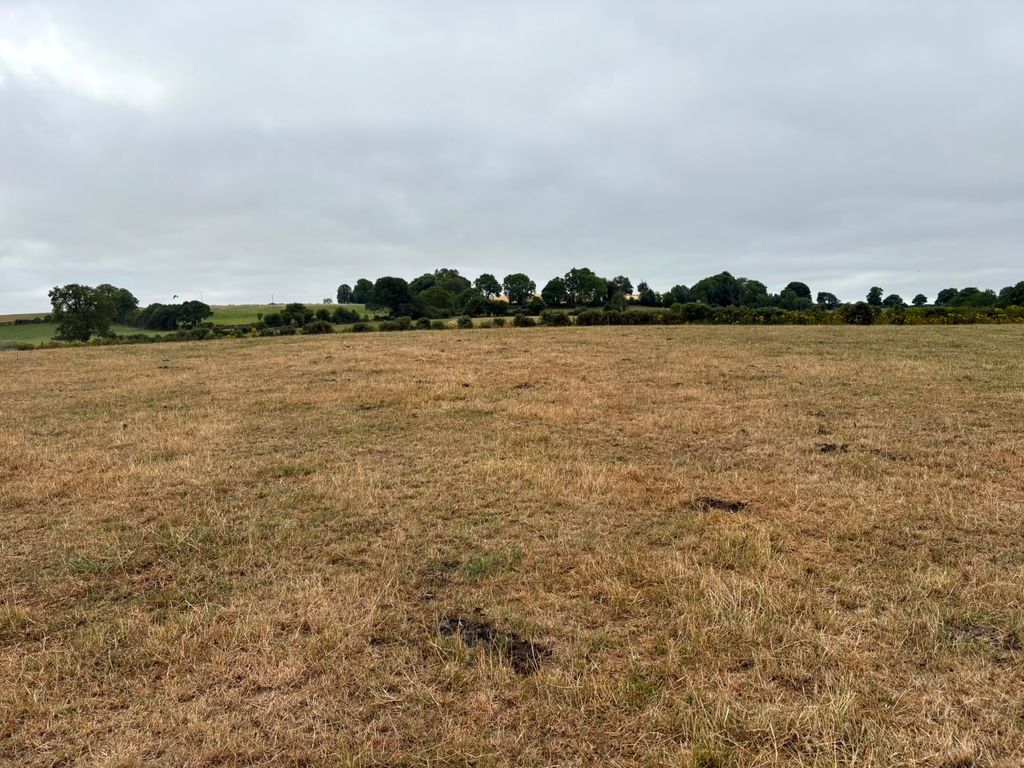
Commenting on grass growth rates on the farm, Connolly said: "We have changed our tactics on the farm in the past week or so as grass growth rates have only got worse - the only thing growing is weeds."
Paddock sizes have also increased significantly as grass covers are so low.
The farm also runs a store lamb operation every year but has not bought in any lambs yet.
It is hoped the first store lambs will arrive on the farm in the coming weeks as the grass situation will be closely monitored.
"We think it will be 3-4 weeks until we have grass and we do think we will get a massive burst of grass then.
"But we have over 400 calves and we will have store lambs by then also so they will probably make better use of the grass," Connolly explained.
Advice is to start feeding forward cattle
The ABP agri-sustainability manager advised farmers who are tight on grass and reluctant to start foddering to introduce fodder where needed before cattle growth rates are checked.
He said: "If cattle need silage and farmers are hesitant to start feeding, they should seriously look at doing it because you could be losing 2/3 weeks of thrive in cattle."
He said that beef farmers in several drier parts of the country are already feeding out bale silage to cattle or else have housed their forward cattle earlier for finishing.
Connolly said: "The current dry spell is causing a lot of challenges as regards grazing and grassland management.
"There are parts of the country where grass is totally burned up.
A backup water pump is in place on the ABP Demo Farm also to ensure adequate drinking water supplies remain avaliable to livestock.
"Water supplies are also being monitored, and it is something farmers may also need to keep a close eye on."
Connolly said: "Where farmers are under pressure for grass and are concerned about fodder supplies, they should talk to a member of our farm liaison team.
"Moving on surplus livestock such as fit cattle and culls is advisable and will help to reduce demand on farms that are running tight on feed supplies."