Could an Irish not-for-profit supermarket help farmers?


Could a state-subsidised supermarket be the answer to rising food prices and help boost farm incomes?
One councillor believes it could and has put forward a not-for-profit model aimed at benefiting both consumers and farmers.
The idea is that these stores could provide essential food at affordable prices; while simultaneously offering more price stability to farmers.
Conor Reddy, People Before Profit (PBP) councillor for Dublin North West told Agriland: “We had a proposal in our alternative budget last year, proposing the creation of five pilot stores in areas where people have food poverty issues.”
“The idea of a pilot is a learning exercise, broadly representing struggling communities.
"Many families struggle to provide essentials," he said.
As well as the sometimes prohibitive cost of nourishing food, Reddy added that a problem to be addressed is “food deserts” – areas where it’s hard to find high quality, nutritious food.
The programme would be funded through taxes on profits of the largest supermarket chains.
Cllr. Reddy said: “People talk about margins in retail, but we looked at tax take from top five chains: Our proposal worked on those profits alone – an extra 10% tax would fund a project like this.
“For us, it would have discounted essentials in stores – achieved by subsidies – similar to (New York Mayor) Zohran Mamdani’s plan.”
The New York mayor announced recently that the city would have five state-sponsored stores providing essentials in deprived neighbourhoods.
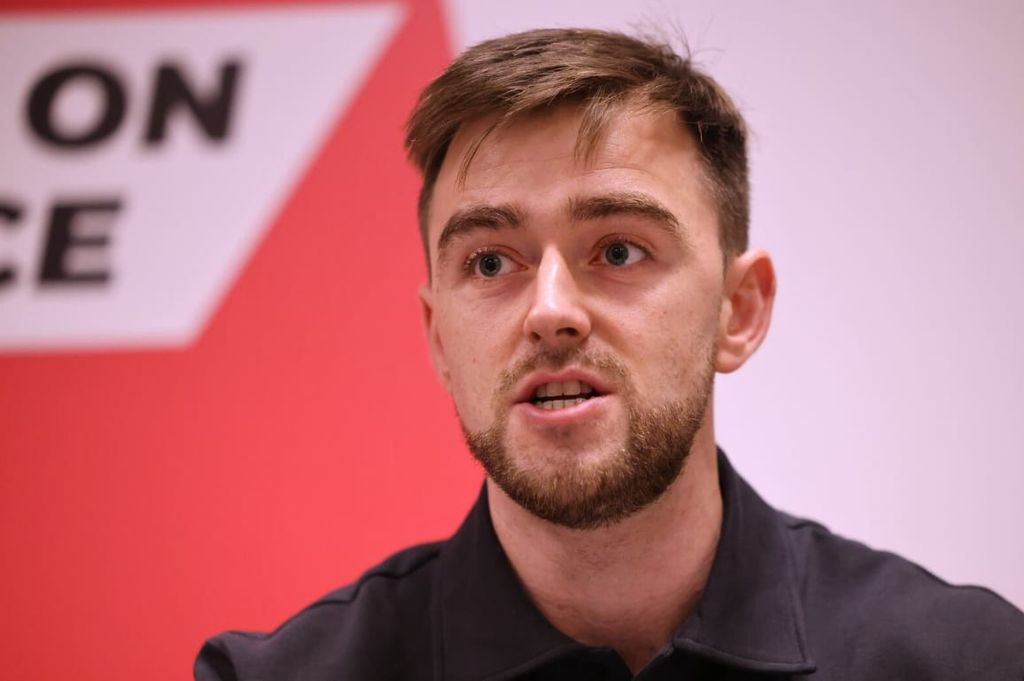
Like the New York proposal, Cllr. Reddy’s idea is to only stock the basic, nourishing food.
“You won’t have a complete shop there, just core essentials – fruit, vegetables, dairy, meat.
“We’re not proposing a soviet model.
“It’s a pilot, a learning exercise, at this stage," he said.
Farmers and producers
But what about farmers and food producers?
Farmers and agri-businesses have repeatedly highlighted falling prices and rising costs.
Cllr. Reddy said: “The warehouse that would stock the five pilot stores would be a distribution hub.
"That’s who farmers would interface with, the aggregator who’d be buying the produce from them.
“That’s where you’d have the certainty and fair prices, and where subsidisation would probably come in as well.
“We’d be very conscious of the fact that anything like this would need to be developed in dialogue with the people producing food."
Cllr. Reddy added that the party would especially like to talk to small and medium producers, rather than larger or corporate outfits.
But could this project mean lower prices being paid to farmers?
According to Cllr. Reddy it would not.
He said: “This would be about giving farmers a fairer price. It’s developed with that in mind too.
"We live in an unstable world.
"One way to buffer that is by building resilience at home.
“Farmers are essential to that resilience. Supporting them financially is an important part of the picture.”
Cost of living
Denis Drennan, president of the Irish Creamery Milk Suppliers Association (ICMSA) believes that like all consumers farmers are feeling cost of living pressures.
Drennan said farmers also have first-hand experience of the cost of producing food.
He said dairy farmers are producing milk "below the cost of production" since September 2025, while 2025 was the "first year in probably 30 years" in which beef farmers made a profit from the marketplace.
He said: “The cost of producing food has increased substantially since 2020 due to factors completely outside the control of farmers.
"Even at current food prices, the cost of production is not being fully reflected in consumer prices while farmers are being continually undermined by powerful links further up the supply chain.
“For example, the price of milk was close to 50 cents per litre this time last year and is now around 37 cents per litre, well below the actual cost of producing it.”
Drennan said that farmers would need assurances that the People Before Profit proposal would not undermine farmers.
He said if it was to be implemented, a clause would have to be included that “no product would be sold below a defined farmer production cost that included all the sustainability requirements on farmers and also the cost of all regulations that farmers have to meet”.
The ICMSA president said that farmers will "no longer tolerate" a scenario where they are expected to produce food to the highest standards only to receive a price below the costs of production.
He added: “ICMSA would be really concerned that this may happen if such a PBP proposal was adopted without any guarantees”.
Pressure
Irish Cattle and Sheep Farmers Association (ICSA) rural development chair Edmond Phelan also has some concerns about the proposal.
He said: “Food poverty is a genuine concern, and everyone wants healthy food to be affordable.
"But any attempt to reduce food prices cannot come at the expense of Irish farmers, who are already operating on extremely tight margins.
"Too often when pressure is applied to reduce food prices, it is usually the primary producer who ends up paying the price, despite having the least influence over the final retail price."
Phelan added that people often assume that if food prices are high, farmers must be benefiting.
However, he said that farmers receive only a small share of the final retail price, while the cost of producing food continues to rise.
"Consumers deserve affordable food. Farmers deserve a viable income.
"Those two objectives are not mutually exclusive.
"The difference between what shoppers pay and what farmers receive is where the real questions should be asked," Phelan added.
But Cllr. Reddy said that dialogue with farmers is definitely part of the plan.
“We’ll do that in the next month or two, ahead of our alternative budget in late September early October,” he said.