Ground limestone usage down 8.6% in 2025 - DAFM

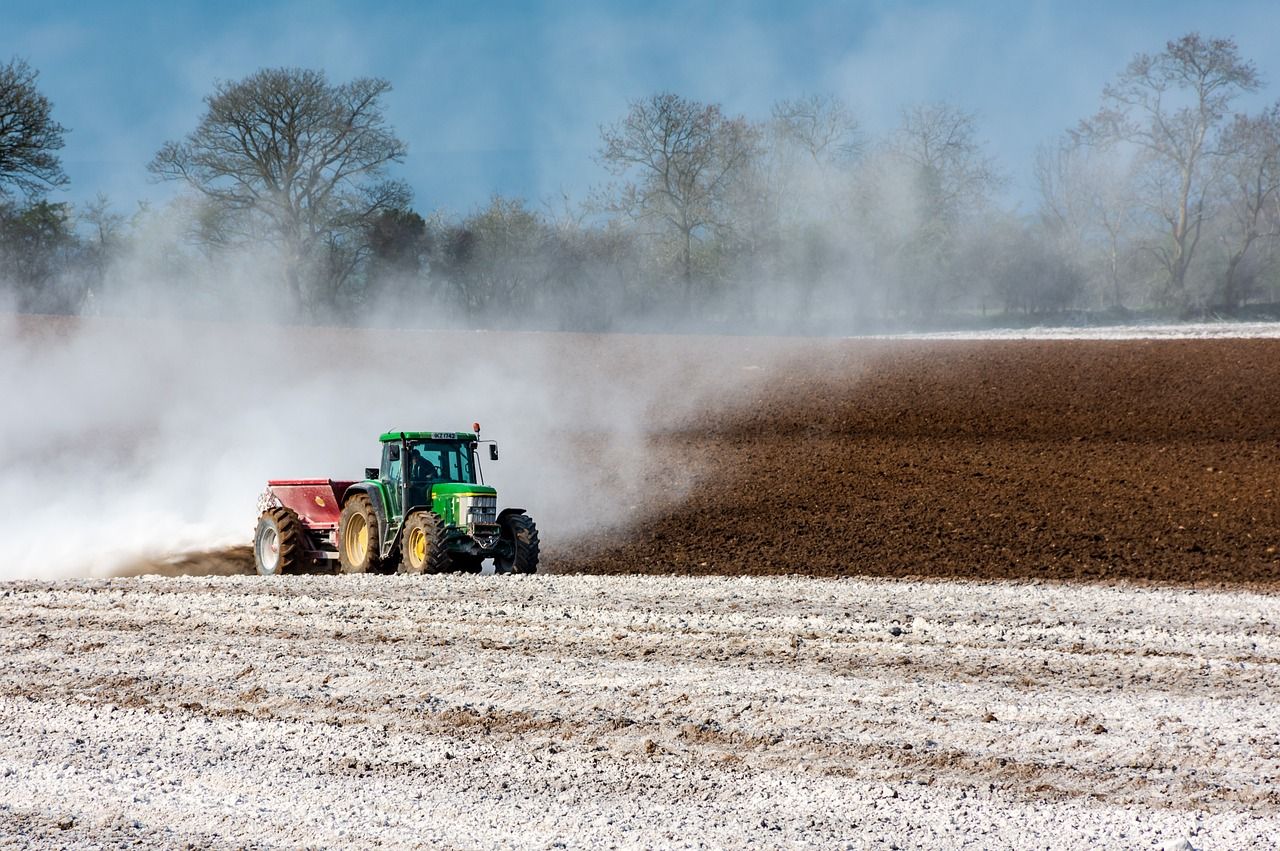
Usage of ground limestone as fertiliser declined in 2025, according to data from the Department of Agriculture, Food and the Marine (DAFM).
Ground limestone usage was down 8.6% on the previous year (2024) to 929,739 tonnes.
DAFM has published its Annual Report for 2025, outlining the work it carried out across various programmes.
Control programme
DAFM's control programme for fertiliser and lime verifies that the products on the market are labelled correctly and meet minimum nutrient requirements.
In 2025, a total of 278 samples were taken at manufacturers’ premises, the Annual Report detailed.
188 of these were fertiliser samples and 90 were lime samples.
435 individual analyses were performed for fertiliser and circa 3.2% out-of-tolerance was recorded for these samples.
All out-of-tolerance results were investigated by the department, and appropriate actions were taken by the companies involved, DAFM said.
One urea sample did not meet the minimum content of NBPT (urease inhibitor) required for solid urea, DAFM said.
Environmental measures
DAFM outlined in its report that during 2025, the obligation to use low emission slurry spreading (LESS) technology was extended to more farmers, and as part of the interim review of the fifth Nitrates Action Programme, a ban on the use of uninhibited (unprotected) urea in granular form was introduced.
In its report, department gave an update on progress that was made under the Multi-Species Sward Measure, which incentivised farmers to establish theese swards, to reduce the reliance on nitrogen fertilisers.
A financial contribution of €300/hectare was provided to participating applicants to offset part of the cost that they incur in the establishment of these swards.
This measure built on the areas established under the pilot programme launched in 2022, with 4,000 hectares sown.
Following on from the success of the pilot programme, 2,000 hectares were sown in 2023, 3,700 hectares in 2024 and 2,000 hectares in 2025.
This measure is not operating in 2026 and is subject to review, it was confirmed earlier this year.