Sponsored
More grass, better milk fat? Identifying the farm practices that matter most

Sponsored by

Milk quality is shaped by far more than genetics alone.
A major European study has now shown that feeding strategy, grazing management and production intensity have a significant influence on the fatty acid profile of milk, with important implications for both dairy product quality and farm management.
The research analysed data from 75 dairy farms across five European countries and used machine learning to identify which farm practices were most closely associated with a nutritionally favourable milk fat composition.
Researchers examined farms ranging from low-input grazing systems to highly intensive operations in France, Ireland, Italy, Germany and Switzerland.
Across these farms, they assessed 29 management factors and linked them with the concentrations of key milk fatty acids, including omega-3 fatty acids, conjugated linoleic acid (CLA), vaccenic acid and branched-chain fatty acids.
The strongest signal came from grass
Among all the variables studied, fresh grass intake repeatedly emerged as one of the most influential factors affecting milk fatty acid composition.
Farms where cows consumed greater quantities of fresh grass and spent more time grazing consistently produced milk with higher concentrations of omega-3 fatty acids and CLA.
The relationship was particularly clear for CLA, a fatty acid that has attracted interest because of its potential health-promoting properties.
According to the study, the highest CLA levels were found in farms where fresh grass intake exceeded 5.2kg dry matter (DM) per cow per day and annual milk yield remained below approximately 6,800kg per cow.
The authors suggest that fresh forage supports rumen conditions that favour the production of beneficial fatty acid intermediates, whereas high-concentrate diets and intensive feeding systems can suppress these pathways.
Concentrates and maize silage shift the balance
While grazing and fresh forage improved the concentration of beneficial fatty acids, the opposite trend was observed for higher levels of concentrate feeding and maize silage inclusion.
These inputs were repeatedly identified as major drivers of variation in milk fat composition.
For omega-3 fatty acids such as alpha-linolenic acid (ALA), eicosapentaenoic acid (EPA) and docosapentaenoic acid (DPA), the most favourable profiles were associated with lower concentrate use, lower maize silage inclusion and more moderate production intensity.
Farms with higher concentrate feeding and larger maize silage inputs generally produced milk with reduced concentrations of these fatty acids.
The study also found that increasing maize silage intake above around 4.7kg DM/cow/day was associated with lower levels of several omega-3 fatty acids.
Production intensity comes with trade-offs
One of the most important messages from the research is that milk nutritional quality and milk output do not always move in the same direction.
High-output systems characterised by greater concentrate use, larger herd sizes and higher stocking densities tended to produce milk containing lower concentrations of omega-3 fatty acids, CLA and branched-chain fatty acids.
At the same time, these intensive systems were associated with higher omega-6 concentrations and less favourable omega-6 to omega-3 ratios.
The researchers found that farms feeding more than 5.6 kg of concentrates per cow per day and operating at higher stocking rates recorded the highest omega-6:omega-3 ratios.
By contrast, lower-input grazing systems consistently produced milk with lower omega-6 : omega-3 ratios and higher concentrations of nutritionally desirable fatty acids.
Management matters more than labels
An interesting outcome of the study was that management practices appeared to be more important than whether a farm was classified as organic or conventional.
Although many organic farms achieved strong results because the EU organic specification indicates an obligatory access to pasture when conditions allow, the models showed that grazing, forage intake, concentrate supplementation and production intensity explained much more of the variation than certification status itself.
In practical terms, farmers seeking to enhance milk fat quality should focus on the underlying management decisions rather than relying on production labels alone.
Greater access to pasture, higher-quality forage, controlled concentrate feeding and moderate stocking rates were the factors most consistently associated with favourable milk fatty acid profiles.
What dairy farmers can take from the findings
The study does not suggest that all farms should move to low-input systems.
Instead, it highlights the production trade-offs that exist between maximising milk yield and optimising milk fat composition.
However, it does provide valuable benchmarks. The machine learning models identified practical thresholds that could help guide decision-making, including lower concentrate use, increased fresh grass intake and reduced dependence on maize silage.
These management changes were repeatedly linked with improved levels of omega-3 fatty acids and CLA in milk.
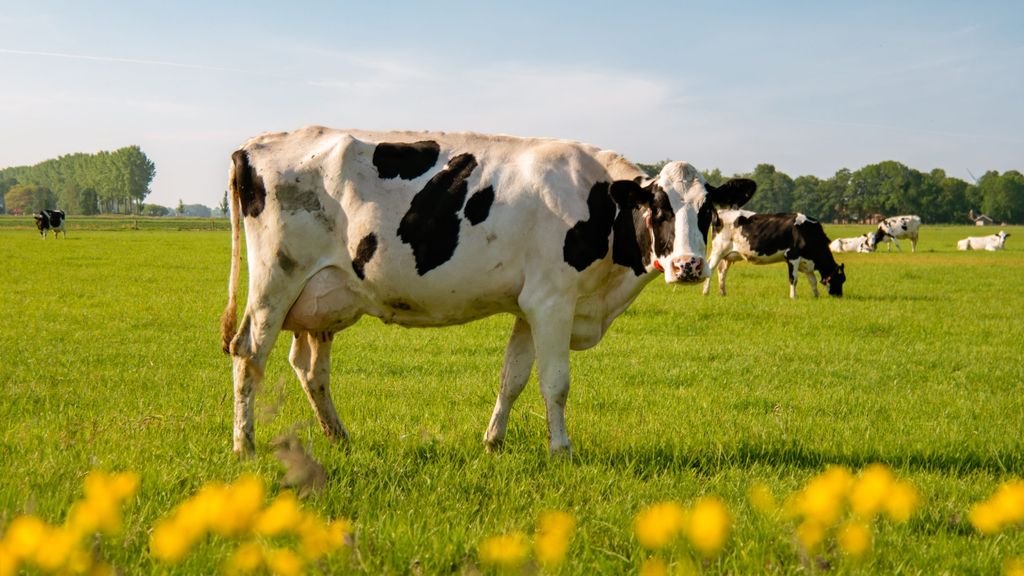
For an industry increasingly focused on both nutritional quality and sustainability, the message is clear: feeding strategy remains one of the most powerful tools available to dairy farmers.
The study demonstrates that relatively small changes in forage and concentrate management can have measurable effects on milk composition, offering producers another route to differentiate their product while maintaining efficient production systems.
About INTAQT Project
INTAQT is a five-year research project funded by the European Union's Horizon 2020 (H2020) programme.
The project explores the relationship between livestock production systems and the quality of chicken and cattle products.
Through the concept of "One Quality", INTAQT aims to demonstrate that safe, nutritious and enjoyable animal products can be consistently produced in both extensive and intensive farming systems while supporting more sustainable livestock production.

Sponsored by