Did the drought expose stocking rate issues?


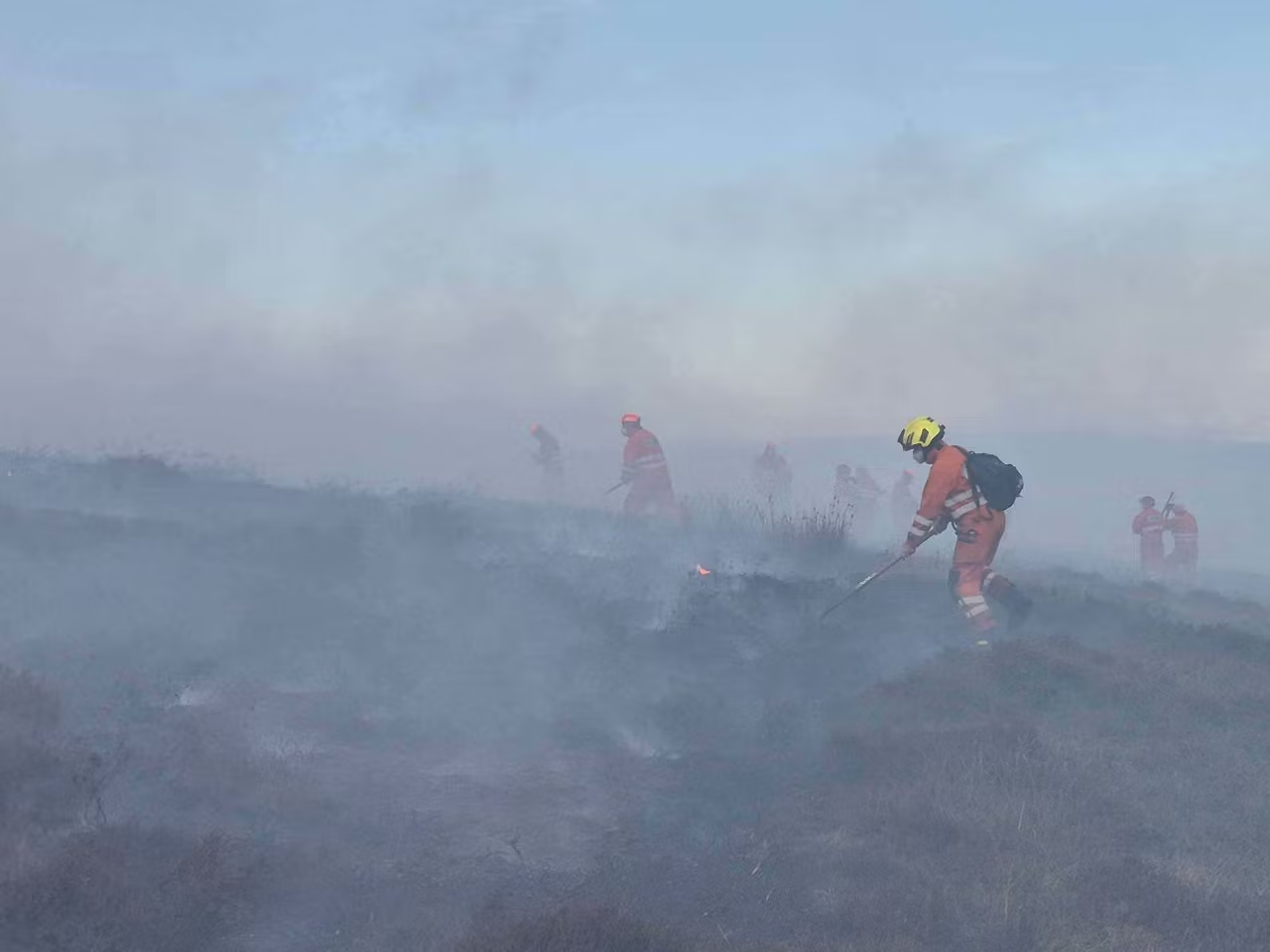
This summer's drought acted as a stress test in terms of farms' grass growing availability, as well as their stocking rate.
Since the rapid expansion in Ireland's dairy industry began a decade ago, issues with stocking rates have been a common theme.
Farms that are overstocked begin to lose profit as production units drop, and higher inputs such as concentrates fed will be required, especially as weaknesses appear in years like this when hard droughts hit.
Maintaining the farm's optimal stocking rate is one of the most crucial practices a farmer should stay on top of in order to increase their profits.
Stocking rate
'Finding the sweet spot' is a term often used when trying to find the correct stocking rate that suits the farm's system, but also matches derogation restrictions, banding, and fertiliser allowances.
The most easy way to find to find your ideal stocking rate is to remember that each cow should have access to approximately 19-20kg dry matter (DM)/cow/day.
To calculate this, you can cross-check the size of your dairy platform with your average grass growth, taking peak growth and grass growth curves into consideration.
Once you know your farm's growth capacity, use it to find the optimum stocking rate, which will help you boost margins.
Every farm is different, and will need to match their stocking rate to suit land quality, cow size, as well as any other relevant factors.
However, a general guide provided by Teagasc is as follows:
| Tonnes supplement (DM/cow) | 10t DM/ha | 12t DM/ha | 14t DM/ha | 16t DM/ha |
|---|---|---|---|---|
| 0.00 | 1.5 | 2.0 | 2.3 | 2.6 |
| 0.50 | 1.8 | 2.2 | 2.5 | 3.0 |
| 1.00 | 2.0 | 2.4 | 2.9 | 3.1 |
Overstocking
Every cow extra to the optimal stocking rate will affect your profit margins, as the dairy platform will no longer be considered self-sufficient in terms of forage.
Therefore these extra cows will just continue eating through expensive concentrates and imported fodder.
Farms stocked from 2.5-3 cows/ha are generally able to manage growth and demand efficiently, as their demand stays below the average grass growth curve from April to September.
Farms that stock upwards of the 3 cows/ha, reaching 3.5 cows/ha, often struggle with grass availability throughout the summer months, especially considering how droughts are becoming more common.
Those who stock the platform at 4 cows/ha are typically under pressure throughout the year, with demand surpassing even the peak growth rate.
Not only does this reduce cow performance and silage production, these stocking rates add additional financial pressure and concentrates fed are much higher than the typical farm.
Overstocking also puts pressure on farmers when trying to reseed ground, as there is not enough grass in front of them to provide cover for a two-month turnaround.
This leads to farmers not reseeding pastures, which may seem acceptable but is actually reducing profit per ha as the swards age and grass growth reduces.

Another problem overstocked farms may run into is building covers in the backend of the year, with demand surpassing growth rates early into the back shoulder of the year.
Many overstocked farms may have issues with feed availability during the last few months.
However, this does not mean understocking is the way to go, as surplus covers will build, pastures will become too heavy to graze, and while having plenty of silage is a good thing, repeatedly generating excessive surpluses is counterproductive.
At the end of the day, as margins get tighter, it is well worth evaluating your current stocking rate.
However, be careful to maintain a balance, and do not rashly cull cows to achieve certain rates, as this may affect other factors such as your banding.