'Booleying' tradition to be revived in Cooley Peninsula, Louth

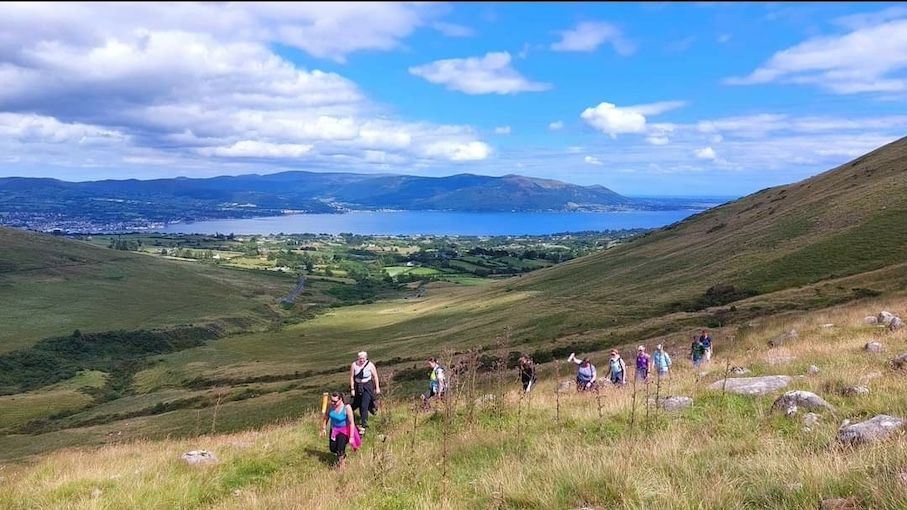
The tradition of booleying will be revived at this year's Cooley Connect Well Lunasa celebrations in Co. Louth.
The celebrations take place at various locations around the Cooley Peninsula, Co. Louth from today, Saturday, August 1 to the end of Heritage Week, Saturday, August 23.
According to local historian, Seamus Murphy, it used to be common for people in rural Ireland to migrate to the hills for the summer until the early 1900s, a practice known as 'booleying.'
Seasonal grass growth
Families who owned cattle took advantage of the seasonal grass growth experienced in many upland areas from May, he said.
The aim was to exploit the mountain grazing to allow crops to be planted on an open field system, and most importantly, to keep lowland grazing for the wintertime, according to Murphy.
Booleying allows the land rest after winter, and the grass and crops to grow, he said.
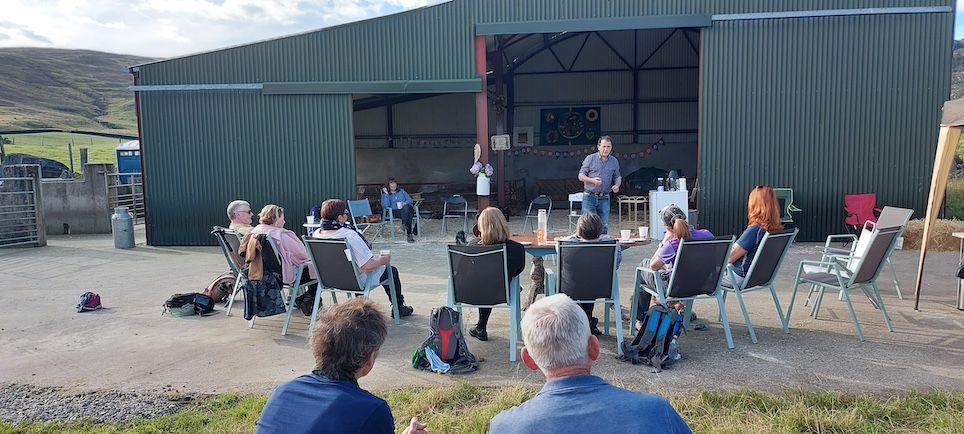
Those attending the Cooley event will be able to see a re-enactment of roofing a booley hut, and help build a miniature booley hut.
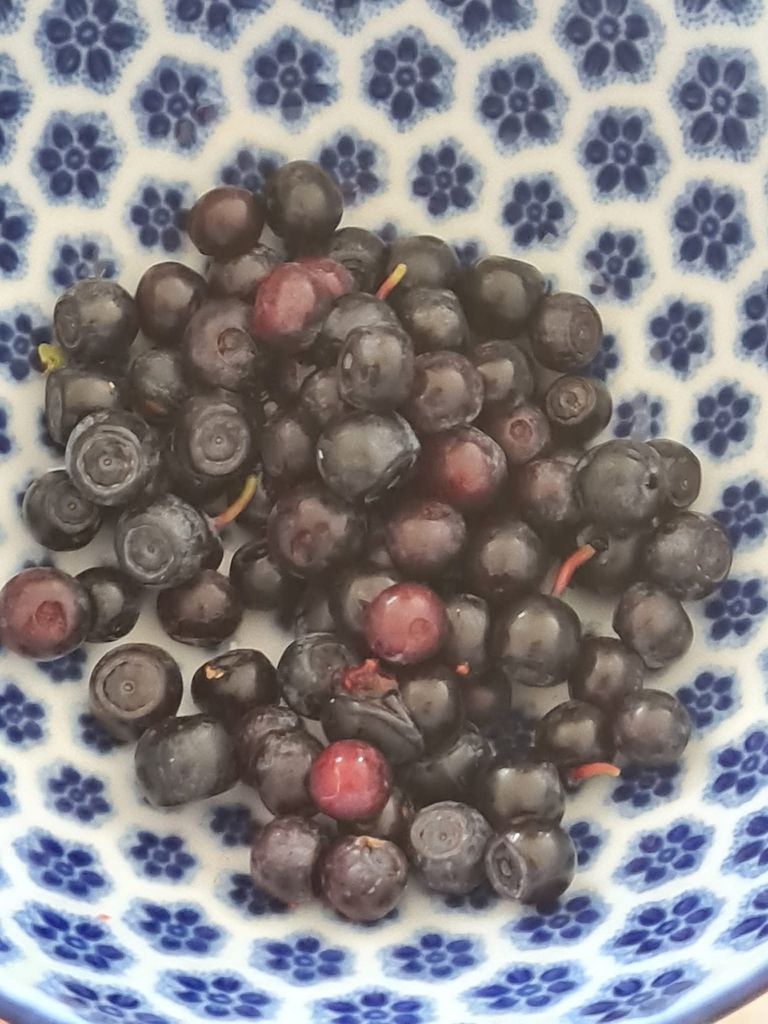
They can also learn about hill sheep farming (a free event), and the tradition of bilberry picking, enjoy traditional hospitality, bilberry jam, local honey, as well as traditional homemade butter and breads in Glenmore, Cooley Peninsula, from 9:00a.m-5:00p.m.
Tickets will be available between these times, with the main event at 2.00pm. Advance booking is essential.
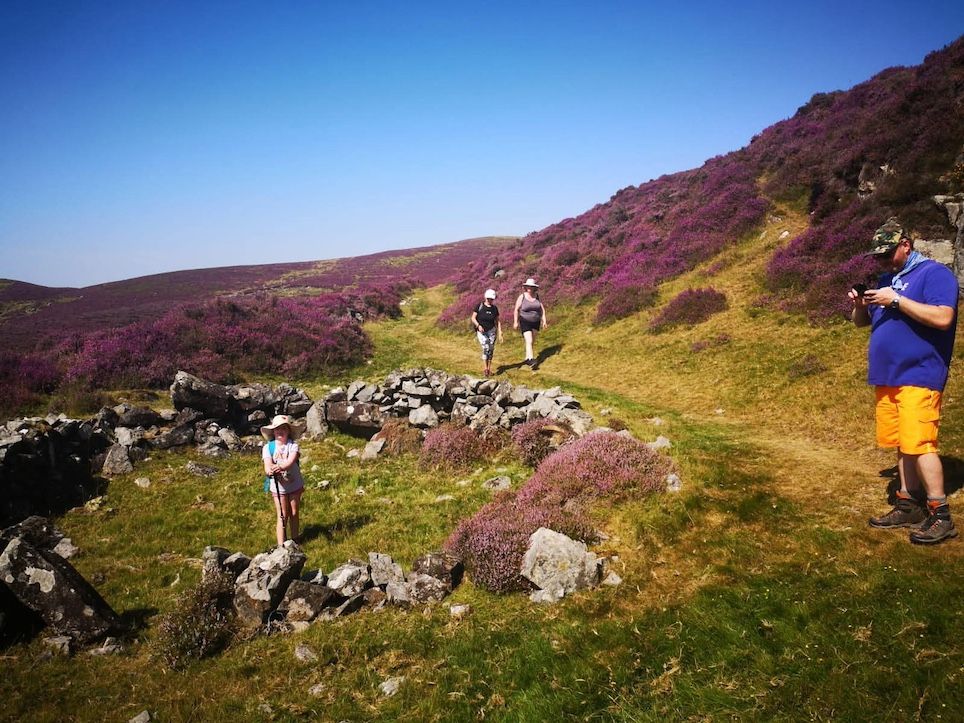
Booleying and celebratory traditions such as bilberry picking are shared heritage traditions with many other upland communities across Ireland, according to author and lecturer, Dr. Eugene Costello.
"One can still see the physical remains of this extraordinary way of life. The herders would sleep in groups of two to five in small one-roomed huts," he explained.
Local sheep farmer, Matthew McGreehan said: "The stone circles remain in the Cooley mountains, but the oral history is very vague, with many sheep farmers referring to the stone maris as a small sheep holding, with no transmission of the oral tradition of booleying".
Murphy explained these traditions and others in his film 'The Mountains of Cooley'.
Stone circle survey
His work inspired Cooley Connect, a voluntary community group, with the support of the Heritage Council, to commission Derek Watters to complete a survey of the stone structures of the Cooley mountains in 2022.
The aim was to formally record all stone formation, including the stone circles of the booley huts, to raise awareness and to promote the preservation of the stone heritage in the Cooley mountain landscape.
It is only since 2021 that the revival of booleying has been taking place in Cooley, Costello said.
“Typically the booley hut structures had stone walls with ‘scraws’ of peat placed on top of them and then more scraws and/or heather used as roofing," he added.
Booleying huts were built in May at the start of the booleying period, and depending on the weather, the season ended in August or September.
"Some older huts were probably built largely of wattle or wickerwork, especially before the 1700s when trees were more common in our uplands," he said.
Temporary structures had a tuff gorse roof, and butter-making was a big part of booleying.
"Fascinatingly, by the 1800s, it was mostly young people and teenage girls, especially those who had the job of looking after cows at these seasonal ‘booleys,’ Costello said.
"The women who lived in the booley huts - older women and teenage girls - milked the cows and churned the cream into butter on the mountain.
Murphy added: "Once a week the butter was collected and brought down to be sold.
"Booleying was a time of celebrating away from parents, to enjoy fun and songs and the transmission.
"Booley huts visited other booley huts, and it was a social celebratory event, hence our modern day revival tag #Hooley Booley Cooley."
Local heritage walk leader, Venora Hovelt, said booleying was a right of passage for young people, between childhood and adulthood when they moved to employment at the fairs.
It also "forged friendships and possible future marriages with other communities, thus broadening and sharing other cultural and genetic baselines", she said.
According to Murphy, the traditional celebrations on August 15 are related to the end of the booleying season with homecoming celebrations.
This is re-enacted most years with the festival in Cooley, and a traditional ceili will be held this year in Mullaghbuoy Community Centre on Friday, August 21.
“Hillwalkers looking down upon our valleys generally think they are looking at a timeless landscape, an ancient field pattern, and it is hard to convince them otherwise,"
"In fact, the field patterns are relatively new.
Most of the ditches are less than 200-years-old, with "virtually none" in Cooley more than 300 years-old, the local historian said.
"A generation before the famine, open field farming was the norm.
"People generally lived in housing clusters – each known as a baile – and tilled the soil in co-operative groups.
"Cattle were herded by day and penned at night, but in the summertime all the cattle and a lot of the people headed into the mountains at the beginning of May.
"There they lived in temporary huts - booleys (buaile) - milking and churning butter for sale,"" Murphy said.
Butter-making
The main booley sites in the mountains are easy to identify by the remains of stone huts.
"There are at least 50 with intact walls. Door openings always face south or south-east for light. There were no window openings," Murphy explained.
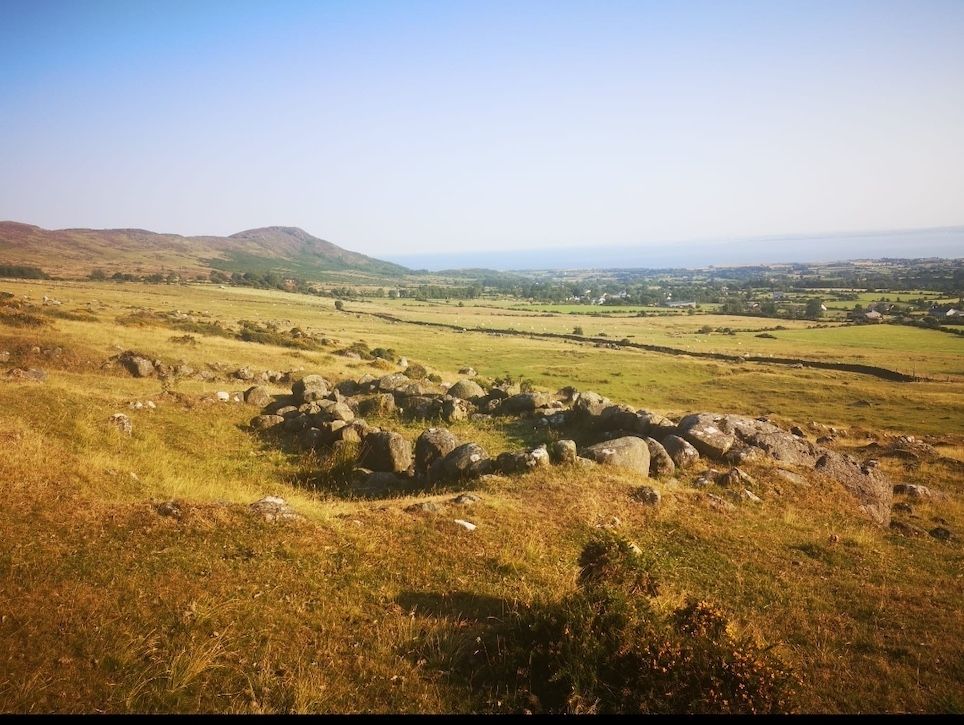
Sites are also identifiable by the broad patches of bright green grass fertilised by centuries of cow dung "and still winning the battle against heather and bracken".
"Booleying is sometimes referred to as a form of nomadism, but this is nonsense. People in the booleys were generally no more than a mile or two from their permanent homes," he added.
There are two booleys close together on the slopes of Ballyonan close to the Omeath-Carlingford Greenway at Greer’s Quay.
The Táin trail leading from Carlingford across the Golyin Pass to Glenmore is "lined with booley sites on both sides", Murphy said.
Big event
According to Murphy, "moving to the booleys was the big event on the agricultural calendar from the Bronze Age until the famine era, and was mentioned by Norman and Elizabethan sources.
"Cattle were rounded up and driven between two bonfires, a purification ritual linked to the name of the month in which it took place, Bealtaine.
"An Omeath dialect word for a booley still used today is 'mari.'
"The most accessible booley hut is Mari Tanamuc in Tullagh Glen, no more than 100m from the carpark at Tullagh bridge," he added.