Update: Young farmer support scheme application numbers

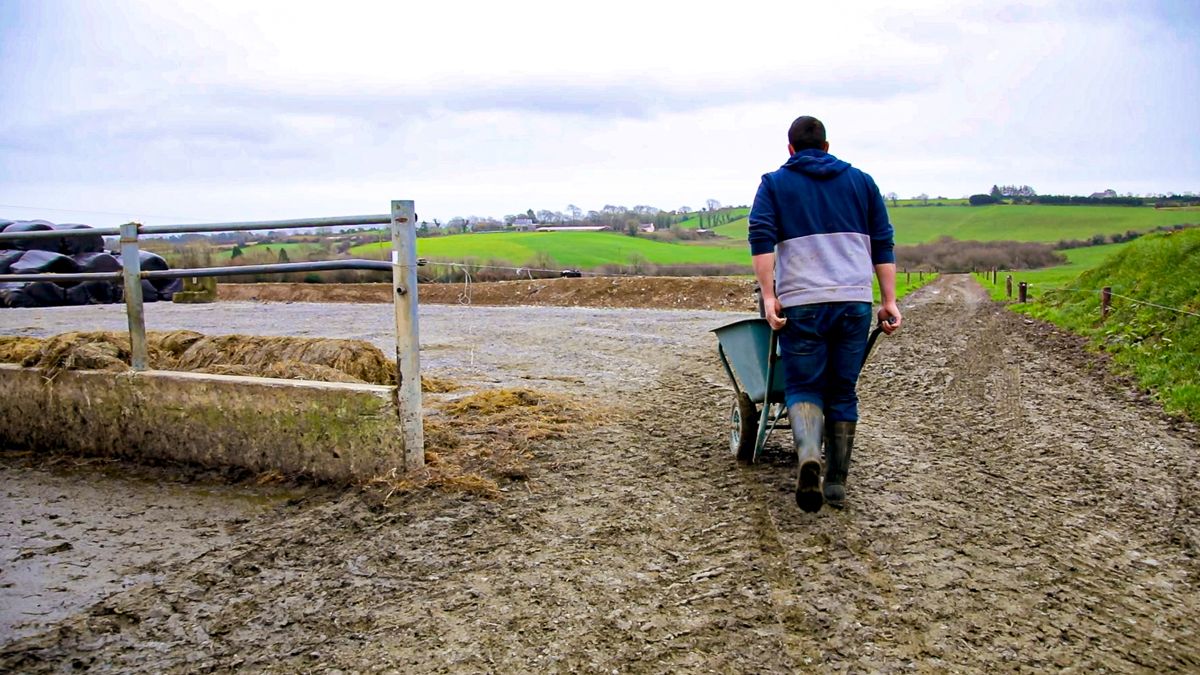
Almost 8,500 young farmers applied for the National Reserve (NR) and Complementary Income Support for Young Farmers (CISYF) schemes in 2025.
This was according to the latest figures from the Department of Agriculture, Food and the Marine (DAFM).
Figures for 2023, 2024 and 2025 have been provided but, according to DAFM, those for the 2026 scheme year are not yet available as processing of applications is "ongoing".
The figures for young farmers applying for the NR and CISYF schemes as part of the current Common Agricultural Policy (CAP) cycle, are set out in the table below:
| Scheme year | NR - Young Farmer | CISYF |
|---|---|---|
| 2023 | 1,879 | 6,834 |
| 2024 | 1,398 | 7,137 |
| 2025 | 1,260 | 7,236 |
In 2025, €38.3 million were disbursed to young farmers under the CISYF scheme, and €3.1 million as part of the NR scheme, according to DAFM.
The NR (young farmer category) scheme provides income support to young farmers setting up farms, who "receive an allocation of entitlements at national average value or a top-up to the national average value on entitlements that are below that level", DAFM said.
The maximum number of entitlements or top-ups allocated per applicant is 50.
The CISYF is a payment made to farmers younger than 40 years of age who are educated in agriculture "to help them succeed in farming", according to DAFM.
This payment can be made for up to five years.
The young farmers' scheme payment is made per eligible hectare, subject to a maximum of 50ha.
According to DAFM, "payments should average approximately €150/eligible hectare over the five-year term of the scheme".
Generational renewal
According to Teagasc: "Generational renewal has emerged as a critical challenge for European agriculture, reflecting a rapidly ageing farm population and persistent barriers to entry for younger and new farmers."
Data from the most recent Census of Agriculture in 2020 indicated that 33% of EU farmers were older than 65, with only 12% under the age of 40, and of this younger group only 2.5% were women.
According to the European Commission, ageing is taking place faster in agriculture than in other sectors, with far more farms being managed by farmers beyond retirement age (33.2%).
In 2025, the European Commission set what it described as an "aspirational target" to double the share of young farmers in Europe to 24% by 2040.
At the time, EU Commissioner for Agriculture, Christophe Hansen, said that the strategy aimed to double the share of new and young farmers in the EU from 12% to 24%.
National strategy
Each EU member state will be asked to "prepare a national strategy in their future budget plans to prepare for the next generation of farmers", the commissioner said.
As previously announced as part of the proposals for the next EU budget, member states would be asked to dedicate "at least 6% of their ring-fenced CAP envelope to support young and new farmers".
Speaking at the Interparliamentary Conference on Securing the Future of Farming in Dublin on July 27, the secretary general of DAFM, Sinead McPhillips, said young farmers under the age of 35 made up only 4.3% of the farming population in Ireland, compared to an EU average of 5.6%.