From cotton t-shirts to digital crop test kits: Guiding farm sustainability

Cotton t-shirts have long been used to help farmers test the health of their soils, but new technology is providing more insights on compaction and crop analysis.
Using technology to inform sustainability was a main focus of Tipperary-based Golden Vale Research farm open day which is undertaking the SOILCRATES pilot project.
Held in conjunction with Technological University of the Shannon (TUS), several researchers from the university were on site in Clerihan to show farmers different approaches to understanding their soil characteristics and sustainability potential.
Soil health
TUS's Dr. Lena Madden spoke of both old and new approaches which can be taken to measure soil health and sustainability.
The cotton t-shirt test was shown as a classic example of how to check the rate of microbial activity in the soil.
This involves burying a cotton t-shirt at least 5cm deep for a 5-8 week period, after which the level of decay of the fibres will indicate microbe activity in the soil.
The researcher highlighted the penetrometer, a modern technique for measuring soil compaction.
It is T-shaped rod with a pressure gauge, that when driven into the ground can be used to detect compaction.
Once the gauge reaches 300PSI, plant roots will not be able to penetrate below that level.
The compaction resulting from machinery trafficking mostly occurs at 20-30cm below the surface.
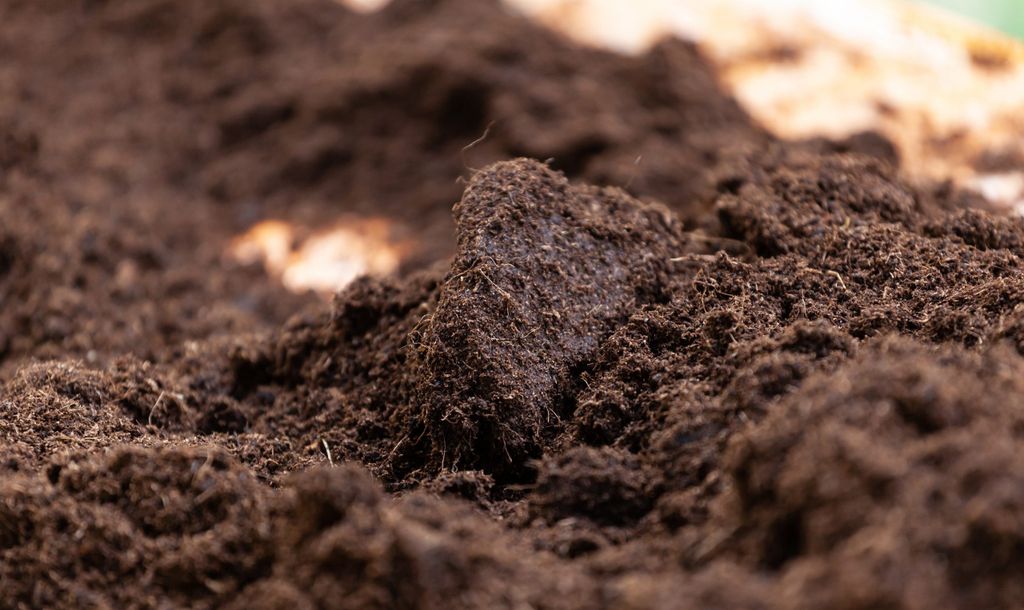
Farmers were also advised on traditional methods of testing compaction.
By digging a hole in the soil, farmers can look for the following signs of compaction; roots suddenly growing sideways instead of down; soil aggregates that are hard to break with your hand; and red mottles (spots) appearing, indicating an iron pan presence.
On-site pH tests were also shown to be rapid and cost effective.
They allow farmers identify patches in fields that are above or below the ideal range for crop production (typically 6.2-7) without the delay associated with waiting on lab results.
Biochar trials
Biochar is a product with enormous potential value for farmers, according to Maurice Deasy, CEO of the bio-economy firm Climaticus, who also spoke at the event.
Farmers who attended the event will have seen how biochar is combined with slurry to create a more sustainable nutrient source. These trials have been commissioned by Irish Distillers Ltd.
According to Deasy, biochar is what remains once timber has been 'burned' to just before the ash phase, so is a carbon-rich product.
This acts as carbon sequestration as the carbon in biochar is stored for over a minimum of 100 years and potentially further.
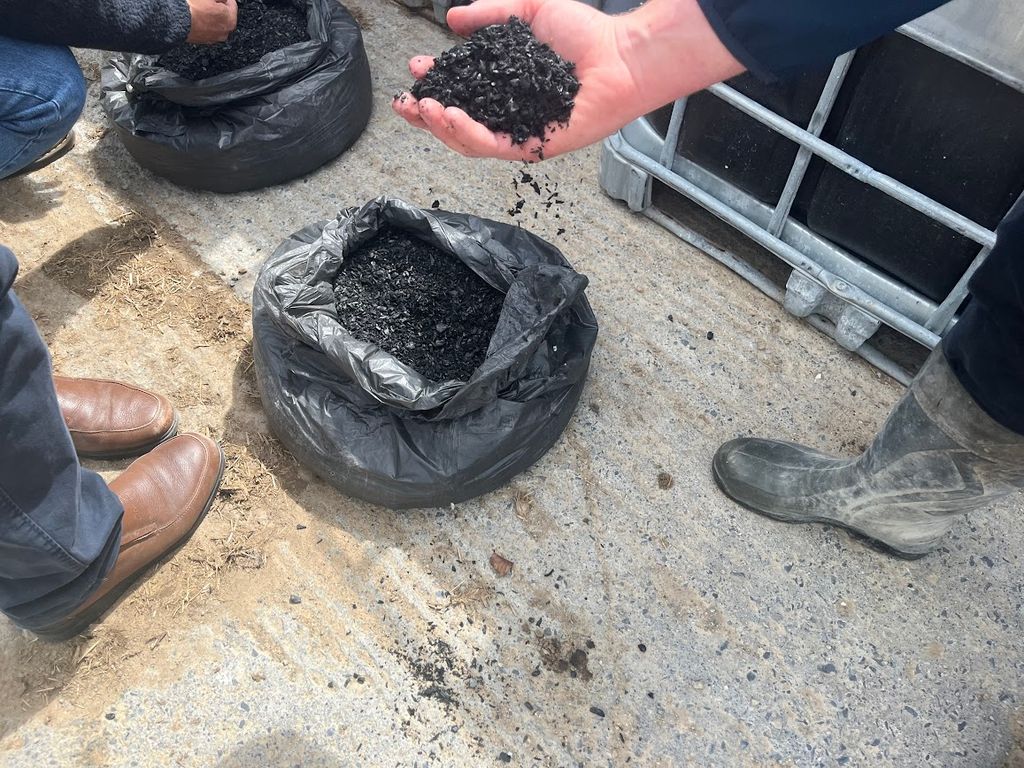
Initial trials suggest that biochar's inclusion in slurry can reduce ammonia emissions as well as achieve a minor reduction in methane emissions of approximately 1-2% due to its porous structure's ability to absorb ammonia molecules.
The performance of biochar at different rates of inclusion is also being monitored this year, with rates set at 5% and 10% with slurry and 10% with digestate.
The biochar trial consists of spreading the various mixtures on spring barley crop planted on April 13.
There are five treatments, as follows:
- Control treatment;
- Slurry only (7L/plot);
- Slurry plus 5% biochar(3L);
- Slurry plus digestate (2L);
- Slurry (3.5L) plus digestate (2L) plus biochar (1.5kg).
According to the researchers, each treatment was repeated three times to improve the accuracy of results.
Crop analysis
A kit that allows farmers to get crop analysis in less than 15 seconds was also demonstrated on the day.
According to Rialto Labs, makers of the Quicksafe scanner, the advantage of this technology is its portability, allowing farmers to get a range of results (some listed in the table below) for different crops without waiting on lab reports.
| Flours | Edible oils | Distilling grains |
|---|---|---|
| Moisture | palmitic % | moisture % |
| Water absorption | oleic % | dry matter % |
| Starch damage | linoleic % | CP % |
| Protein | linolenic % | fat % |
| Dough resistance | stearic % | NDF % |
| Minolta A, L, B | UCP % |
For non-homogenous products such as grass silage, a rotator is available. This significantly increases the surface area of the sample, ensuring increased accuracy.
While cost is the main barrier for most farmers accessing this technology, those in attendance were advised that, by cost-sharing through cooperatives or farmer groups, they can make this technology more widely available.
The new innovations presented at the Golden Vale open day are designed to give farmers peace of mind and recognise that, in order to be sustainable, they must be informed and able to make timely decisions.