Sterile insects - keeping the screwworm fly out of Europe?

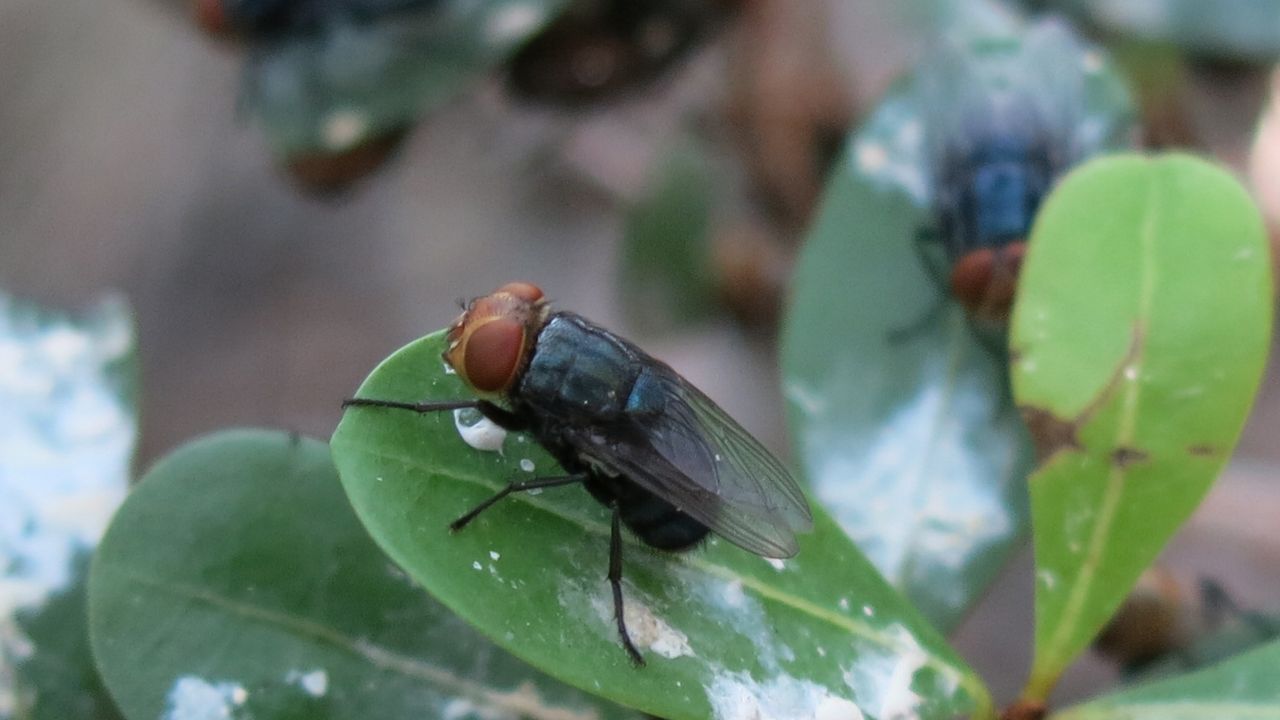
Some agricultural bodies are betting big on the sterile insect technique (SIT) to tackle pests, especially in the fight against screwworm flies.
For instance, on Tuesday (July 7) the US Department of Agriculture (USDA) highlighted on social media earlier that it has released 300 million sterile New World screwworm (NWS) flies across South Texas since February.
The department said it launched the sterile insects “by both air and ground to fight this pest”.
It added: “Using the Sterile Insect Technique (SIT), along with animal control and surveillance, we're tackling NWS head-on.”
The USDA described NWS as a “serious pest” that effects livestock, pets, wildlife, and, less commonly, people and birds.
A breed of blowfly, the NWS is a parasitic fly that lays eggs in and on open wounds and mucous membranes of warm-blooded animals.
According to the US Food and Drug Administration: “NWS larvae (maggots) burrow into the flesh of these animals and eat healthy living tissue. This infestation with larvae is called myiasis.
"NWS can infest livestock, pets, wildlife, occasionally birds, and in rare cases, people.
"The damage caused by NWS in animals can be serious and is often deadly to the animal.”
USDA had previously eradicated screwworm from the United States using a combination of surveillance, animal movement controls, sterile insect releases, and public outreach.
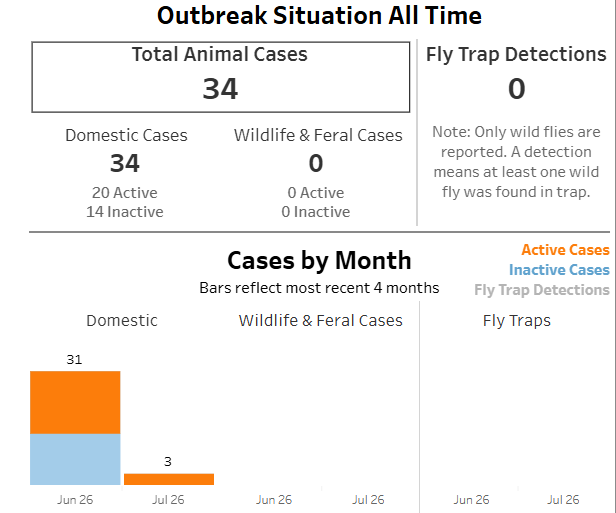
However, new cases have emerged in Texas on June 23.
Sterile insects - advantages
Sterile insects as a method to eradicate pests was once the stuff of science fiction (literally so – it was a plot point in Jurassic Park III).
An advantage of SIT is that it does not involve insecticide or other techniques that directly kill the insects. Instead, it cuts off the breeding.
According to the USDA, because only NWS larvae - not the adult flies - cause harm to animals, and sterile flies do not produce larvae, this approach "poses no risk to wildlife, livestock, or people".
“Female NWS flies only mate once in their lifetime. When they mate with a sterile male, they lay unfertilised eggs that don’t hatch.
“By releasing sterile flies just outside affected areas, we help ensure flies moving into new areas will only encounter sterile mates and cannot reproduce.
“When combined with surveillance, movement restrictions, and education and outreach, SIT is a highly effective tool for controlling and eradicating NWS," the USDA said.
SIT and Ireland
SIT tends to be used for tropical insects and at a large scale. The method has also been used in the fight against mosquitos.
So, benefits to Irish farmers are indirect: wiping out an invasive pest at source (in another country, for instance) benefits farmers across the globe.
While there are no cases of NWS in Ireland, and most cases are in the ‘New World’, a statement from the European farming group Copa Cogeca on April 1 expressed concern about the insect’s arrival to Europe.
Under the heading ‘why are we worried?’, it said:
- Blowflies can fly up to 300km;
- Maggots can be carried for long distances on cattle;
- Blowflies can infect all warm-blooded animals;
- Blowflies can be transported by cars, trains, planes – and even carried on humans.
Copa Cogeca listed SIT, or specifically “production of millions of sterile blowfly males (radiation)” as a potential method of eradication control.
Pest control in Ireland
While Ireland may benefit indirectly from SIT, more direct pest-control options are available for Irish farmers currently dealing with pests.
For successful fly control, Teagasc has the following recommendations:
- Monitor fly activity using sticky traps, fly reel kits and fly bags before and during warmer months. Keep a record of numbers and locations – this will also help build a history for future reference;
- Identify the fly - Common, Lesser or Horse Fly etc. - to determine treatment;
- Kill larvae (80% of life cycle is spent as larvae) in breeding areas such as manure heaps, slurry pits, straw bedding, etc;
- Kill adult flies using baits, sprays, wettable. Kill migrating flies and those already present;
- Monitor fly activity and repeat the process;
- Alternate between insecticides every few months where possible to prevent the insect using its natural defences to overcome active ingredients and reduces resistance.
Finally, Teagasc shared an evergreen piece of advice: always follow the product labels.