Managing bloat in high clover paddocks

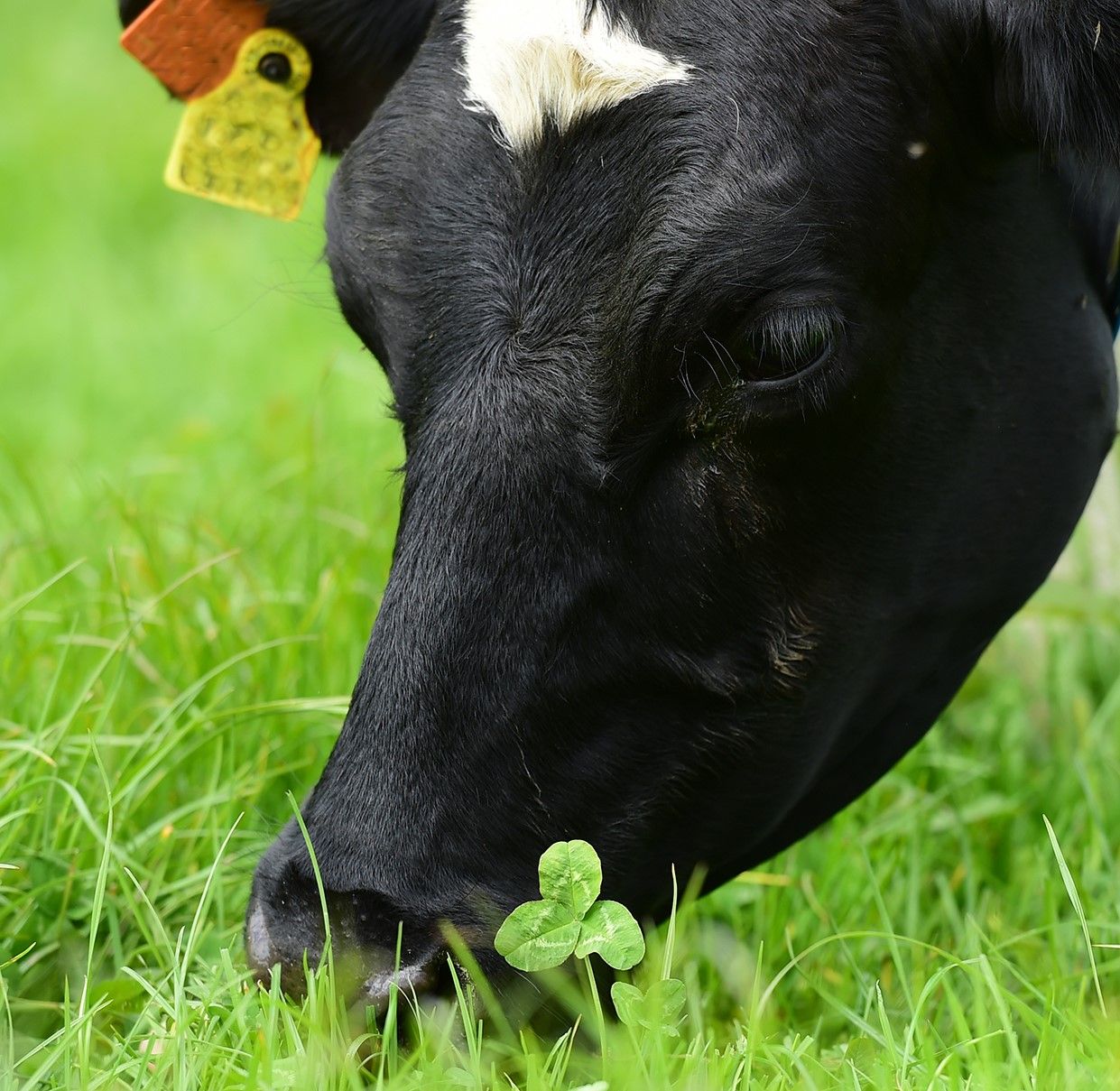
The risk of bloat often significantly increases in the second half of the grazing year as clover content increases in swards.
There is no doubt that clover brings plenty of benefits such as the reduced reliance in chemical nitrogen.
However, there can be just as many drawbacks if it is not managed correctly, such as bloat and persistency issues, especially in years like this where the grazing season was much later starting.
A lot of farmers have got clover management down to a 'T', having no issues with persistency in the spring and now reaping the rewards, but they must be mindful now of the threat it poses at this time of the year.
Bloat
Ruminant animals produce large volumes of gas during digestion, which is either belched out or passes through the gastrointestinal tract.
However, if something interferes with gas escape from the rumen, bloat occurs.
This usually happens when animals are grazing young, lush pasture or when the pasture has high legume content, such as clover.
Swards with a high clover content of over 40% will pose a serious threat to cows grazing it at this time of the year.
Therefore, grazing these pastures need to be done strategically, as preventative measures need to be put in place.

Bloat can be rampant when turning cows from grass-only swards to graze grass clover swards. It can pose a bigger threat when turning hungry animals to graze grass clover swards.
Bloat usually occurs after heavy feeding and is more common in hungry cattle. If left untreated or if you delay your treatment, it can be fatal as the gas can quickly go to the head.
When the previous grazing saw the post-grazing height go down to less than 4cm, this can pose a threat for the following grazing.
After a heavy fall of rain, during wet weather or even after a heavy dew, the dry matter (DM) percentage will be lowered and consequently pose a threat of bloat.
Therefore farms should be cautious with clover paddocks if we get heavy thunder showers following the hot weather.
Very lush grass, or even sending the cows into a paddock with a low pre-grazing herbage mass or sending them into a bit of after grass, can see the onset of bloat in cattle.
Prevention
Make sure all the cows enter the paddock as a full herd, which may require holding some in the yard.
Also ensure that all the water troughs in the fields and along the roadways or in the collecting yard have a sufficient amount of bloat oil in them.
If possible, introducing a bit of roughage and fibre, or around 2-3kg DM/day of silage, around milking time can help.
Do not underfeed the cows, as they will eat down to a low post-grazing yield height. Using a strip wire can be beneficial for putting the cows into 2-3 hour breaks.
Try and avoid moving cows from grass paddocks to high clover content paddocks if possible and keep your post-grazing sward height at 4-4.5cm.
When cows are grazing high risk paddocks, monitor them closely during the high-risk period.
Farmers need to be consistent in reemploying the strip wire when allocating grass, using bloat oil, including fibre in the diet, and managing the grazing group to avoid gorging.