Will EU livestock and protein strategies deliver for farmers?

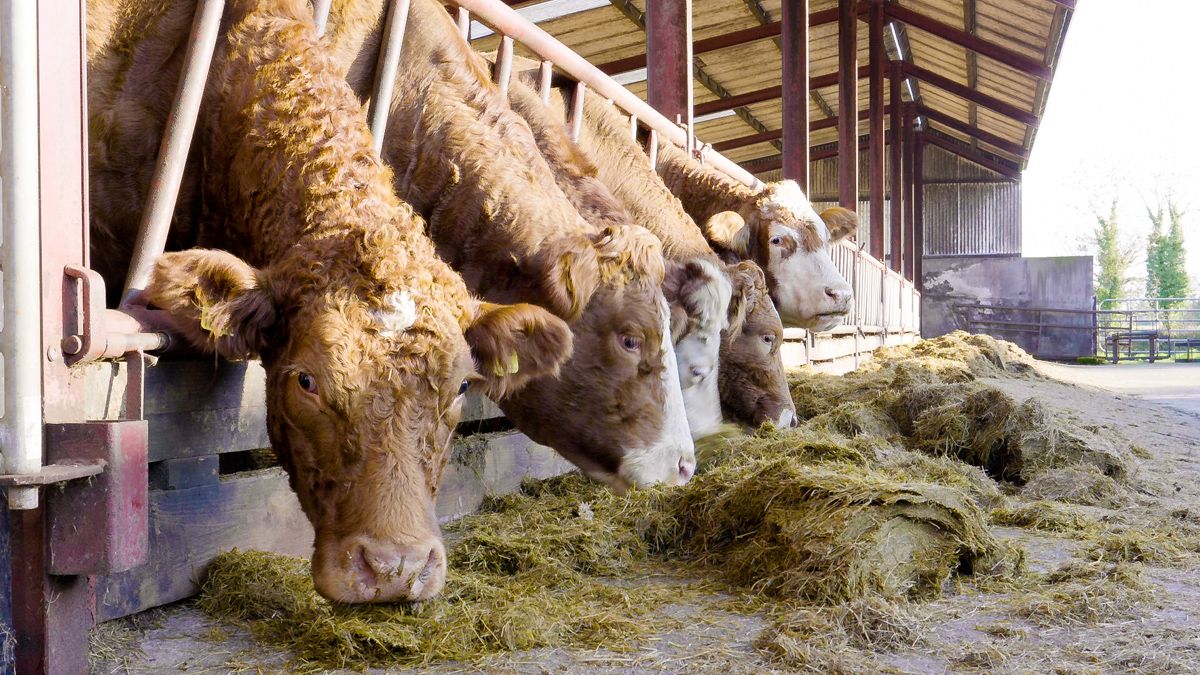
Farm organisations have said the real success of the new EU livestock and protein strategies will be determined by their delivery for farmers.
The European Commission yesterday (Tuesday, June 7) unveiled its first-ever Livestock Strategy.
A new Protein Action Plan, which aims to boost production, support innovation and create new opportunities across the food chain, was also launched in Strasbourg.
Livestock
Copa Cogeca has welcomed the "renewed political recognition" of the strategic role of European livestock and protein production.
However, the umbrella organisation representing European farmers and agri-cooperatives, warned that too many elements of the strategies are "little more than statements of intent" or lack "operational and technical clarity".
Copa Cogeca acknowledged that the strategies "mark an important shift in tone".
"After years in which livestock was too often portrayed as part of the problem, the commission now recognises its contribution to food security, rural vitality, the circular economy, and the production of high-quality proteins and renewable energy.
"The Commission also acknowledges the risks associated with the decapitalisation of the European livestock herd, the importance of nutrient circularity, the valorisation of manure and animal by-products, and the need to address permitting procedures and the Nitrates Directive," the organisation said.
Copa Cogeca added that the Protein Strategy "rightly identifies the need to strengthen the European Union's strategic autonomy by reducing its dependence on imported protein feed, based on targets that appear realistic and achievable by 2035".
Copa Cogeca
The organisation warned that the commission is still "heavily focused on assessments, monitoring and benchmarking".
"Even a careful reading of the annexes makes it difficult to identify concrete actions or measures that would deliver tangible relief for farmers on the ground.
"For instance, the Livestock Strategy includes references to manure valorisation and the risk of livestock farm decapitalisation, but does not propose clear actions to address these challenges.
"The Protein Plan recognises the role of biofuels and carbon farming but fails to clarify whether flexibility will be given for the 7% cap on crop-based biofuels," it said.
The organisation said the strategy lacks a long-term programme to guide innovation in protein crops.
The Livestock Strategy provides precise animal welfare targets in relation to housing in the poultry and pig sectors.
"While the commission acknowledges the substantial investment costs associated with these transitions, it fails to provide a credible roadmap for financing them," Copa Cogeca said.
Budget
Copa Cogeca said the ambitions in both strategies "can only be realised if it is accompanied by concrete legislative and financial measures".
The organisation said the success of the plans will ultimately depend on how they are translated into concrete action and how they connect with the ongoing discussions on the Common Agricultural Policy (CAP) and the next Multi-annual Financial Framework (MFF).
"We are now almost halfway through the mandate of this European Commission.
"Given the time required for deliberation within the EU institutions, it is high time to move from the stage of intentions to that of action, if we are to see the first common-sense measures delivered before the end of this term," it added.
Young farmers
CEJA, the European council of young farmers, said the EU livestock strategy will be tested against the how it works on the ground.
"This strategy sends a positive signal that the commission sees livestock farming as part of Europe's strategic future.
"However, a long-term vision for the livestock sector must answer the question of who will be farming in 2040, and under which conditions," Katharina Schobersberger, CEJA vice-president said.
"As Europe’s next generation in farming, we have long argued that a strategy on the future of the livestock sector can only succeed if it comes with concrete actions for those who enter the sector, answering to the complex challenges they face in their everyday work," the Austrian pig producer added.
The young farmers' organisation welcomed the "toolbox" proposed by the commission, which suggests actions to improve the sector’s performance in terms of resilience, competitiveness and sustainability, while recognising the excellence of Europe’s livestock products.
CEJA said it will continue to "actively engage" with the strategy's implementation.
"The European Commission and the EU member states now carry the responsibility to turn today's ambition into the concrete instruments young farmers need on the ground.
"Concrete delivery of EU policy frameworks is necessary to restore trust in Europe’s ambitions and grant the livestock sector the long-term predictability it deserves," it added.