Agriculture GHG emissions down 0.2% in 2025 - EPA

Agriculture's greenhouse gas (GHG) emissions decreased by 0.2% in 2025 but it remained the largest contributor to overall emissions in Ireland according to a new report.
The data was contained in the Environmental Protection Agency (EPA's) Ireland’s Provisional Greenhouse Gas Emissions report for 2025, published today (Wednesday, July 8).
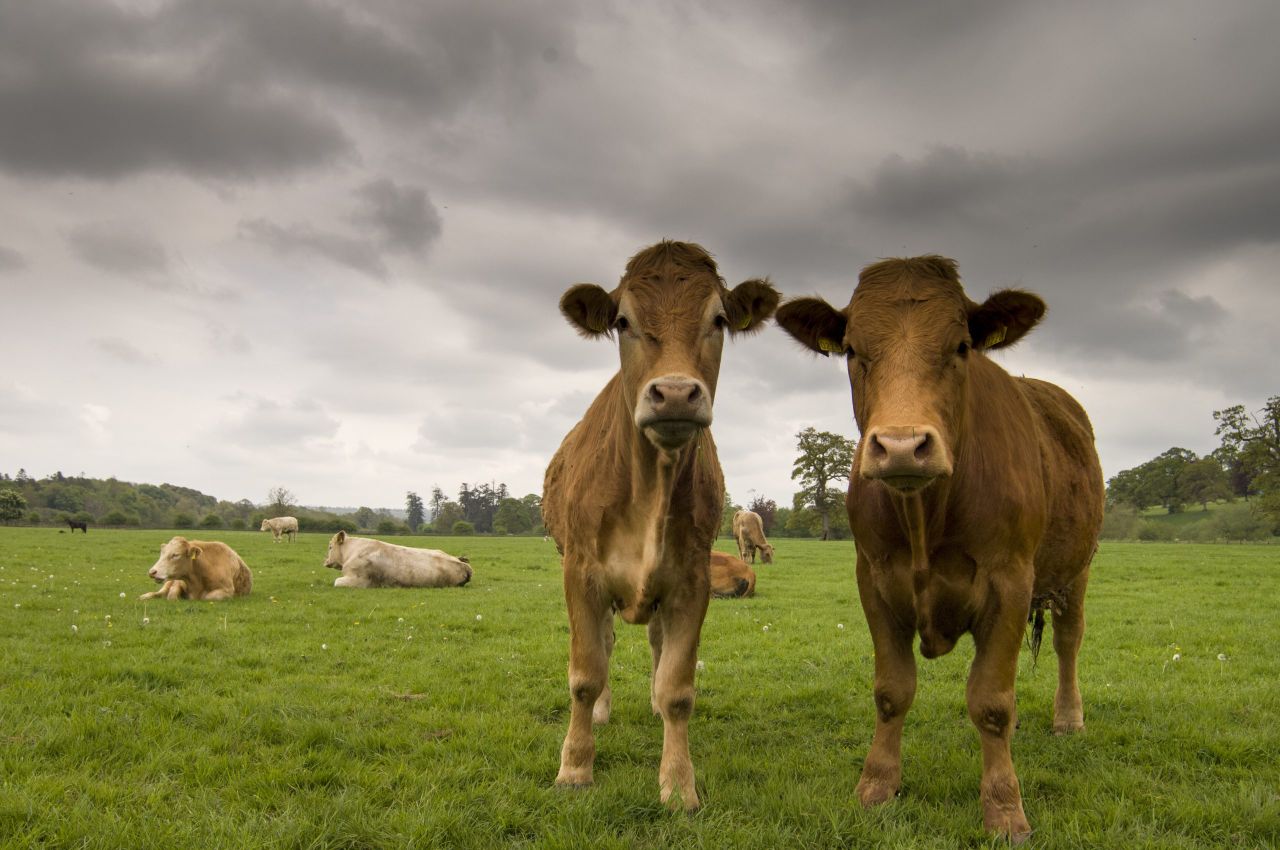
According to the EPA, the agriculture sector's drop in emissions was primarily due to a 3.3% reduction in cattle numbers - offset by a 12.7% increase in nitrogen fertiliser use and a 4.8% increase in milk production.
Overall, total national greenhouse gas emissions in 2025 are estimated to be 52.65 million
Total national greenhouse gas emissions in 2025 (excluding LULUCF) are estimated to be 52.65 million tonnes of carbon dioxide equivalent (Mt CO2eq).
This is down 2.3% year-on-year, and follows a 1.9% fall in 2024.
Emissions in 2025 are 5.5% lower than the historical 1990 baseline, marking the third successive year these emissions have been under this key international baseline, the report said.
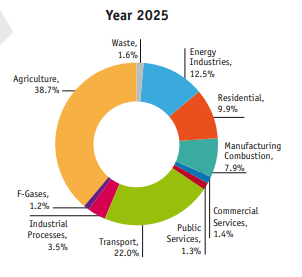
The report highlighted that agriculture was the largest contributor to the overall emissions at 38.7%.
The transport and energy industries are the second and third largest contributors at 22.0% and 12.5%, respectively.
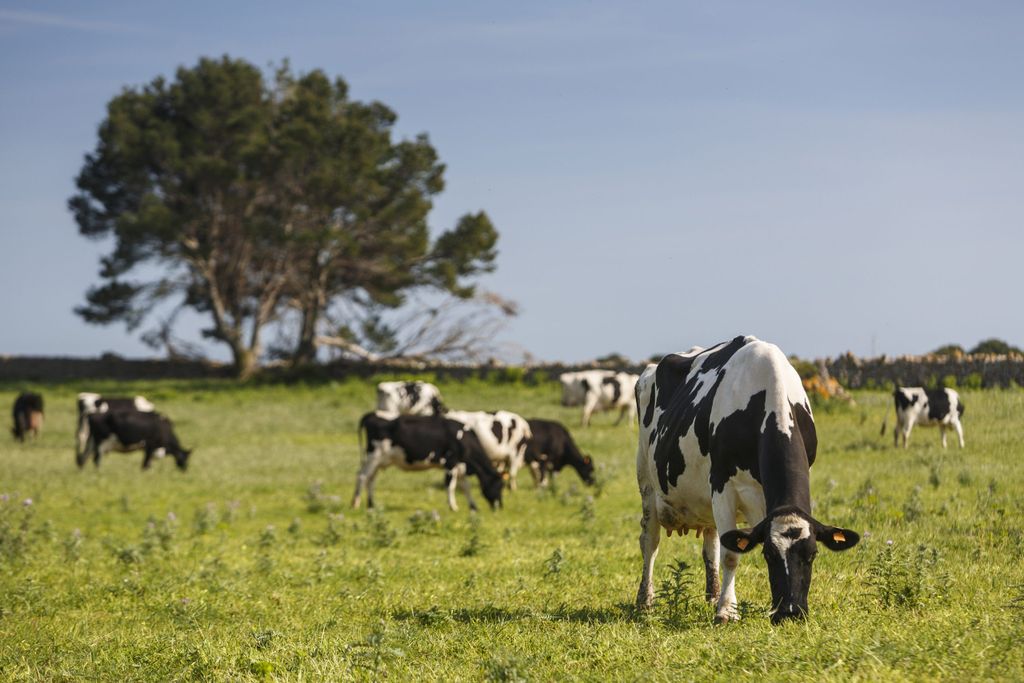
Agriculture emissions' decrease of 0.2% year-on-year amounts to 0.04 Mt CO2eq.
The agency found that, alongside cattle, livestock numbers in general decreased, apart from the total poultry population, which increased by 6.3%.
The number of sheep decreased by 7.9%, pigs by 4.0%, non-dairy cattle by 4.0% and dairy cows decreased by 0.9%.
However milk output per cow increased by 5.6% and overall milk production increased by 4.8%.
Methane (CH4) emissions originate from enteric fermentation, manure management and fuel combustion, the report said.
In 2025, CH4 emissions contribute 70.1% to the agriculture sector's total and decreased by 1.7% since 2024.
Nitrous oxide (N2O) emissions originate from manure management, agricultural soils and fuel combustion.
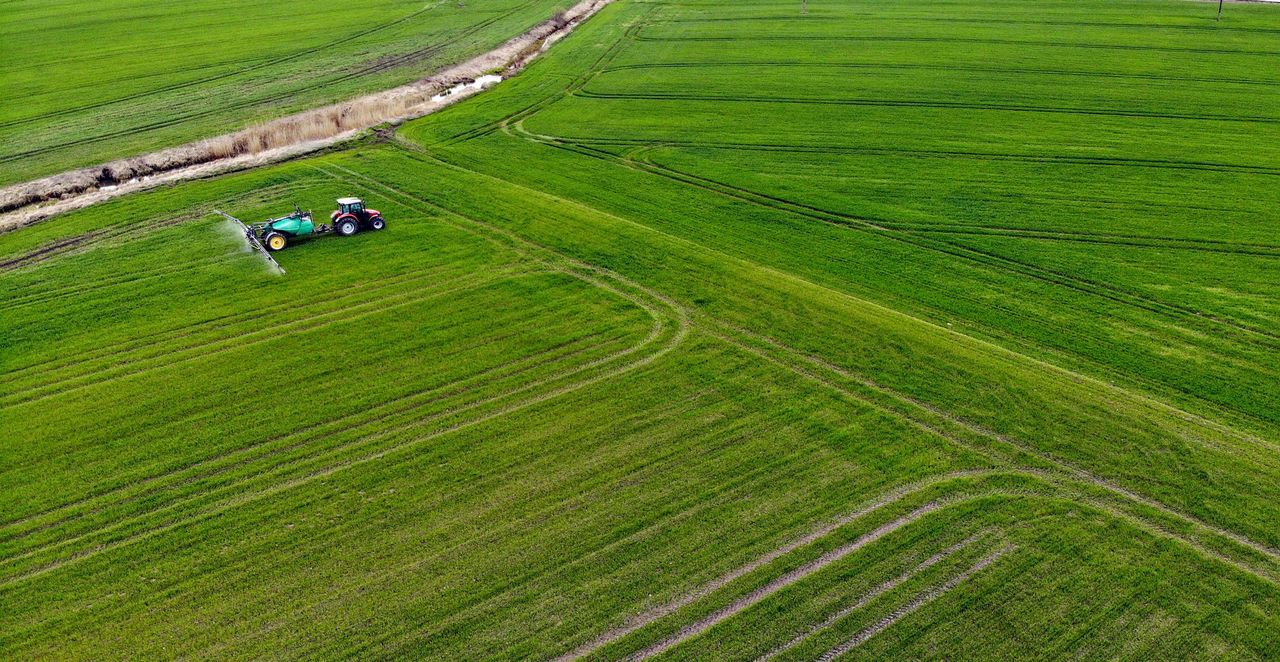
In 2025, N2O emissions contribute 23.2% to the agriculture sector's total and increased 5.0% since 2024, reflecting the 12.7% increase in fertiliser nitrogen use to 349.9 kilotonnes in 2025.
Carbon dioxide (CO2) emissions originate from liming, urea application and fuel combustion. In 2025, CO2 emissions contribute 6.6% to the agriculture sector's total and have decreased by 0.8% since 2024.
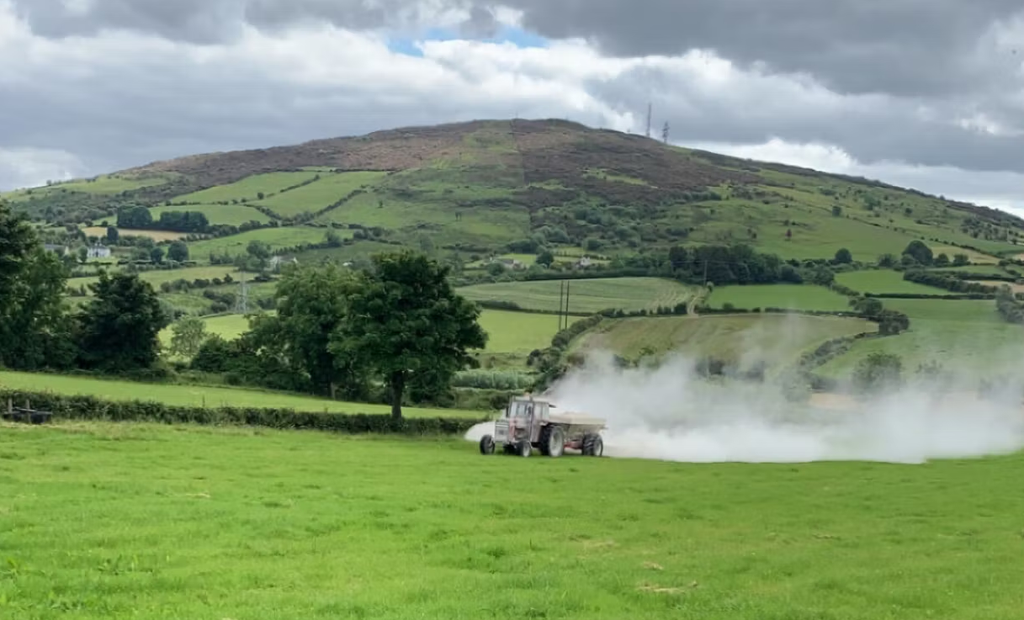
In 2025, the application of lime to soils decreased by 9.8% compared to 2024, using 0.93 million tonnes of lime.
The EPA noted that as a mitigation measure, elevated levels of lime application improve soil fertility, leading to sustained reductions in fertiliser nitrogen usage and a net reduction in greenhouse gas emissions.
2025 followed 2024 with a second annual decrease in dairy cow numbers (after 13 consecutive years of increases up to 2023).
The EPA said there was a "notable" increase in milk output per cow of 5.6% in 2025 and an overall increase in milk production of 4.8%, despite the 0.9% decrease in dairy cow population.
Total fossil fuel consumption in agriculture/forestry/fishing activities in 2025 increased by 8.6%.
Overall figures
The overall figures show a reduction of 2.2% or 1.2 Mt CO2eq compared to 2024.
However, the EPA said that greenhouse gas emissions now need to decrease by over 10% each year to 2030 for Ireland to meet the country’s national climate target of a 51% reduction on 2018 levels.
Other sectors
Looking beyond agriculture, emissions from energy industries decreased for the fourth consecutive year by 7.1% in 2025, to an all-time low of 6.6 Mt CO2eq.
Looking at transport, emissions decreased for the second year in a row by 1.5% or 0.17 Mt CO2eq following a 1.2% decrease in 2024.
From buildings (residential, commercial and public), emissions decreased by 4.7% due to a warmer winter and decreased use of fossil fuels.
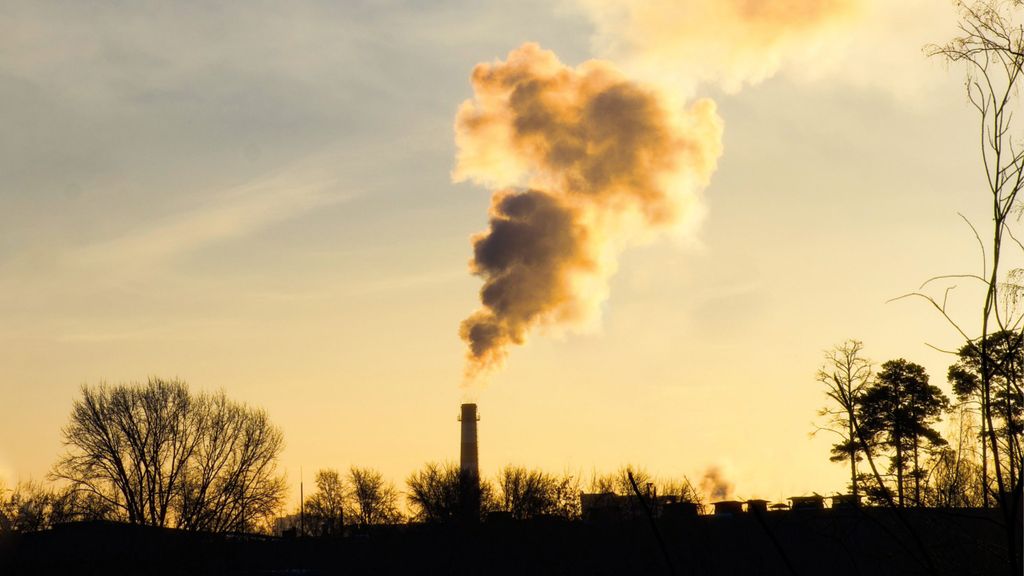
Emissions within the residential sector have fallen to their lowest level in over three decades. Currently standing at 2.7 Mt CO2eq per household, this figure represents a substantial decline from the 1990 baseline of 7.5 Mt CO2eq.
Manufacturing combustion and industrial processes emissions decreased by 3.3% to 6.0 Mt CO2eq in 2025 due to marked reductions in coal (down 25.5%), oil (down 6.2%) and gas (down 2.7%) usage.
Carbon budget
As defined by the Irish government, a carbon budget represents the total amount of emissions, measured in tonnes of CO2 equivalent, that may be emitted by a country or a region during a specific time period.
Provisionally, Ireland is under its first carbon budget by 1.1 Mt CO2eq.
The EPA assessment also reports on sectoral ceiling performance for 2021-2025, with several sectors such as energy industries and buildings meeting or coming within their ceiling.
Two sectors, transport and industry, exceeded their ceilings by 8.1% and 9.1% respectively.
Sectoral emissions ceilings refer to the total amount of permitted greenhouse gas emissions that each sector of the economy is permitted to produce during a specific time period.
According to the report, a direct comparison of the agriculture sector against its absolute sectoral emission ceiling is no longer possible given recent scientific updates to baseline historical agriculture emissions.