The EU Protein Action Plan: What's in it for farmers?

Europe needs more home-grown protein—and farmers are key to making that happen according to the European Commission.
A new Protein Action Plan - which aims to boost production, support innovation and create new opportunities across the food chain - was unveiled today (Tuesday, July 7) in Strasbourg.
In 2025, only 25% of the oilseeds and protein crops used to feed animals in the EU were produced inside the EU.
The plan aims to increase the share to 35% by 2035.
Protein crops - legumes, soya and fodder legumes - play an essential role in Europe's agriculture and food security according to the European Commission.
"They provide high-quality protein for human consumption and contribute to the feeding of livestock, as 64% of the cereals consumed in the EU is used to feed the EU livestock," it outlined today.
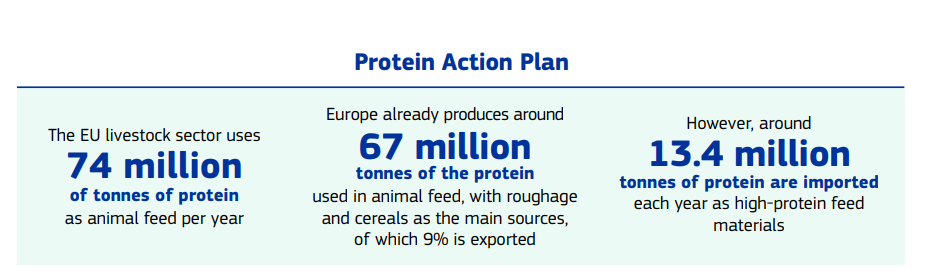
However the EU currently imports 25% of the protein used to feed EU livestock and this is mainly imported from six countries - Brazil, the United States, Argentina, China, India, and Paraguay.
Soya bean and soya meal protein dominate EU imports of protein - at around 13.4 million tonnes of crude protein in the period 2024 to 2025.
The Irish Grain Growers’ Group (IGGG) has long argued that there is "tremendous scope" in Ireland to replace imported soya with native oilseed rape, peas and beans.
According to the IGGG chair, James Kelly: “In so doing, the livestock sector would be directly supporting the Irish tillage sector while, at the same time, lowering its carbon footprint".
Protein Action Plan
This is an approach the European Commission would appear to favour as it set out its plan today for a "more autonomous and sustainable protein system in the EU".
The commission's new Protein Action Plan will support:
- The production of protein-rich crops in Europe;
- The diversification of feed imports through strategic partnerships;
- The reinforcement of European plant-protein value chains from farm to processing;
- The creation of new opportunities for EU produced plant proteins in both feed and food markets.
The commission said today that the new Action Plan "combines concrete measures to strengthen EU production of protein and oilseed crops while stimulating demand to ensure an outlet for the EU production, both for feed and for food".
But in order to make this happen the commission said action will now be required "at multiple levels of governance and across stakeholders".
CAP
According to the commission it plans to strengthen EU production by "incentivising protein crops" through the Common Agriculture Policy (CAP).
It said today that it has proposed to "enable a distinct protein crop sector under the CAP post-2027".
"We will support investment in processing, storage and innovation to make proteins produced in Europe more accessible, more attractive and more competitive for consumers.
"The Action Plan also promotes a bioeconomy approach, helping to make better use of agricultural resources and unlock the full potential of European protein sources" the commission stated.