Use of EIDs in NI sheep industry 'opened many new opportunities' - flock owner

The mandatory use of electronic identification (EID) within Northern Ireland’s cattle sector could soon become a reality.
This follows a commitment made by the Department of Agriculture, Environment and Rural Affairs (DAERA) to host a public consultation on the mandatory use of electronic identification (EID) within the cattle sector.
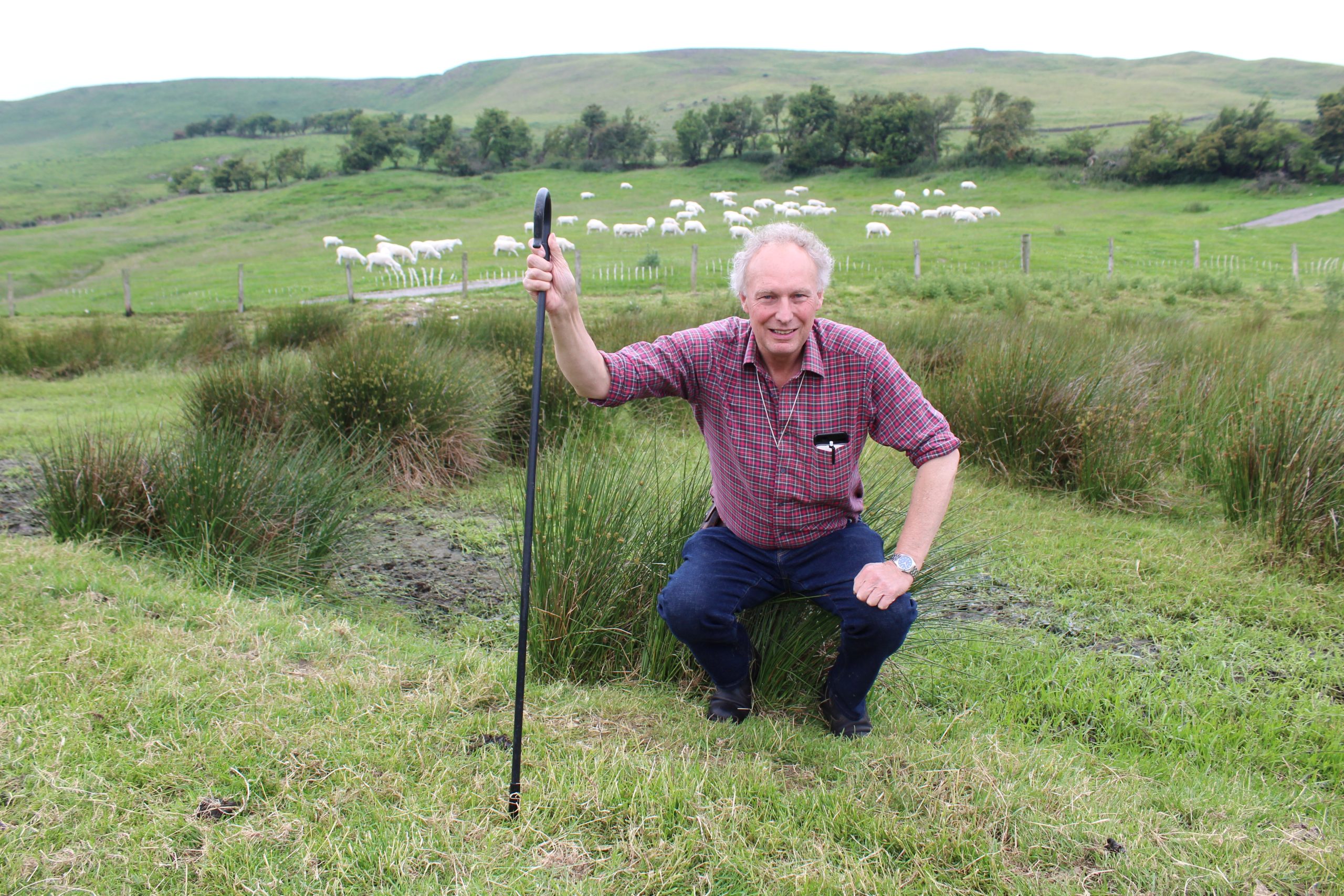
A leading EasyCare flock owner believes that cattle herd owners can learn a lot from their sheep farming colleagues, where this matter is concerned.
Campbell Tweed farms near the village of Cairncastle in Co. Antrim. His Ballycoose flock comprises 3,000 breeding ewes.
He explained: “EID tagging was introduced in 2009 in order to allow for the continuing cross-border movement of sheep under EU regulations, which had previously been introduced.
“So, at a very fundamental level, the new tags ensured the continuation of a vitally important export outlet for sheep producers in Northern Ireland.”
But the new identification system also brought with it a number of other benefits, which soon became obvious to sheep producers.
EID tagging
“In the first instance, sheep could be identified at the marts much faster and with complete accuracy - electronic tags can be quickly read by electronic readers," Tweed said.
“And this fact alone significantly speeds up the whole process of getting sheep through the sale ring in an orderly fashion.”
The Co. Antrim farmer explained how the combination of EID tags and the use of compatible information-gathering systems on farm has "opened up many new opportunities to quickly capture individual animal information that can be used for the purposes of performance recording".
“This, in turn, provides the most effective way possible of gauging the progress made by all the individual sheep within a flock, with physical assessment for correctness," he said.
“This is the most accurate and unbiased way of securing the information needed to performance-record all sheep.
"Each lamb is born within the Ballycoose herd is EID-tagged within hours of birth.
"We are currently using TGM software to generate the data required by both the Signet and Sheep Ireland performance recording schemes.”
Tweed believes that the cattle sector can also use EID tagging as a means of collating information on individual bovines that can be used to monitor actual animal performance and further refine herd development strategies.
“But this will require the use of the most appropriate software and hardware, an issue that may well generate significant debate within the dairy and beef sectors during the period ahead,” he added.