Sponsored Article
Teagasc/FBD award-winner Don Somers champions environmental progress

Sponsored Article
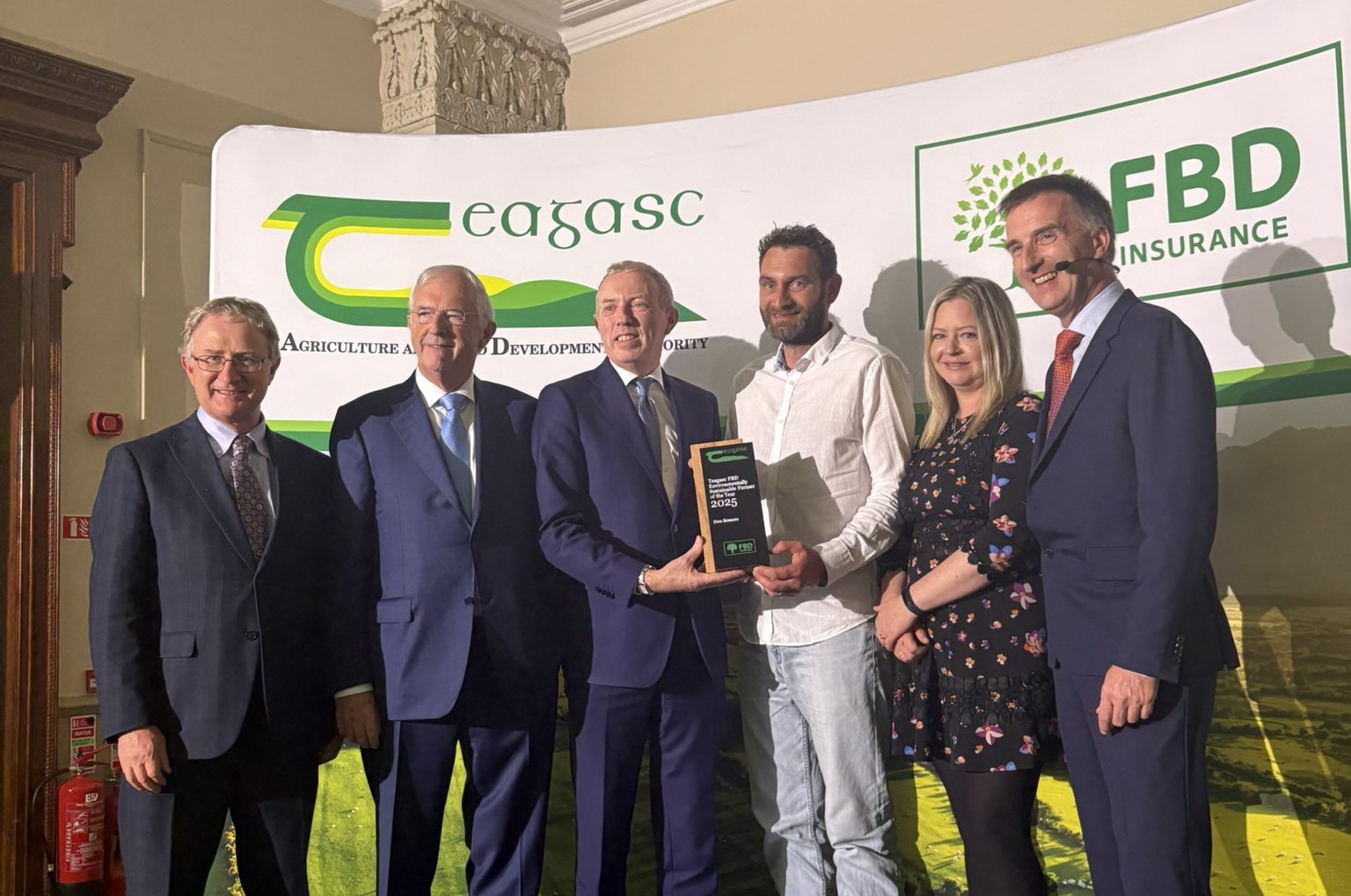
The Teagasc/FBD Environmental Sustainability Awards highlight the progress farmers are making to lighten the load of farming on the environment, while continuing to produce high-quality, nutritious food, in a profitable manner.
Don Somers is tillage farming in Oylegate, Co. Wexford, working alongside his uncle Jim.
Don was named the overall winner of the Teagasc/FBD Environmental Sustainability Award 2025.
At the awards ceremony in October this year, he was also announced as the winner of the 'Improving Water Quality' award.
Don Somers
Don manages around 180ha with a diverse crop rotation including oilseed rape, winter wheat, winter barley, spring barley, spring oats, and some combi-crop of peas and beans.
Since 2018, the farm has used a minimum tillage system, to protect soil structure and biology, and also started chopping and incorporating straw in the last 10 or so years.
The Co. Wexford farmer is passionate that all environmental measures must bring a financial benefit for farmers too.
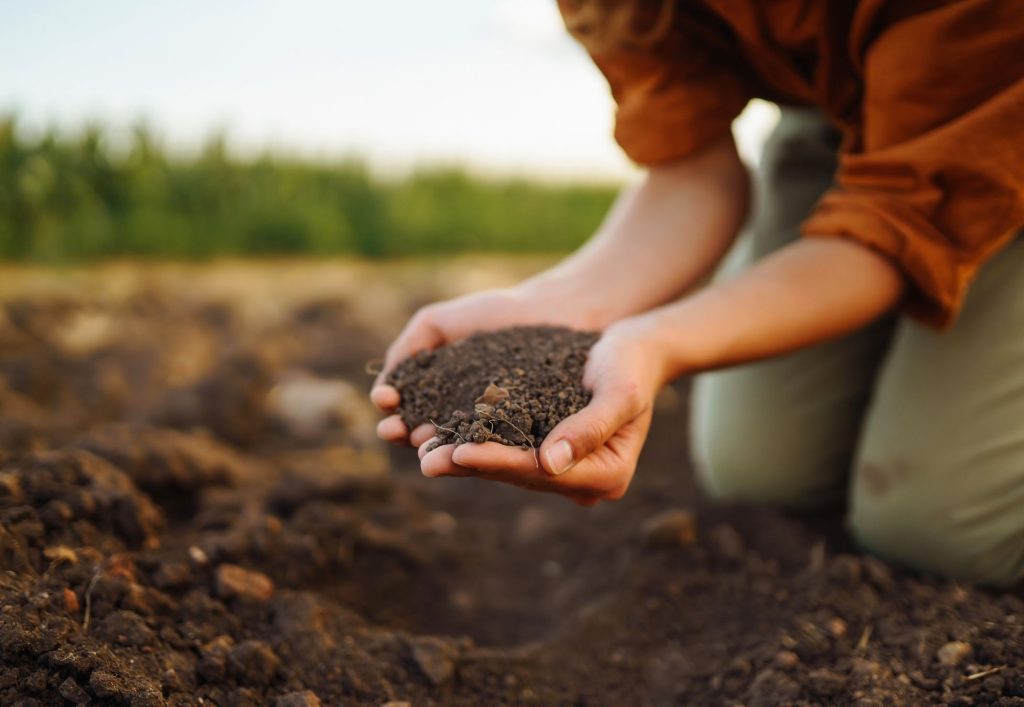
One of his achievements is that he has reduced chemical nitrogen use by 20% through better soil management, careful nutrient planning, optimising the use of organic manure as well as using precision tools like GPS and yield mapping.
One of the measures taken on the farm that has a positive environmental benefit from a water quality point of view, according to Don, is cover cropping, which prevents leaching of nitrogen and allows for soil to hold on to nutrients, among other important things.
"You’re retaining nutrients but you’re also improving the structure of your soil, putting back in organic matter," he said.
"It gives us a chance to bring in different species onto the farm from a biodiversity point of view."
Nutrient management plan
The farm’s nutrient management plan is also a key measure, according to Don, and these plans are "quite detailed" and involve variable rate maps for nutrients.
He has been yield mapping since 2019, and the farm does soil tests based on yield maps, the farmer explained.
He uses the yield maps to see how crops are performing across different parts of the fields, allowing for more targeted soil testing.

The farmer can then vary fertiliser applications and identify any natural limitations in areas that can be treated accordingly as a result.
“We divide up the plot, so the average is around 2.1ha sample size," he said.
"We tailor the nutrients we apply according to the crop's requirement or the lack of yield potential."
Measures
Don makes use of organic manures, which he imports to the farm. This helps to reduce dependence on chemical nitrogen.
He has noted an improvement in soil quality and health as a result, through building soil organic matter.
“With healthier soil we have better organic matter levels, which means the crops can cope with stresses better, and these are measures that have environmental benefits but also have financial benefits.”
He also takes a number of actions to reduce the impact of his farm on the local river, the Slaney.
These include riparian buffer zones being installed, allowing for the protection of water quality along with the enhancement of biodiversity along watercourses.
Doing good for the environment
Don said that “every farmer I know is doing good, and doing their best to be better” for the environment.
He highlighted the importance of the Teagasc/FBD awards in giving farmers the opportunity to speak about the good they are doing and to talk positively about Irish agriculture.
He stressed having “learned so much” from other farmers “who are willing to share their experience”.
He said that where "other farmers have come out and said ‘these are the things I tried, this is where it went wrong, this is where it went right’," it gave him the "confidence to try doing different things on the farm".
Don called on all farmers to share their “experience with other farmers, learn from their experiences and have an open mind to try new things”.
Sponsored Article