Social farming celebrated in Mayo with Irish and Dutch ambassadors
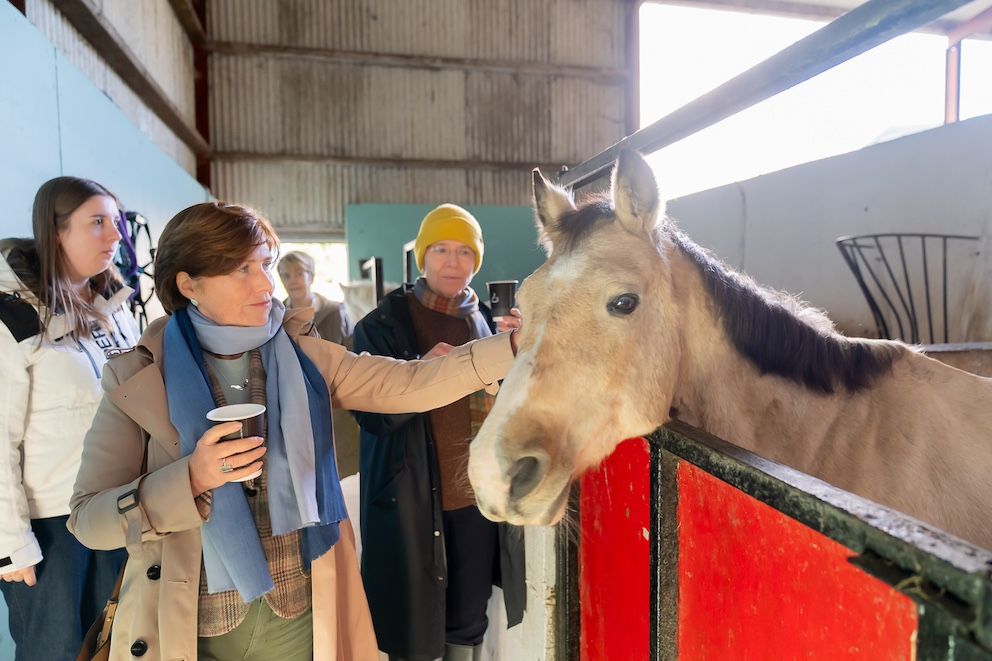
The longstanding relationship between Ireland and the Netherlands, with a focus on their shared commitment to social farming, was celebrated and strengthened last week.
The event in Co. Mayo came as Ireland hosts the presidency of the Council of the European Union.
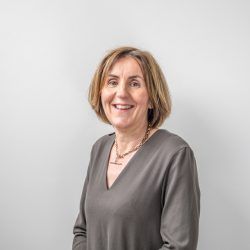
The Irish ambassador to the Netherlands, Ann Derwin, and the Dutch ambassador to Ireland, Maaike Van Koldam were special guests at the celebrations.
A morning seminar in Ballina heard from speakers from the Netherlands and Ireland who reflected on the practice of social farming, the connections between the two countries, and how social farming and care farming works in an EU context.
It was followed by a visit to a local social farm, 'The Shore Farm', where the two ambassadors rounded off three days of engagements in Co. Mayo.
The cooperation between Ireland and the Netherlands on the development of social farming was outlined by Social Farming Ireland project manager at Leitrim Development Company, Brian Smyth, alongside Prof. Jim Kinsella from the School of Agriculture and Food Science at University College Dublin.
Social farming
Ireland has sought knowledge and experience from European development of social farming since 1999, with it being "a slow burn" in its development in this country, according to Helen Doherty, operations manager, Social Farming Ireland.
Insights into the development and evolution of care farming in the Netherlands came from Anouk Hafkamp, care farmer and development and relations co-ordinator at the Federation of Care Farming in the Netherlands.
The audience heard from the local Social Farming Ireland office hosted by South West Mayo Development Company CEO Sabina Trench.
She expressed admiration for the farmers who open their farms to host people and improve their lives, describing them as a "wonderful" resource in rural Ireland.
Ireland and the Netherlands can learn from each other by rethinking how we care for people, connecting them with nature and creating more inclusive communities, the gathering heard.
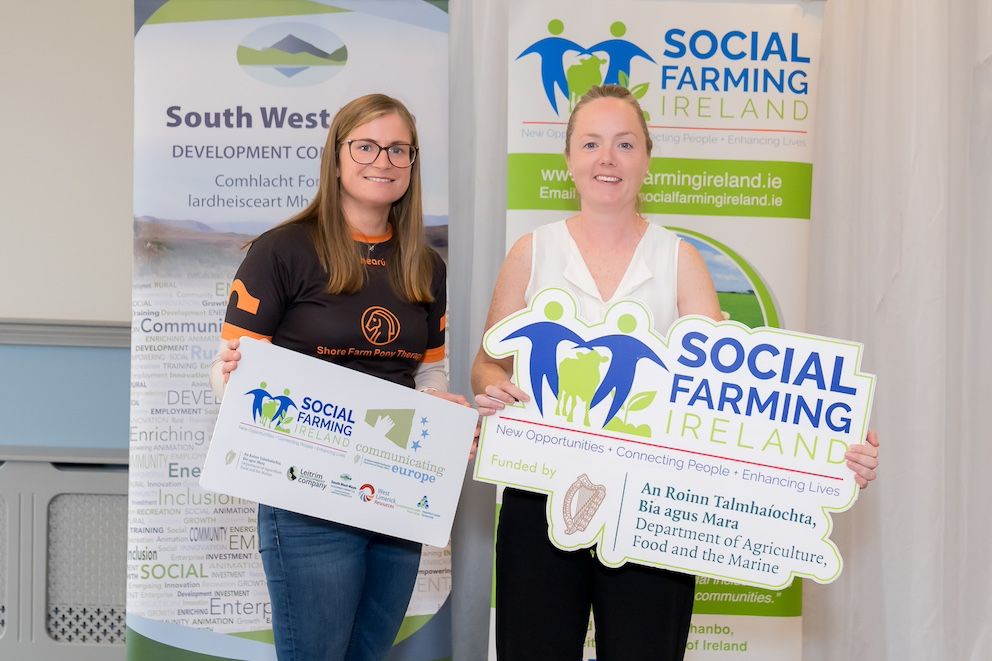
Local social farmers, Emer Quinn and Kelly Doherty, spoke about the ordinary things they offer on their farms for the benefit of the social farming participants.
They discussed how social farming has enhanced their farms from a health and safety perspective as well as being an important diversification opportunity for them.
Above all, making a difference in someone's life is the essence of why they choose to be social farmers.
They said: "We heard about a 14-year-old who visited a farm, initially not wanting to get out of the car without a family member staying on the farm with her, progressing to staying for the full three-and-a half-hours just with the farmer and working with other participants.
"The girl has since returned to full time education after an absence of one-and-a-half years."
Laura Frissen and Louise Mayer, researchers from Maastricht University, shared their insights into green care farms in the Netherlands for people with dementia.
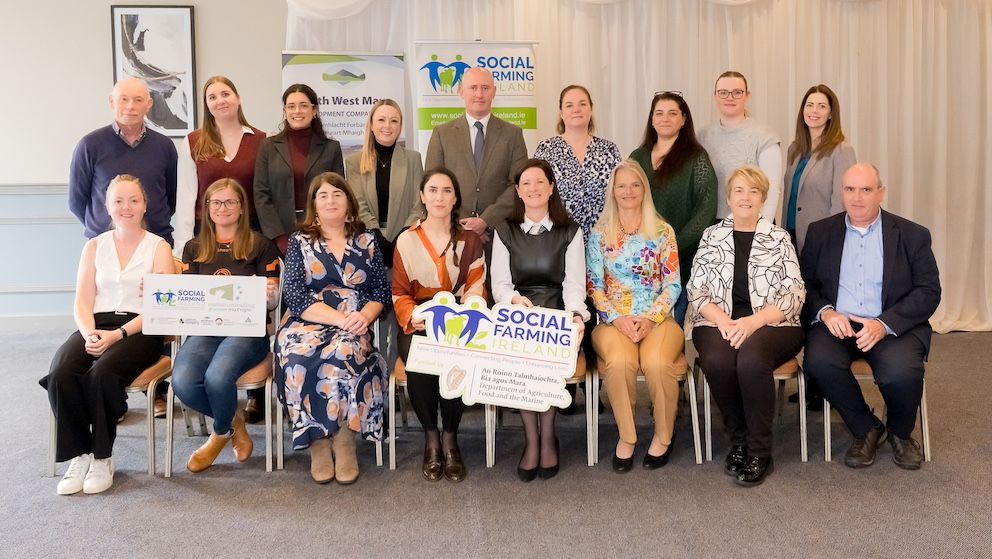
With a shift in government policy significantly away from traditional public funded care homes toward keeping seniors living independently at home for longer, many farms are offering support for those with dementia, the gathering heard.
Doherty said: "With costs remaining similar there is growing evidence that outcomes for people are better if care provided in the more natural setting of a farm, providing a homelike setting with access to ordinary everyday activities.
"There was plenty of food for thought for the future of dementia supports and the role farming can play in this in an Irish context."
Dr. Mary Brennan, research and policy officer at SoFI LDCo highlighted the research and its key role in development to date.
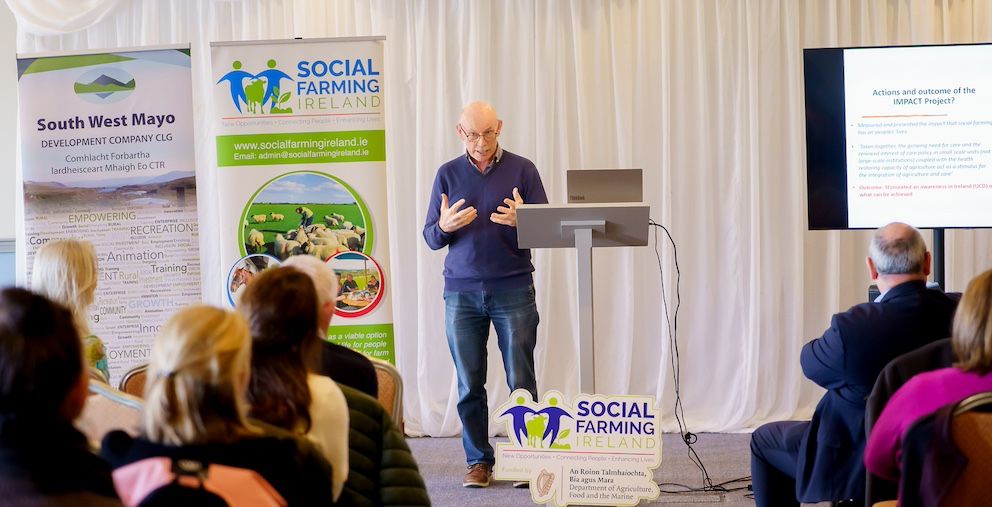
Over two decades, it has generated the evidence needed to support government funding, inform disability and rural development agendas, demonstrate social farming's value as a diversification option for farmers, and position it as an effective model of community-based support.
"As Prof. Kinsella alluded to in his closing comments, collaboration, patience, building evidence and having a common goal all rooted by belief are the key elements to catapult us forward towards social farming being firmly embedded in health and social care services," Doherty said.
Shore Farm
In the afternoon the group travelled to Emer Quinn’s social farm 'The Shore Farm'.
Ambassador Anne Derwin shared her background as a vet and how she first heard about social farming.
Doherty said: "She was one of the first champions of social farming within the Department of Agriculture, Food and the Marine, which resulted in the Social Farming Ireland Network being formed.
"We are grateful to this day for that support."
Ambassador Maaike Van Koldam addressed the profound impact care farming and social farming has on people and wished success and further collaboration to all involved in Ireland and the Netherlands.
The event highlighted the many shared experiences between Ireland and the Netherlands in supporting people through social and care farming, reinforcing the value of continued collaboration, learning and exchange between both countries, Doherty said.
The initiative was funded by the Department of Foreign Affairs' Communicating Europe Initiative (CEI.).