Risk of bluetongue transmission grows with warm weather - DAFM

The Department of Agriculture, Food and the Marine (DAFM) said recent warm temperatures bring an increased risk of bluetongue transmission.
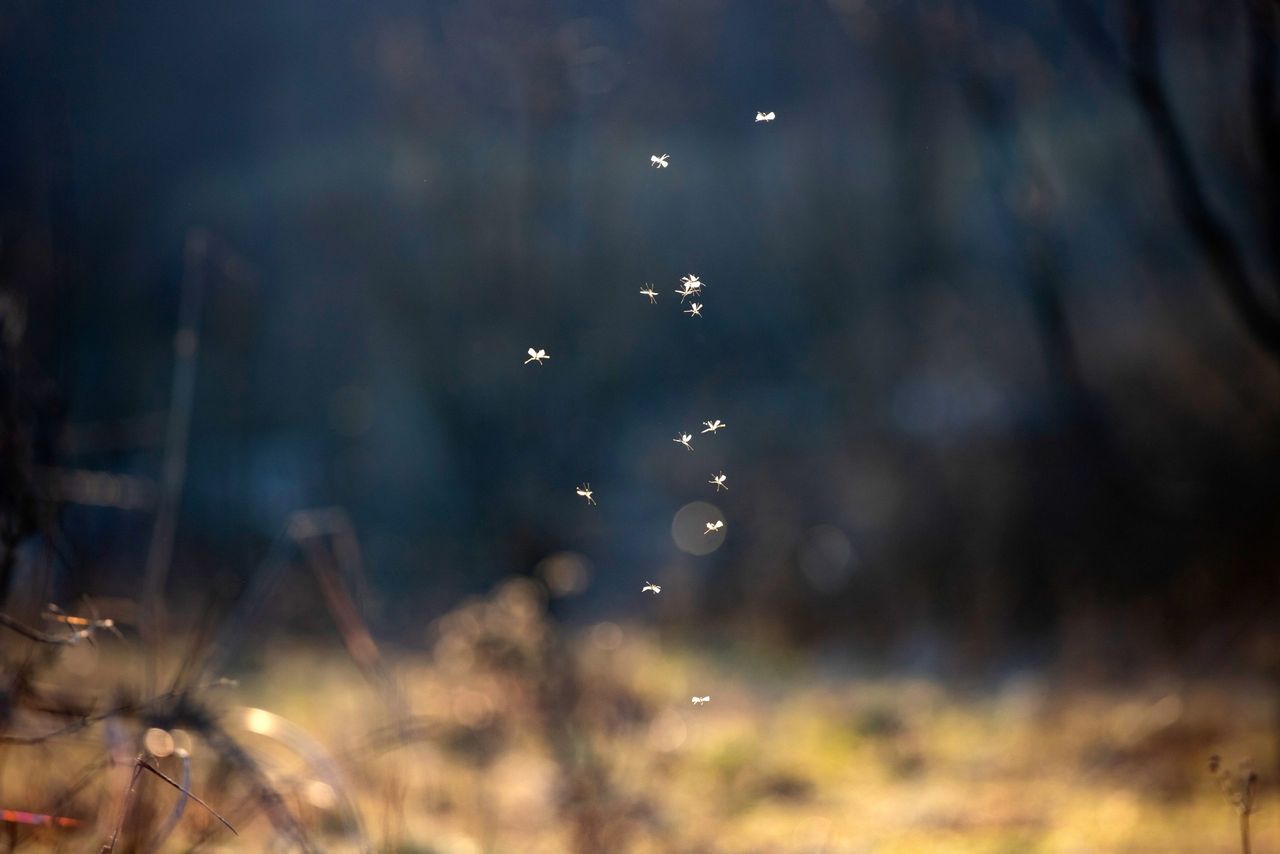
Bluetongue virus (BTV) is a serious disease of cattle, sheep, goats and camelids. It is caused by a virus which is transmitted between animals by biting midges.
Research has shown that a period of warm weather where the average daily temperature is greater than 12°C is required for the replication of the virus within the midge.
The department said the concept of a ‘degree-day’ is a 24-hour period where the temperature is 1° above 12°.
Approximately 50 of these ‘degree-days’ are required for completion of the BTV viral replication phase within the midge host.
DAFM
DAFM said with the recent rise in temperatures it is likely that the cumulative temperature threshold (50 ‘degree-days’) required for viral replication within the midge vectors has been reached in the warmer parts of the country, in particular the south-east.
The department said "this means that any infected midges which survived the winter/spring will have the potential to become infective and transmit virus to a naive ruminant host".
For other parts of the country, especially more northern parts and those at higher altitude, it is unlikely that the cumulative temperature threshold has yet been reached.
However, DAFM said with a forecasted improvement in weather next week, this will "likely change".
In England and southern Wales, weather modelling has shown that the cumulative temperature threshold has been met.
DAFM said this means that it is very likely that there are infective midges now present in sites across England and southern Wales.
"If weather conditions occur which are supportive of midge migration across the Irish sea, similar to those which enabled the incursion of BTV-3 to Ireland last autumn, then there is a possibility of infective midges being blown across again.
"Recent wind modelling from the last fortnight indicates wind conditions have not yet been favourable for such a migration (blowing west to east)," the department added.
Bluetongue
Bluetongue virus serotype-3 (BTV-3) has been confirmed in multiple cattle herds in Ireland to date.
The first case of BTV-3 was confirmed in a suckler herd in Co. Wexford on January 24, 2026.
It was detected through the culled cow routine surveillance in a slaughterhouse.
To date, surveillance has identified BTV-3 in additional herds in counties Wexford, Wicklow, Louth, Laois, Monaghan, Kildare, Cork, and Tipperary.
DAFM said investigations indicate these cases are historic cases from last autumn and not active infections.
The department said as the risk of BTV transmission is now increasing with the warmer weather and possibility of incursion from England/Wales, any farmers who have not yet vaccinated stock should consider vaccination.
Vaccination of breeding animals is especially important given the effects on fertility and the ability to transmit virus in semen during mating.
Farmers and vets are encouraged to submit abortion samples to their local regional veterinary laboratory (RVL).
Any suspect cases of bluetongue should be reported to your local Regional Veterinary Office or via the National Disease Emergency Hotline on 01 492 8026 (outside of normal office hours).