Watch: Understanding your grass covers and what to mow or graze

There is a varying level of understanding of and emphasis placed on grazing the correct grass covers on farms across Ireland.
All farmers have their own ways of managing grass on their farms, and many have their own systems for understanding the level of grass currently available on their farm.
The universal system used for grass measurement in Ireland is 'KgDM/ha' or kilogrammes of dry matter per hectare.
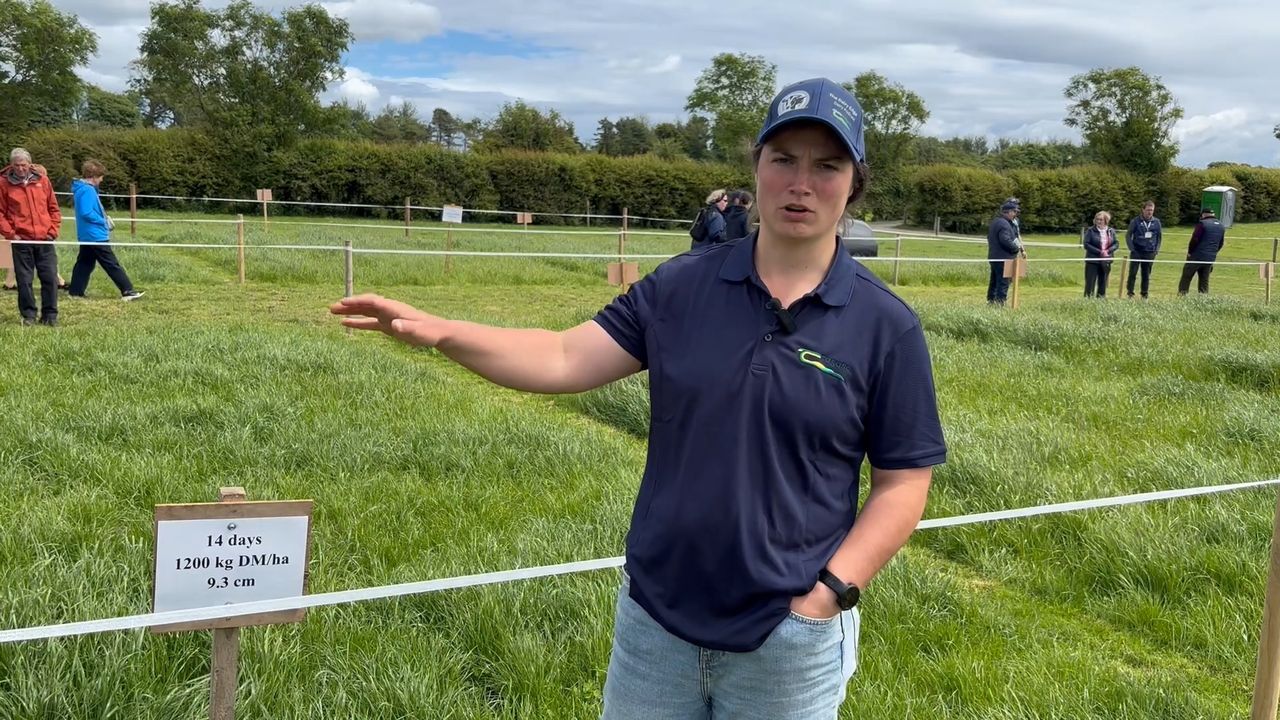
This was the focus of one of the many interesting exhibits at the Teagasc Johnstown Castle Open day on Wednesday, June 10.
Explaining the demonstration, Teagasc's Nikki Kennedy said: "The main thing we're looking at is the right stage of grass to graze, how long it takes to get there and the consequences of going into the right or the wrong grass covers."
The first plot in the demonstration was grazed after 35 days of growth and had a cover of over 3,000kg DM/ha.
Commenting on the graze-out of this heavy grass cover, the Teagasc adviser said that it was grazed out better than expected as it was a fresh reseed.
However, she added: "The recovery is going to be really slow on that.
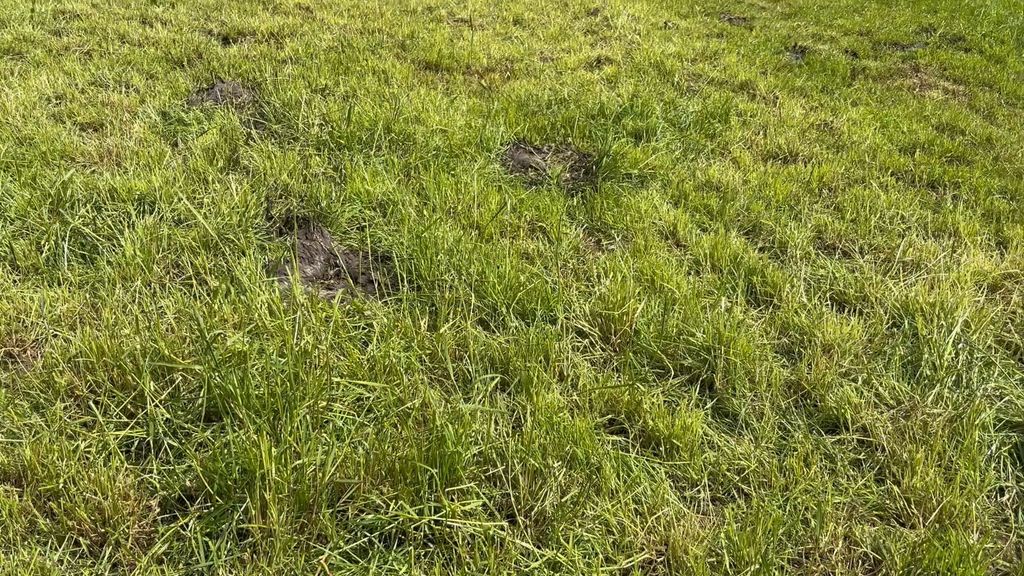
"There's a lot of stem left over and you can even see it's much whiter than the next plot which was grazed with a cover of about 1,200kg DM/ha on it."
Commenting on the plot that was grazed at the grass cover of 1,200kg DM/Ha, Kennedy said: "They've done a really good job grazing it.
"It's already greened up - you can already see it regrowing and it was only grazed on Monday."
Another plot had seven days regrowth on it and the grass cover was approximately 450-500kg DM/ha or an average sward height of 6cm.
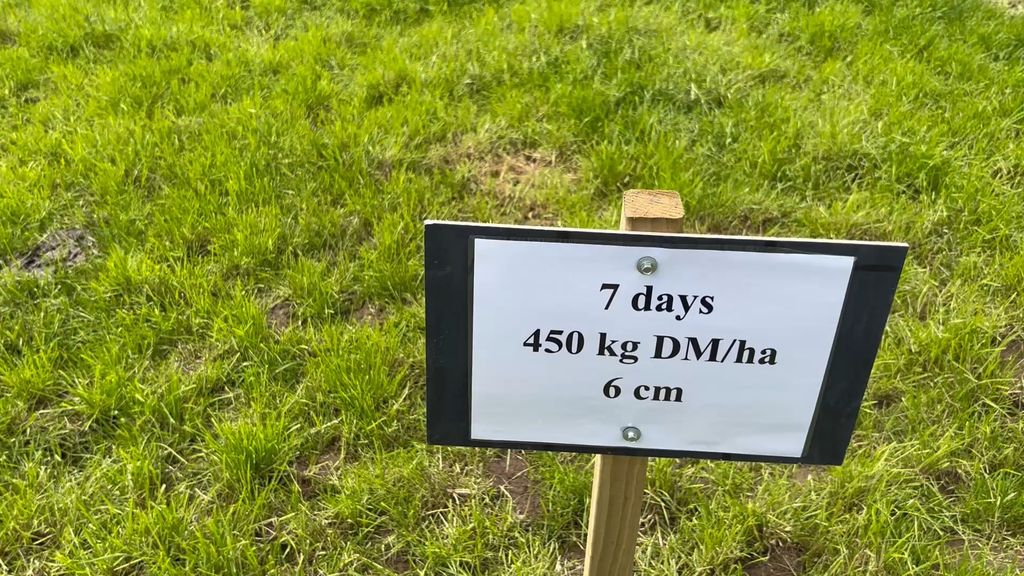
The next plot had 14 days regrowth and was already at a grass cover of 1,200kg DM/ha.
The following plot was at 21 days regrowth, which the Teagasc adviser said has "already gone too heavy" with a grass cover of 1,700-1,800kg DM/ha and an average sward height of 11.8cm.
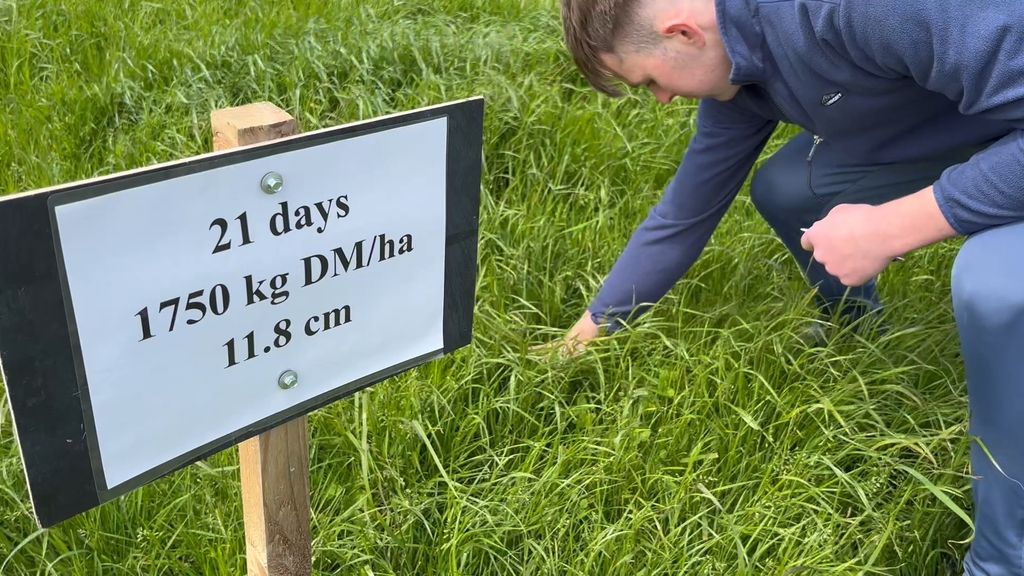
Kennedy said: "This time of year, grass could be moving really fast, you need to be looking at it all the time.
"Somewhere between the 14 and 21 days is probably our optimum, going into a good pre-grazing cover of 1,400-1500."
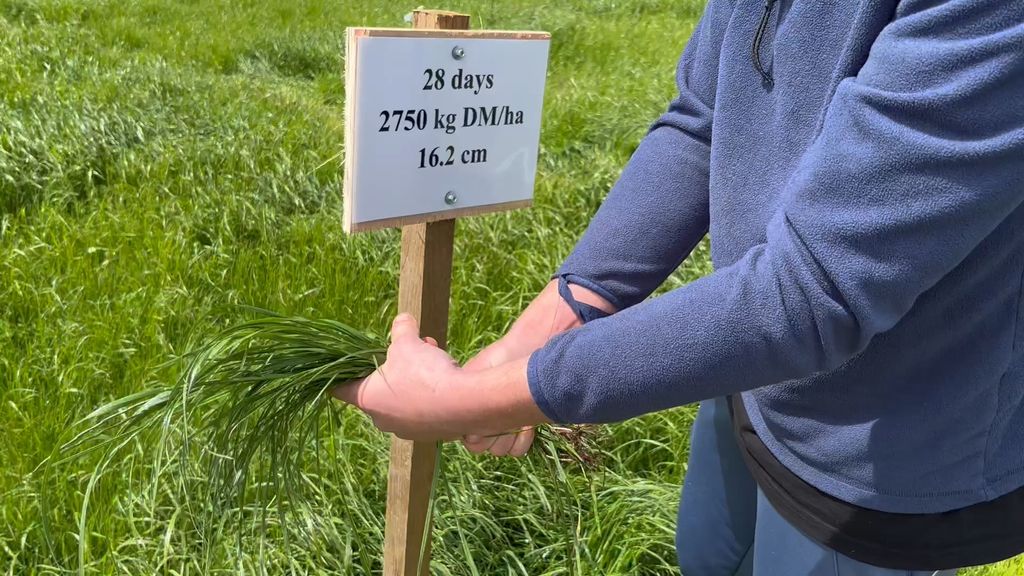
The next plot had 28 days regrowth and a grass cover of 2,750kg DM/ha.
The Teagasc adviser recommended baling grass covers at this stage or above.
She recommended farmers to do farm walks "at least once a week" or every five days this time of year, to get looking at the grass covers on paddocks and seeing how they are growing.
She said that this will help farmers identify which paddocks are getting strong, which ones may need to be grazed next and which ones may need to be taken out for bales.
For grazing, she said: "You want to get in when it's nice and leafy before it's stemmy.
"Not only is that the best nutrition for animals that time round, your grass is going to come back much better the next time and you'll get good quality again the next time."