How has the CBV impacted the cattle landscape since its inception?

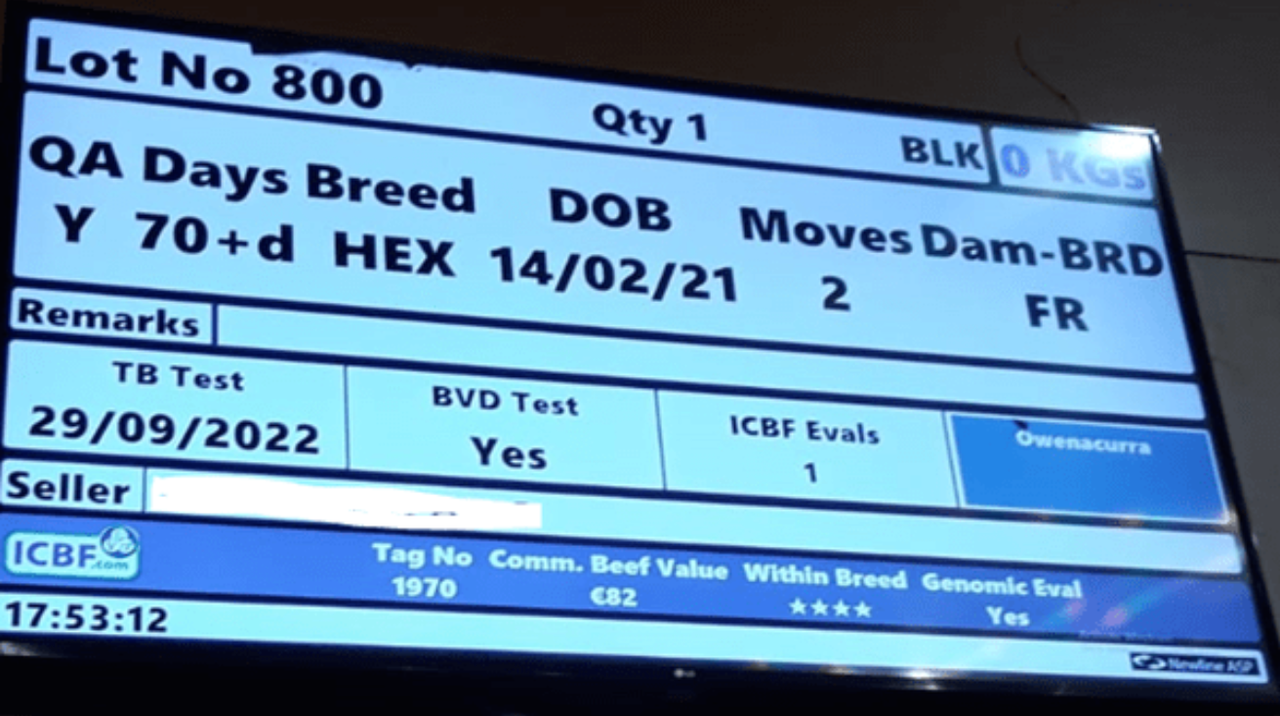
The Commercial Beef Value (CBV) is in its fifth season, and its impact is increasingly substantial with the index playing a large role in marts and cattle farms across the country.
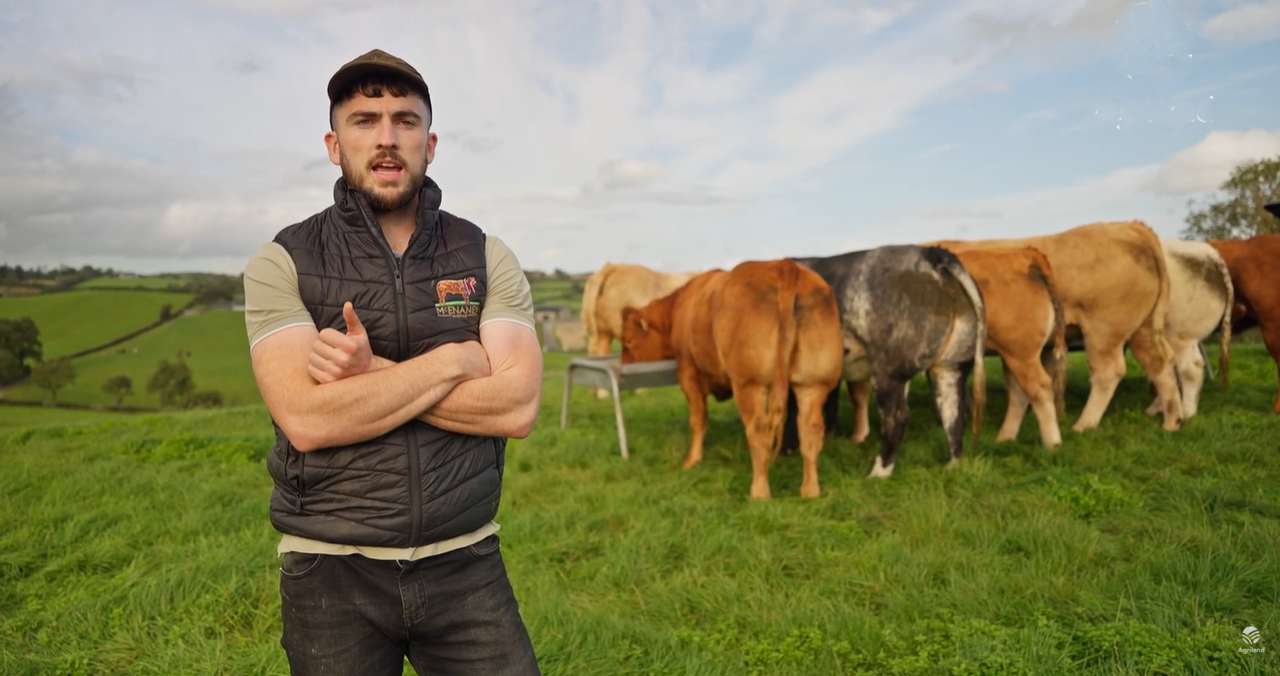
Speaking to Agriland, Teagasc researcher and beef geneticist Cliona Ryan explained the benefits of the commercial beef index. She outlined how at three- or four-weeks-old, a farmer can identify their best CBV calves.
She advised farmers to use the index as a selection tool, and added that without CBV "you wouldn't be able to pick out the ones that perform best at slaughter".
Referring to the potential of high CBV bulls to cause additional calving difficulties, Ryan advised farmers to select bulls with a calving difficulty threshold from the Dairy Beef Index that suits them and then pick high CBV bulls from these.
CBV uptake in the dairy sector
Agriland also spoke to several mart managers and farmers across the country, who indicated a common trend is the increasing awareness of CBV amongst dairy farmers when selecting sires for breeding.
Dairy farmers are increasingly using high CBV bulls in conjunction with the Dairy Beef Index and seeing substantial returns on calves.
This is especially the case this year, with good quality weanlings regularly breaking the 5.00/kg mark and the best calves getting well over €6.00/kg in places.
The increased use of sexed semen within the dairy herd has also had a role in increasing CBV use. Teagasc data shows that nearly two thirds (63%) of calves now have a beef sire. This has increased from only 47% in 2021.
This has led to greater uptake of the CBV as a selection tool, and has seen the national average CBV reach €77.
Teagasc data shows that the CBV has capitalised on improving dairy-beef genetics. When CBV values were applied to the six most common sire breeds (Belgian Blues, Angus, Herefords, Limousin, Charolais , Simmental) since 2010, Belgian Blues are the only breed that has not seen average CBV values increase.
This rise in CBV is in conjunction with the Dairy-Beef Index calving sub-index improving across the same six breeds.
This effectively means bigger, better performing calves are possible without increasing calving difficulty.
Impact ringside
Agriland also spoke to mart managers about how farmers ringside were responding to CBV values and wheather it was actively considered in purchasing calves.
Eric Driver, mart manager in Tullow Mart, Co. Carlow said that it is increasingly being used as a "selection tool for buyers".
He noted that during the recent turbulent prices, "when people needed to get as much out of cattle as possible, they opted for higher CBV animals and when it did what it said, they came back this year and looked for higher CBV cattle again."
John Tevlin, the mart manager in Ballyjamesduff Co-Operative livestock marts, Co. Cavan, commented that it was still a work in progress, but added that "the younger generation are looking at it more".
George Candler, auctioneer in Kilkenny Mart, felt that it was "yet to get going" and that cattle buyers were "still focused on the physical appearance in the ring".
Science backed by results
On the impact at factory level, new data shows that when carcasses are separated based on their CBV value, high CBV cattle produce the best carcass performance, significantly outperforming low CBV cattle.
This data comes from an ICBF analysis of over 87,000 cattle slaughtered from factories across Ireland, and highlights the accuracy of the CBV as an indicator of calf performance at slaughter.
High Commercial Veef Value cattle or 5-star rated finished 13 days earlier than low or 1-star cattle.
5-star cattle had on average a 14kg heavier carcass weight, returned €113 more and saw a carcass conformation score of 0.56 higher than 1-star cattle.
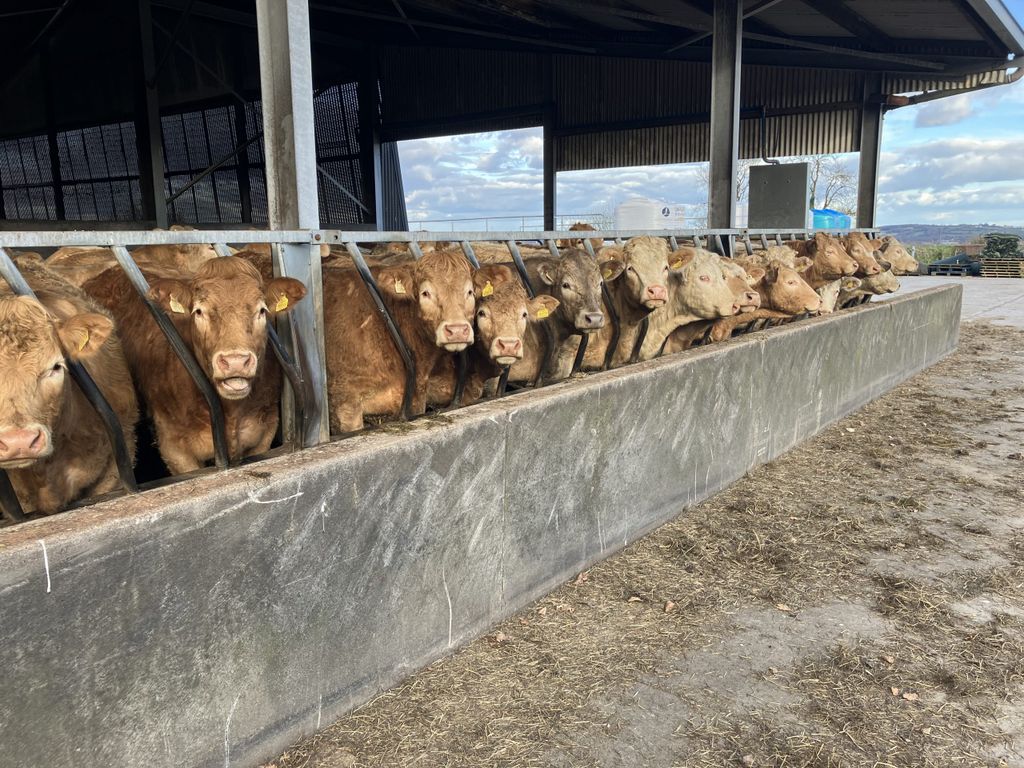
ICBF data from the Tully beef research centre, Kildare, shows that cattle in the top 20% also consume less feed compared to low CBV cattle.
There is also an environmental benefit to cattle in the top 20%, as they emit less methane compared to low CBV cattle.
The ICBF data shows that the CBV is reliable and accurate across the seven beef main breeds in this country - Angus, Hereford, Charolais, Belgian Blue, Limousin, Simmental, and Aubrac.
The ICBF faced challenges in its initial years as only approximately 50% of sires were registered with the ICBF, however the rollout of genotyping nationally (6.3m cattle genotyped animals currently) has led to greater reliability and accuracy.
ICBF informed Agriland that “the Commercial Beef Value has become a key tool for identifying animals with the greatest potential for profitability and performance.
"The continued validation of CBV through commercial farm data, combined with its growing adoption across the industry, has been a major success story.
"Looking ahead, we see CBV playing an even greater role in helping farmers purchase and finish more profitable, efficient and sustainable cattle," it said.