Food security and its relevance for the poultry sector


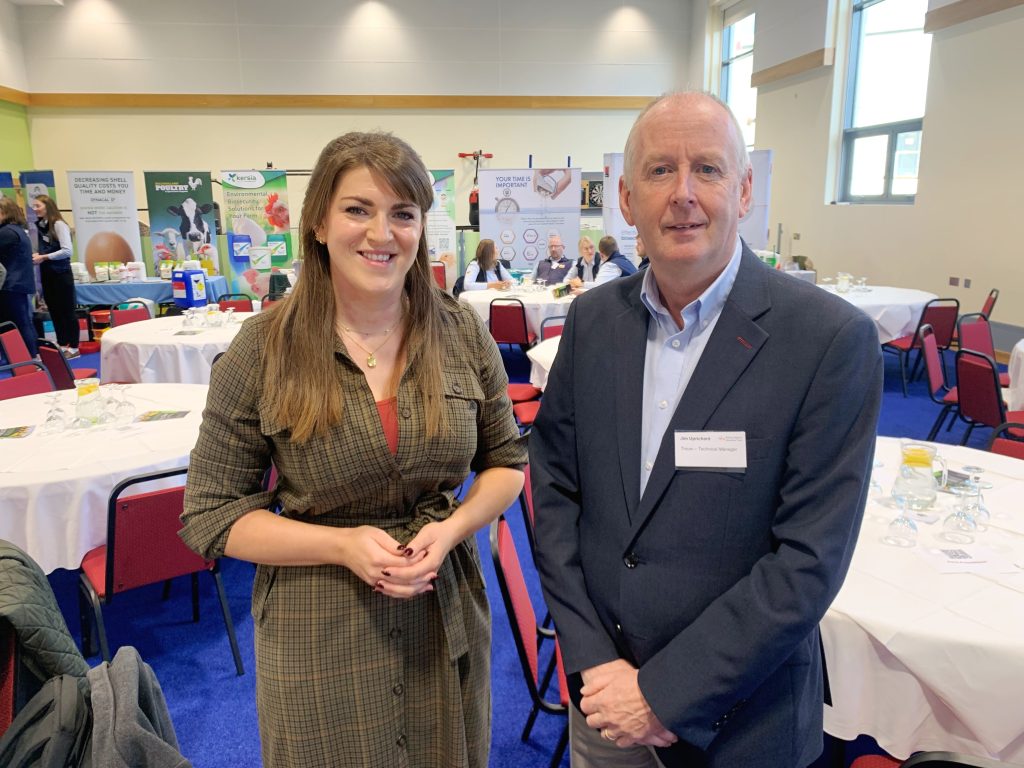
The issue of future food security is one of direct relevance for the poultry sectors in the UK and Ireland, according to Pilgrim’s Europe director of research, Dr. Anne Richmond.
She addressed this topic at the Poultry Industry Education Trust conference, earlier this year.
In her presentation, Dr. Richmond noted that "a major food security report" was published by the Department of the Environment, Food and Rural Affairs at the end of 2024.
“Food security is defined as all people at all times have physical and economic access to sufficient safe and nutritious food that meets their dietary needs and food preferences for an active and healthy life.
“This definition was agreed at a World Food Summit, held in 1996,” she added.
According to the Pilgrim’s Europe representative, food is currently being produced across the globe at a rate of 2,958 kilocalories (kcals) per day.
In contrast, the average person requires a food energy intake of between 2,000-2,500kcals per today.
Dr. Richmond said: “So, in theory, there should be enough food to go around. However, global food systems are very complicated.
“As a result we have a growing cohort of people around the world are undernourished. This figure increased from 514 million in 2017 to 733 million in 2023.
“Meanwhile, the number of people, internationally, who are categorised as being obese is also increasing. Currently, 2.8 billion people are deemed to be overweight.”
Poultry
In terms of food intake patterns, poultry accounts for 64% of all the meat consumed around the world.
Livestock production is expected to grow by 12% over the next decade.
“This is only half the rate that was recorded during the previous 10 years,” Dr. Richmond noted.
“Meanwhile, poultry meat production in the UK has started to level off over recent years with egg production actually dropping.
“What’s more, these trends are now impacting on food self-sufficiency levels.”
Looking to the future, Dr. Richmond highlighted the need for more food to be produced from a shrinking agricultural area using fewer inputs.
Productivity
She defined this in terms of Total Factor Productivity (TFP).
In a UK context, this is already happening to some extent. However, progress to this end in other countries around the world has been mixed.
The Pilgrim’s Food representative continued: “Given the projected increase in the world’s population up to 2050, it has been estimated that a TFP increase of 2% must be achieved on an annual basis in order for the international food industry to meet envisaged consumption levels.”
However, farming and food has a good news story to tell.
The sector currently produces enough food protein to meet the needs of some 10 million people.
Referring to the sustainability challenge now facing the poultry and other agri-food sectors, Dr. Richmond pointed out that carbon was not the only issue to be addressed in this context.
She said: “Issues including water quality, soil quality, and biodiversity must also be taken account of. However, these are factors that are extremely hard to quantity.
“Disease threats continue to increase, led by the likes of avian influenza and bluetongue.
"But countering this has been the very significant reduction in antimicrobial usage within the UK’s poultry sector.
”And this gives cause for great hope into the future," Dr. Richmond added.