Farmers need to be aware of steps to protect against tick bites - DAFM

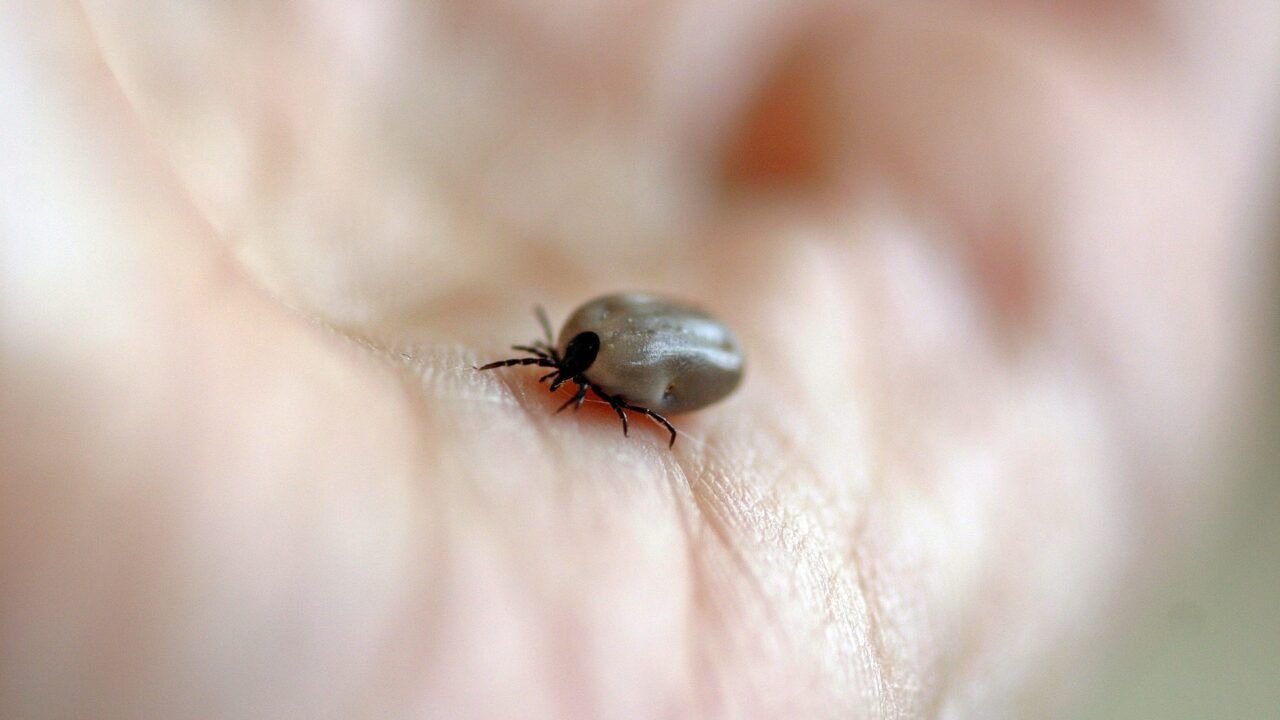
Farmers need to be aware of "simple preventive steps" that they can take to protect themselves against tick bites and Lyme disease.
The Department of Agriculture, Food and the Marine (DAFM) is warning farmers that the period of highest tick activity and risk of Lyme disease is between spring and autumn months.
Lyme disease is a bacterial infection that can be spread to humans by infected ticks.
High-risk areas
People are urged to be aware of high-risk areas.
Ticks can be found in both urban and rural environments. They are most likely to be found in the following areas:
- Shady and humid woodland clearings with grass;
- Open grassland, parkland, fields and bushes;
- Walking paths, especially those bordered by long grasses;
- Wooded and forested areas;
- Vegetation close to lakes and seaside beaches.
Protection against ticks
The HSE's Health Protection Surveillance Centre (HPSC) has advice on protection against ticks.
Before going out in areas where ticks are found:
- Cover exposed skin by wearing long trousers tucked into socks/boots and long-sleeved tops;
- Wear closed toe shoes or boots rather than sandals;
- Use repellent that contains at least 20% DEET or picaridin or IR3535 on exposed skin taking care to follow product instructions and avoiding hands, eyes, and mouth;
- If using sunscreen, tick repellent should be applied after sunscreen;
- Use repellent that contains 0.5% permethrin on clothing, backpacks and tents;
- Inspect your skin and clothes every three to four hours while in areas where ticks are found.
After returning from an area where ticks are found, people are advised to bathe or shower as soon as possible after coming indoors (preferably within two hours) to wash off and help find ticks that are crawling on you.
A full-body tick check should be conducted using a hand-held or full-length mirror to view all parts of your body upon return from tick-infested areas.
Parents should check their children for ticks under the arms, in and around the ears, inside the belly button, behind the knees, between the legs, around the waist, and especially in their hair.
Pets can carry the ticks and need to be checked as well, the HSE said.
Most tick bites are harmless
Only a small number of ticks are infected with the bacteria that causes Lyme disease, the HSE said.
A tick bite can only cause Lyme disease in humans if the tick has bitten an infected animal.
About 5% of ticks in Ireland are thought to carry Lyme disease bacteria.
The HSE advises to remove ticks as soon as possible, because Lyme disease can be prevented if infected ticks are removed within 36 hours.
Symptoms
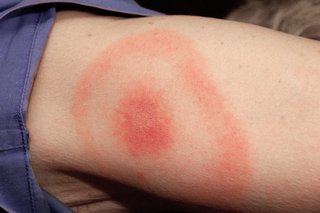
According to the HSE, most people with early symptoms of Lyme disease develop a circular red rash around a tick bite.
"The rash can appear up to three months after being bitten by a tick," the HSE said.
"Most rashes appear within the first four weeks. It usually lasts for several weeks.
"Not everyone with Lyme disease gets the rash."
In the early stages, flu-like symptoms may be experienced, such as: feeling hot and shivery, or a high temperature; headaches; muscle and joint pain; and tiredness and loss of energy.