Farmer milk income down ‘over €600m’ in first half of 2026

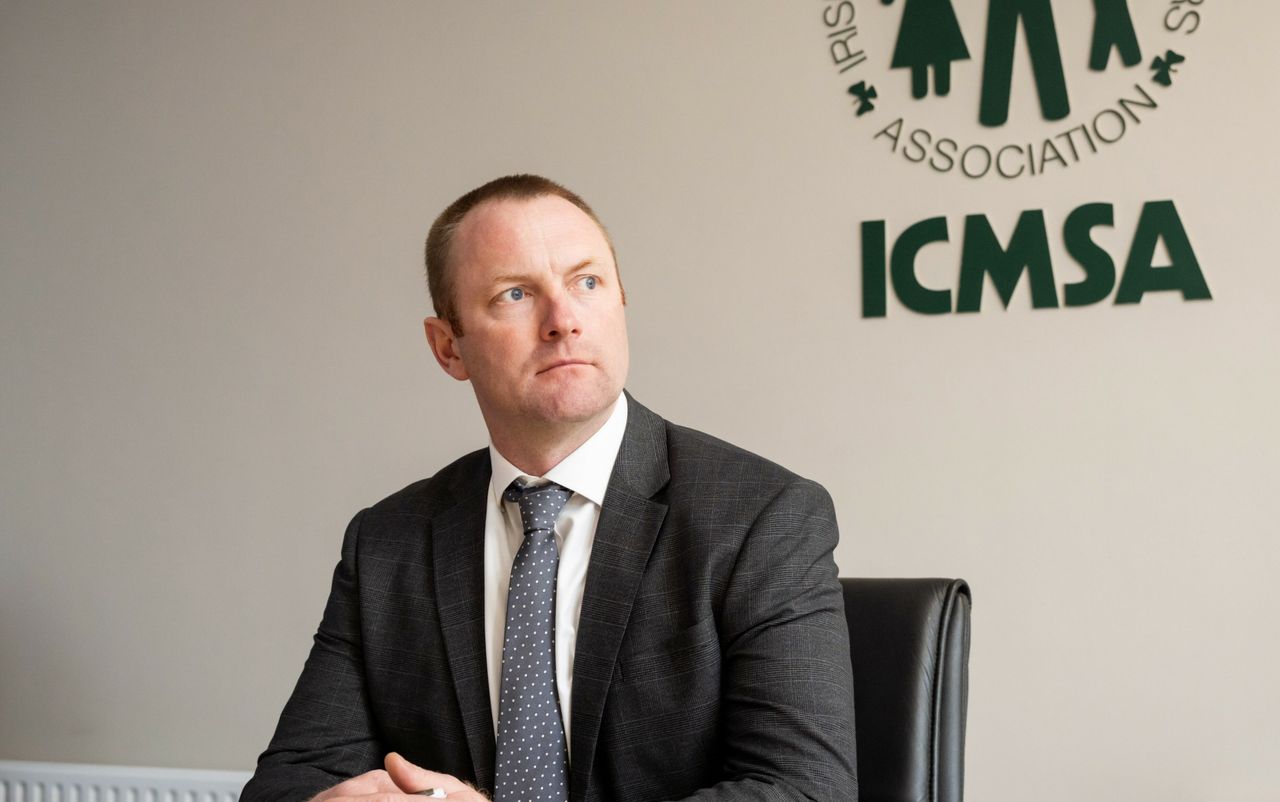
New figures compiled by the Irish Creamery Milk Suppliers Association (ICMSA) show a fall of over €600 million in milk revenues to the state’s dairy farmers in the first six months of this year, compared to the same period in 2025.
Describing the period as “particularly ruinous for dairy farmers”, ICMSA president, Denis Drennan observed what he described as a “wipeout” of dairy farmer income.
The ICMSA said that there has been massive overall reductions in the “big producing counties” across Munster and south Leinster, with the Cavan and Meath region also “hard hit”.
Drennan predicted “profoundly negative effects” on the wider rural economy as the farmer income from milk stopped going “straight out the gate” into the wider rural economy.
Policymakers
Drennan said: “We have to constantly remind policymakers that underneath all the hype about foreign direct investment (FDI) and U.S. tech and pharma companies located here, the real rural economy is farming, food production and, specifically, the dairying.”
He added that Ireland leads the world in terms of farmers’ technical excellence and the marketing, processing and reputation of co-ops and agencies.
Drennan said: “That money paid to the active full-time farmers producing the milk goes straight out the gate to the individuals and business supplying the dairy farmers, the contractors, the machinery outlets, the feed, fertiliser and fuel merchants, animal health and renewables, all the different commercial activities that effectively rely on and ‘satellite’ our world-leading dairy sector.
“When the income from milk dries up – as it has done very completely from last September – that money dries up for those businesses reliant on our dairy farmers.
“When we dairy farmers catch a cold, those reliant rural businesses will catch pneumonia.”
Multiplier
The ICMSA president emphasised the “multiplier” effect when it came to dairy income going out into their local economy.
The multiplier effect is an economic model, in which money entering the economy grows as it’s spent: €10 spent on milk might then spent by the milk farmer on something else, turning it into €20, and so on.
He said: “The standard and accepted economic multiplier for dairy income is to double it as it goes out the gate into the wider rural economy.
“If you look at a county like Cork that produces 23.5% of all the milk in the state, the income to Cork’s dairy farmers fell by €145 million in just the first six months of 2026 compared to 2025.
“But that’s €290 million out of Cork’s economy when the multiplier effect is taken into account.”
He added that Tipperary’s dairy income fell €71 million over the same six-month period.
Drennan said: “Comparing 2025 to 2026, again, that’s bad enough, but it will amount to €140 million out of Tipperary’s economy as that ‘multiplier’ effect works in reverse.”
ICMSA has calculated the figures for every county in Ireland.
Drennan said that these figures illustrate the “ruinous fall in milk income" over the first six months of this year.
He also argued that the situation highlights the need for a financial mechanism to "smooth out" dairy income and mitigate "boom-to-bust cycles".
Government
The ICMSA president said that it was possible to mitigate the worst of these income collapses, but that the government is “unwilling despite promising otherwise to look at the examples in other states where exactly the same problem has been identified and addressed”.
Drennan said: “We have proposed several plans that would allow farmers to use revenue-approved deposit schemes to ‘smooth out’ annual earnings and avoid the kind of disaster we have this year when our members are getting tax demands now for earnings in 2025.”
He added that these earnings “are long, long gone and eaten up by the grass shortage of this summer, a looming fodder shortage for this winter, and the inputs surge that went all the way through this year”.
Drennan said: “We can’t go on like this and we don’t have to.
“It seems to be a choice by the government to keep particularly dairy farmers trapped in this ‘boom-bust’ cycle where we can’t plan over any term of time and where young people thinking of going into farming are immediately confronted by an income model that works overwhelmingly against any idea of predictability or security.”
Attitude
The ICMSA president added that it was a question of attitude and making hard choices.
He said: “We have to get past the ‘head down and wait and see’ attitude that we’ve been getting from successive governments and the EU for 20 years.
“It’s getting steadily worse and steadily harder and we are all getting steadily older – young people won’t come into farming because it’s too hard with too much uncertainty over an income that’s too low anyway.”