No BTV testing plans for all animal products entering the state - Heydon


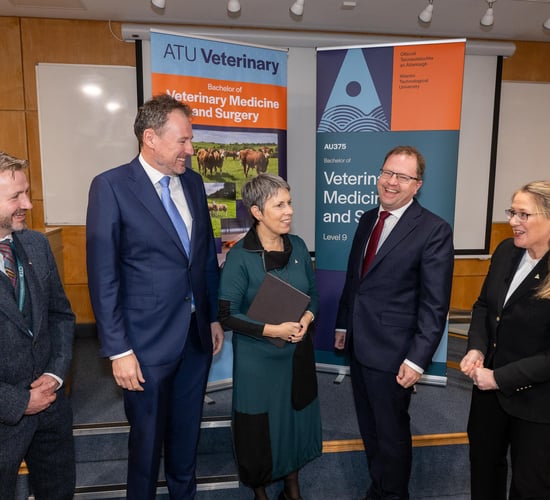
There are no plans to introduce bluetongue disease (BTV) testing for all animal products entering the state, Minister for Agriculture, Food and the Marine, Martin Heydon has said.
The minister was responding to a query raised by Fianna Fáil TD Cathal Crowe, who asked if there are plans to test all animal products entering Ireland for pathogens, in light of the recent rise in bluetongue disease cases in Northern Ireland.
Minister Heydon said: "The movement of live animals and animal products into Ireland is subject to a robust system of official veterinary animal health certification, in line with EU legislation.
"This system is designed to mitigate the the risk of animal diseases and is based on scientifically informed, risk-based controls rather than blanket testing.
"In the context of BTV, it should be noted that the virus is a vector-borne disease transmitted by midges and is associated with the movement of live susceptible animals.
"Animal products such as meat, dairy or products of such, do not pose a risk to the spread of BTV."
Accordingly, there are no plans to introduce the BTV testing for all animal products entering the state, the minister confirmed.
"My department continues to monitor the evolving BTV situation in Northern Ireland and elsewhere, and appropriate controls on live animal products are kept under continuous review in consultation with veterinary and scientific experts," he added.
BTV vaccination
Bluetongue vaccinations will be permitted in cattle and sheep in Ireland next year, the minister also confirmed this week.
According to the Department of Agriculture, Food and the Marine (DAFM) this follows the recent detection of four outbreaks of bluetongue serotype 3 (BTV3) in Northern Ireland.
The vaccination decision came just 24 hours after the Department of Agriculture, Environment and Rural Affairs (DAERA) said that two further suspected bluetongue cases had emerged on a fourth Co. Down farm.
Temporary control zone (TCZ) surveillance has indicated suspect cases in two cattle on a second farm near Greyabbey.
This takes the total number of suspected infected premises to four.