'Little overall improvement' in water quality in 2025 - EPA

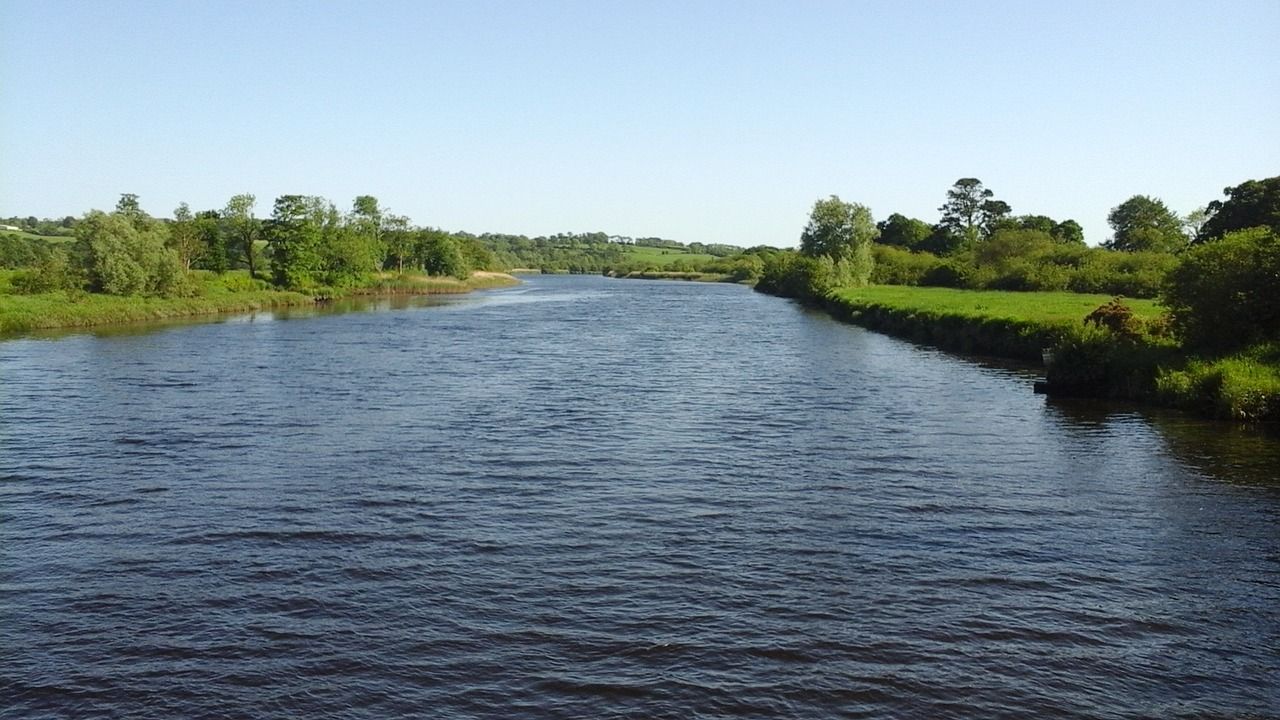
The Environmental Protection Agency (EPA) has called for "faster action" on water quality as indicators show "little overall improvement in 2025".
The agency's Water Quality in 2025: An Indicators Report, published today (Wednesday, June 17), found "overall water quality remains unsatisfactory in many areas".
The report provides an update on the water quality of Ireland’s rivers, lakes, estuaries, coastal, and groundwaters based on monitoring data collected in 2025.
The EPA said that nutrient levels remain too high in "a large proportion of water bodies" and while improvements do occur, they are not being sustained.
"In some places the quality has improved, but these gains are being cancelled out by declines elsewhere," the report said.
Water quality
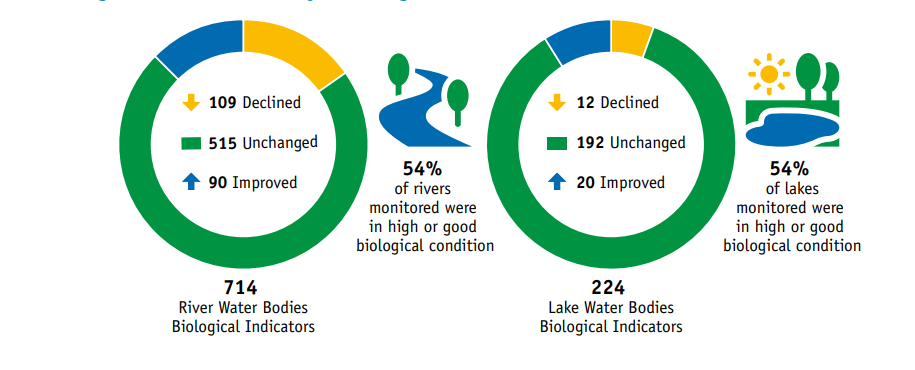
The biological health of Irish rivers and lakes has shown little change with just over half in good or better biological quality.
43% of river sites have elevated nitrogen levels, many of which are in the east and south of the country.
In 2025, 717 (out of 2377) river water bodies were assessed. 515 remained stable with no change in their quality class.
There was a net decline in quality of 19 river water bodies, with 90 improving in quality and 109 declining.
Protecting and restoring high quality river water bodies, also referred to as blue dot water bodies, is a requirement under theWater Framework Directive.
Of the 86 high status objective river water bodies monitored in 2025, aquatic invertebrate quality remained unchanged in 77, declined in 8, and improved in only one.
Of the declines, this represents a net loss of five high quality water bodies.
"More worryingly, the declines in high quality in 2023-2025 reflect a net 25% decline relative to the 2010–2012 period," the report added.
54% of monitored lakes are in high or good biological quality, with the remaining 46% in moderate or worse quality. 11 lakes (5%) are in bad biological quality, the worst class.
The report said the majority of lakes that are failing to achieve good biological quality are in the Erne and Shannon catchments, which are areas with elevated lake phosphorus levels.
A fifth of groundwaters and estuaries have nitrogen levels that are too high, again in parts of the east and south of the country.
Nutrients
The EPA said the main reason for the lack of progress is "ongoing pollution from nutrients, particularly nitrogen and phosphorus".
"These substances mainly come from human activities such as farming, wastewater discharges and run-off from land," the agency said.
The report explained that when too much of these nutrients enter waterways they cause excessive growth of algae which can "reduce oxygen levels, damage habitats and harm fish and other aquatic life".
"Despite some short-term variation in concentrations from year to year, there is no clear evidence that nutrient levels are falling over the longer term," the report said.
Recommendations
The EPA said that "a range of pressures arising from human activities affect water quality in Ireland, and all sectors have a role to play in addressing these impacts".
"Agriculture is the main source of nitrogen entering our waterways, while phosphorus inputs originate mainly from agriculture and waste water.
"These sectors must continue to increase the amount and pace of actions to reduce nutrient losses to water nationwide," the agency said.

The report acknowledges that "significant efforts" are underway nationwide to address the key pressures affecting water quality and that positive improvements are achievable.
In the Ballyteigue Bannow catchment in Co. Wexford, 6 of the 16 rivers surveyed in 2025 improved in biological quality.
The report said further assessment is needed to determine what specific changes occurred in this catchment that might have led to the improvements.
Water Action Plan
The EPA said it is "essential" that actions under the Water Action Plan 2024 are "implemented and tracked in a coordinated way".
"Ireland’s water quality is not improving overall, and that should concern all of us," Roni Hawe, director of the EPA’s Office of Evidence and Assessment, said.
Hawe said the decline in high status water bodies is "a serious warning sign".
"We need to act with greater urgency to cut pollution and protect the waters we all depend on.
"Our actions must match the scale of the problem. Targeted action and measures tailored to the specific challenges affecting each water body must be accelerated to shift the overall trend towards improving water quality," she added.