Using locomotion scoring as a money-saver this summer

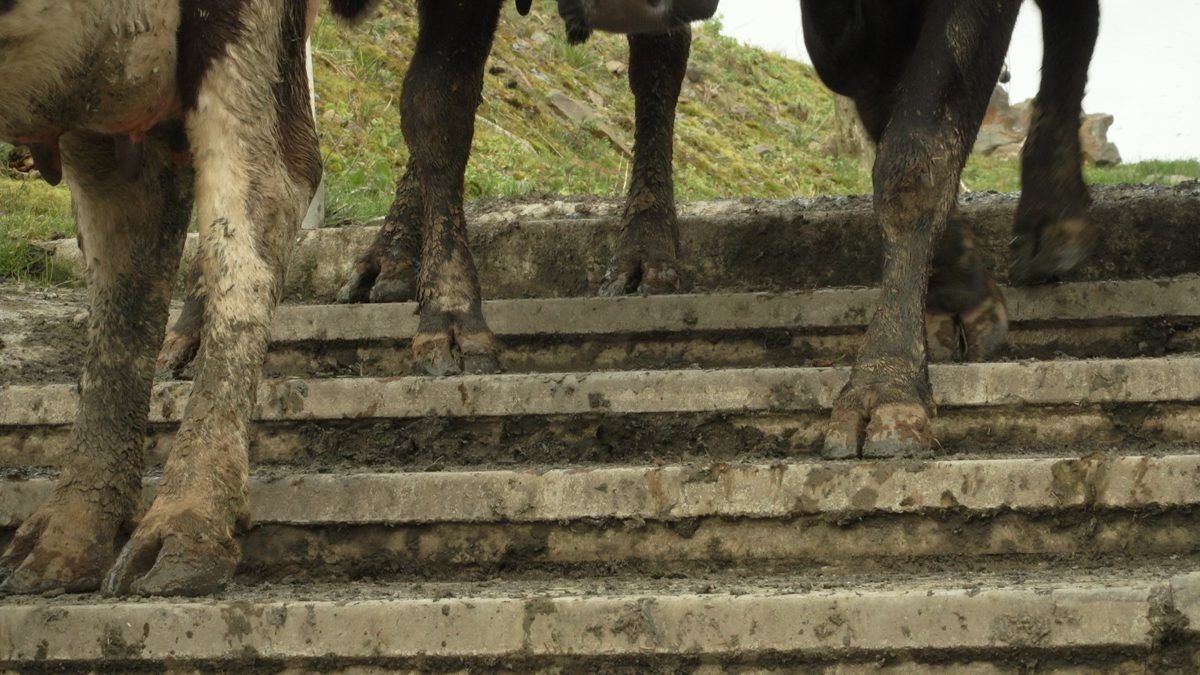
Over the summer months, locomotion scoring should be carried out to combat the scourge that is lameness.
The farm's profitability takes a massive hit when dealing with lameness, from the costs of treatment to the loss in milk production, poor reproduction and dip in body condition.
A single case of lameness can cost in excess of €350/cow when all these factors are considered, with some more severe cases costing even more, a cost nobody wants to incur in a poor milk price year.
Coming towards the end of breeding, there is always chat about figures such as six-week calving rates, Economic Breeding Index (EBI), somatic cell counts, and milk solids production.
However, a lot of farmers could not tell you what their herd's mobility index is sitting at.
When considering the amount of lame cows in the country, it may be worth making mobility scoring a routine practice on farm to identify any lame cows before the problem becomes severe.
Locomotion scoring
The cost of lameness is always a bitter pill to swallow, but before we ever start thinking about expenses, the animal's welfare should be considered first, as she is more than likely in pain.
Regular locomotion scoring lets you detect lameness in the early stages, where there should be a quicker response to any treatment administered, improving the cow's comfortability.
Locomotion scoring is a five-point system based on both gait and posture:
- Normal: The cow is not lame; the back is flat;
- Mildly lame: The back is slightly arched when walking;
- Moderately lame: The back is arched when both standing and walking. The cow walks with short strides in one or more legs;
- Lame: The lame cow can still bear some weight on the affected foot;
- Severely lame: The back is arched; the cow refuses to bear weight on the affected foot and remains recumbent.
A cow’s hind foot should land in the same place as her front foot; failure to do this may be an indication of a lameness issue.
Identifying cows early will give them the best possible chance of recovery.
Cows that are left too long to be treated can repeatedly cause problems down the line, no matter how much work you do with them.
Another way of scoring lame cows is through mobility scoring, which is also used quite regularly.
Both methods are useful as long as they are picking out lame cows for treatment.
The different score of mobility scoring are as follows:
- Score 0: The cow has good mobility;
- Score 1: The cow has imperfect mobility;
- Score 2: The cow has impaired mobility;
- Score 3: The cow has severely impaired mobility.
If you are seeing a lot of lameness at this time of the year, the quality of the roadways should be assessed as this is where a lot of cows could be picking up mechanical issues.
Time constraints
Locomotion scoring is typically put on the long finger due to time constraints.
With the hectic calving season in the rear view mirror and breeding wrapping up, farmers will now have a bit more time available, which is why locomotion scoring is often done in the summer months.
A lot of farmers feel they have a good idea of what cows need treatment as they walk to and from milking, but it not as accurate and often leads to cows slipping through the cracks and developing to a more serious stage.
There is technology appearing on the market, through the form of activity monitors and 3D scanning which can be extremely useful, but requires large capital investment.
If you think about each case as €300, while one milking is less than €100, the savings speak for themselves to have somebody milk once a week while you mobility score.
College students and even secondary school students will be off for the summer months now, with many of them only delighted to get a few milkings done.