Member states outline EU budget plans amid CAP concern


EU member states have agreed a partial plan on how the next EU budget should look, but the plans have already seen some push back relating to farm payments.
The Council of the EU adopted a negotiating position today (Tuesday, June 16) on the Multiannual Financial Framework (MFF) for 2028-2034.
Negotiations on the MFF - the EU's long-term budget - will determine how much money is available across the EU and in Ireland for CAP payments.
The member states' partial position does not outline spending amounts across different areas, as these will be decided later in the process.
The council's position backs the controversial National and Regional Partnership Plans (NRPPs), which will combine funding for different areas - including regional and development, and agriculture - into a single funding pot at country level.
This could leave the CAP competing with other policy areas at national level for funding.
A statement from the council said that the member states' position, when it comes to CAP, will "ensure continuity of funding to beneficiaries, while strengthening the role of the Common Agricultural Policy", in the period from 2028 to 2034.
It is understood that the council's position is based on plans published last week by Cyprus, which currently holds the presidency of the Council of the EU.
The Cypriot plan - which the country describes as a 'negotiating box' - aims to "preserve the core features" of the European Commission's proposal on the EU budget last summer.
Among those controversial proposals was a cut of 20% in funding for the CAP, as well as the introduction of the NRPPs.
On CAP, the Cypriot government said it has "already taken on board several concerns" raised by member states, including frontloading money from a 'flexibility reserve' for CAP schemes in the first years of the next programme.
Cyprus' plan also does not propose any increase in the EU budget compared to the commission's proposal; indeed it calls for a slight decrease of 2%, with the decrease applied across all headings, including the CAP, although this would see the smallest reduction compared to the commission's proposal.
Irish presidency
The presentation of this "negotiating box" will be one of the last major acts of the Cypriot presidency of the council, as Ireland is set to take the reins starting July 1.
How influential the council's positions and the Cypriot negotiating box will be over the course of the next six months, as the MFF and CAP proposals are progressed, remains to be seen, especially as the reduced CAP budget put forward by the commission and Cyprus would seem to clash with Ireland's stance.
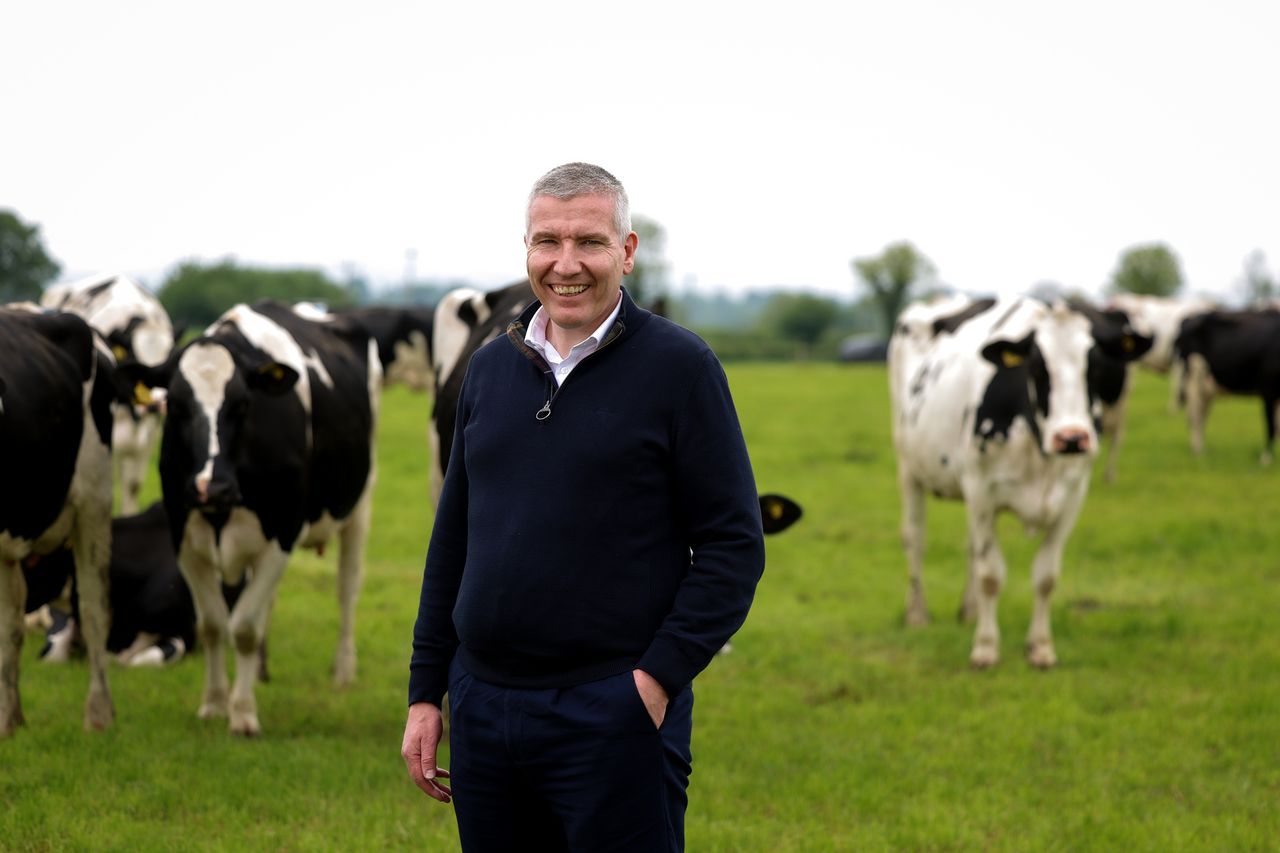
Minister for Agriculture, Food and the Marine Martin Heydon has already stated that this reduction is "a major concern for Ireland".
However, Ireland - and Minister Heydon when he chairs meetings of agriculture ministers during those six months - will have to act as 'honest brokers' in CAP talks, and will not have the freedom to make demands.
A spokesperson for the Department of Agriculture, Food and the Marine told Agriland: "The CAP budget forms part of negotiations on the wider 2028-2034 EU budget... The negotiating box brought forward by the Cyprus presidency is one stage in an ongoing process.
"Pursuing agreement on the new EU budget is an overwhelming priority for the Irish presidency," the spokesperson added.
"Ireland is committed to ensuring that the next MFF will provide the means to transform Europe for the better in the decade ahead.
"As chair of the Agriculture and Fisheries Council during Ireland's presidency of the Council of the EU, Minister Heydon will work with other Member States and the EU institutions to support farming and fishing families, protect their incomes, strengthen their competitiveness, and sustain rural and coastal communities," the spokesperson said.
They added: "Ireland will work during our EU presidency to achieve an outcome that is acceptable to all member states."
MEPs not convinced
The leading MEPs in the European Parliament have expressed misgivings about the stance taken by the Cypriots and now the parliament.
The parliament's budget committee said that the position taken buy the council "sends entirely the wrong message".
"This is of particular concern given that, in their proposal, the commission had already reduced 'Heading 1', which finances farmers and cohesion, from around 60% to 45% of the MFF," the budget committee said in a statement.
"Cutting the EU budget further sends a message to farmers, regions, and citizens that food security, cohesion, border management, and support for local communities are not important despite the challenges they pose," the statement added.
A leading MEP on the committee, Siegfried Muresan from Romania, commented: "Parliament will continue to insist on strong and clearly ring-fenced funding for cohesion policy, the Common Agricultural Policy and the European Social Fund.
"These policies are the backbone of European solidarity, territorial cohesion and social convergence. They provide long-term investment, support farmers and rural communities, strengthen regions and help people access quality jobs and opportunities," Muresan added.
Farm group concerns
The plan from the outgoing council presidency also drew criticism from EU farm group Copa Cogeca.
Copa Cogeca, which represents farm organisations and agricultural co-operatives, said it "can only regret the approach being pursued".
"The proposed baseline for the agricultural envelope simply does not reflect the food security and transition challenges that will arise over the period," the group said.
While Copa acknowledged some positives of the Cypriot plan, such as a safety mechanism to ensure continuity of farmers' support if the new CAP is delayed.
The group said the proposal "lacks ambition for a strong Common Agricultural Policy, which is necessary to meet growing needs and address the challenges ahead".
"By maintaining the CAP within the broader Single Fund and National and Regional Partnership Plans (NRPPs), the negotiating box preserves a model that risks gradually diluting its common nature and increasing competition with other national priorities," Copa warned.
"For Copa and Cogeca, the fundamental concern remains unchanged: the widening gap between expectations and means," the group said.