Heydon: Regenerative agriculture ensures long-term productivity
Minister for Agriculture, Food and the Marine, Martin Heydon has said that when farmers adopt regenerative agriculture practices they are ensuring long-term productivity.
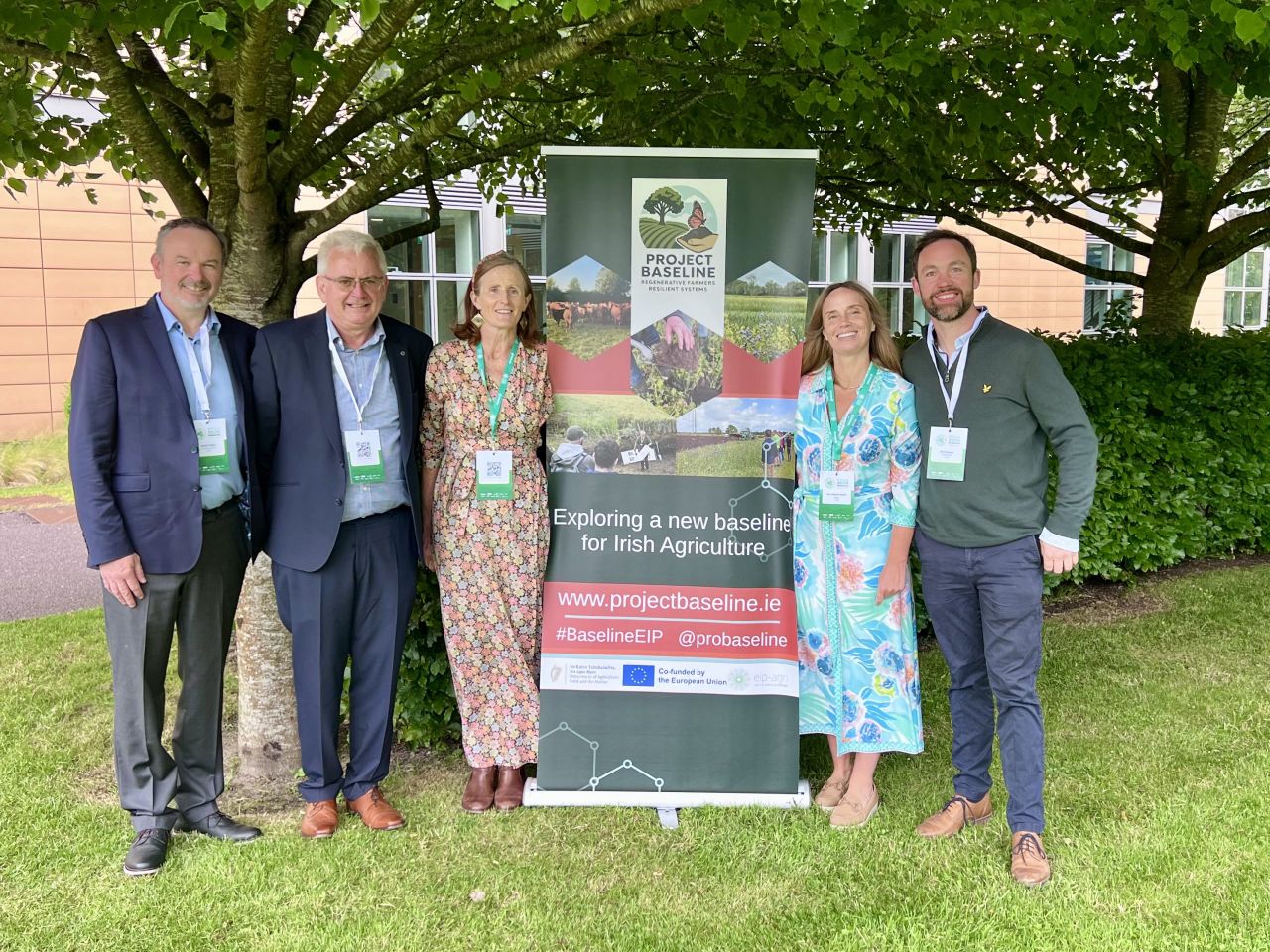
Project BASELINE hosted a Practitioner Discussion Session at the 2026 International Food and Agribusiness Management Association (IFAMA) World Conference in Cork today (Tuesday, June 16).
The conference, hosted at University College Cork (UCC), welcomed over 400 delegates from 34 countries.
Acknowledging the importance of revitalising agri-food systems to enhance sustainability, Minister Heydon said: “I am very happy to see Project BASELINE, which is funded by my department as part of the [Common Agricultural Policy] CAP Strategic Plan, participating at this important and timely international event.
"Sustainable soil management is so important, not just for food production but for climate mitigation, water protection, biodiversity, and the long-term viability of farming itself.
"By adopting regenerative agriculture practices that contribute to soil health, farmers can ensure the long-term productivity and resilience of our eco-systems which will in turn underpin a resilient and sustainable agribusiness sector into the future.”
Ronan O'Neill, agricultural economist with Fresh Concept Ireland and member of Project BASELINE's Operational Group, explained why the forum is a good fit for Project BASELINE, an Irish-based European Innovation Partnership (EIP):
"Project BASELINE is a perfect case study to consider how regenerative agriculture can be measured, supported, and scaled in practice.
"The project examines the financial, ecological and socio-cultural aspects of regenerative agriculture in the Irish context — something that an Irish farmer-led project hasn't attempted before.
"It ties in directly with the conference theme: 'Rooted in Resilience: Revitalising Agri-Food Systems for an Uncertain Tomorrow.'"
Regenerative farming
Speaking from the conference, arable and beef farmer from Co. Cork, chair of BASE Ireland and lead for Project BASELINE, Rob Coleman said: “For the agricultural sector to thrive, sustainability has to make economic sense for the farmer.
"Regenerative practices offer a way to reduce risk, and protect the long-term viability of the farm, but it isn't a one-size-fits-all model.
"Through Project BASELINE, our focus is on building a clear, data-driven understanding of the financial and environmental outcomes of these systems.
"That data is the missing link needed to build viable pathways and collaborative models between farmers, advisors, consumers and the rest of the agri-business supply chain."
Survey
Drawing on a recent survey of 315 Irish farmers interested in regenerative practice, the session compared what farmers themselves identify as the biggest barriers to system change with the views of agri-business professionals.
Ronan and Rob will be joined by Dr. Áine Macken-Walsh, senior research officer at Teagasc's Rural Economy and Development Programme, and John Geraghty, programme leader for the Master's programmes in Organic and Biological Agriculture at South East Technological University (SETU) and member of Project BASELINE's Operational Group.
Project BASELINE is an EIP co-funded by the European Commission and Ireland's Department of Agriculture, Food and the Marine (DAFM) under the CAP Strategic Plan, and it will run until the end of 2029.