How do fodder and diet impact organic beef performance?


Organic beef finishing forms a core aspect of the Teagasc research at Johnstown Castle in Co. Wexford, exploring the most efficient management systems for organic beef operations.
Agriland attended the 'Farming for a Better Future' open day at Teagasc research facility in Co. Wexford on Wednesday, June 10.
One of the research presentations on the day was an organic beef finishing system update from Kildavin Farm.
Kildavin Farm is a 48ha beef research and demonstration facility operated by Teagasc at Johnstown Castle, Co. Wexford. The farm is in its second year of conversion to organics.
One aspect of the research highlighted at the open day was trials looking at the best fodder sources for finishing cattle organically.
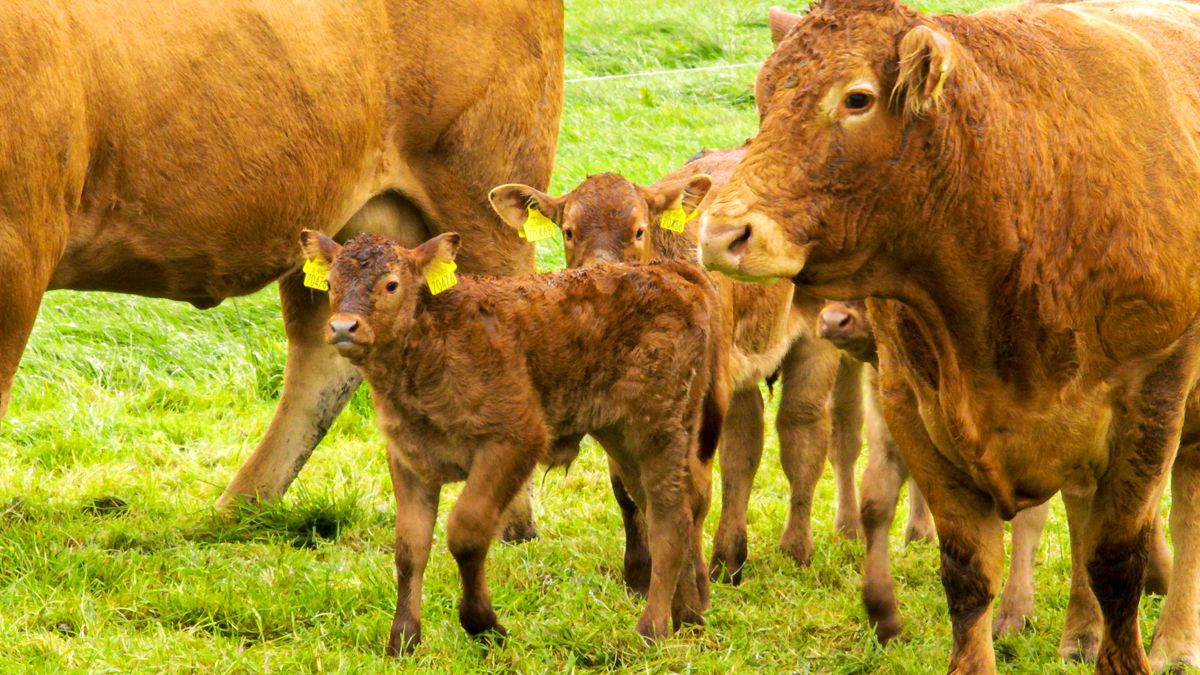
The farm purchased 80 spring-born organic weanling steers, comprised of 40 early-maturing breeds and 40 late-maturing breeds from organic farms last autumn.
The trials focused on a first-winter test where the two animal breed types were fed either grass and red clover silage or multispecies silage.
Both diets were supplemented with 1.5kgs/head of organic concentrate until turnout in spring.
The test revealed that both silage types with early-maturing steers saw an average daily gain (ADG) of 0.8kg.
The late-maturing steers preformed marginally poorer. The red clover silage group saw an ADG of 0.77kgs while multispecies swards saw an ADG of 0.70kgs.
The two suckler-bred steer types will be finished organically at three time points:
- End of the second grazing season (19 months-of-age);
- End of the second winter (23 months-of-age);
- During the third grazing season (26 months-of-age).
Carcass weights and specifications, animal live weight, pasture production and other factors will be analysed as well as the economic viability of organic beef finishing.
The 19-months-of-age group averaged carcass weights of 301kg (R=, 2+) compared to 359kgs (R+, 3=) for the 23 months-of-age cattle. The 26-month-old slaughter group have not had results finalised yet.
Organic Charolais steer finishing study
Another organic finishing research trial assigned 60 Charolais steers with an average weight of 595kg to four different diets for 98 days:
- Conventional perennial rye grass (PRG) with 3kg concentrate;
- Red clover silage with 3kg organic concentrate;
- Red clover silage only;
- Barley-pea silage (Bi-crop).
The red clover silage and organic concentrate group showed the highest daily liveweight gain (DLWG).
The red clover silage and organic concentrate group also had the highest carcass weight on average and margins were highest as well.
The barley pea silage trial group had the highest feed conversion ratio and dry matter intake but had the lowest margin, while the red clover silage only group saw the lowest DLWG.
Teagasc researchers noted that the system was "extremely sensitive" to store cattle price and beef carcass prices.