Sponsored
Landowners: Dial Before You Dig – know the risks

Sponsored by

Farmers, landowners and agricultural contractors - do you know what’s running beneath your fields?
Thousands of kilometres of gas pipelines criss-cross farmland throughout the country, quietly delivering energy every day.
While digging and excavation are part of everyday farm life, knowing what lies below the surface is essential before breaking ground.
The good news? Gas Networks Ireland’s Dial Before You Dig service offers a wide range of tools and resources to help you identify underground gas pipeline infrastructure and dig safely, avoiding costly delays, damage, and danger.
This includes the online resource, Dial Before You Dig - which is a dedicated service for farmers, landowners and agricultural contractors, who can register online and set up an account.
This online service makes it easier than ever to check whether there are underground gas pipes on a site before any work commences.
Hidden danger and risks
Gas Networks Ireland network safety manager, Tommy Lee works to help “ensure that our gas network is operated and maintained safely”.
He explained that third party damage, such as that from agricultural activity, is “one of the largest risks to underground gas infrastructure”.
“If a gas pipe is struck, it can cause a gas leak, which in turn could create a serious risk of fire or explosion," he added.
Farming can be a challenging occupation, but most of the dangers such as working with livestock, working at heights and machinery are highly visible.
However, farmers may not always be aware of the location of natural gas pipelines on their land.
With the network expanding into rural areas across the country, gas pipelines running under farmland are “more common than people think”.
"Pipelines can cross farmland to serve local communities or connect parts of our network, depending on where our transmission network is running," Tommy explained.
His advice is to never assume there is nothing there, but to instead check before starting any digging or groundwork activity, whether you are a farmer, landowner, or rural contractor.
"A major misconception is: 'If you can’t see it, it’s not there'.
“In reality, ground levels can change, field works can reduce cover, and services can be shallower than expected," Tommy continued.
He also warned against relying on local knowledge or memory rather than checking up-to-date service information before each job.
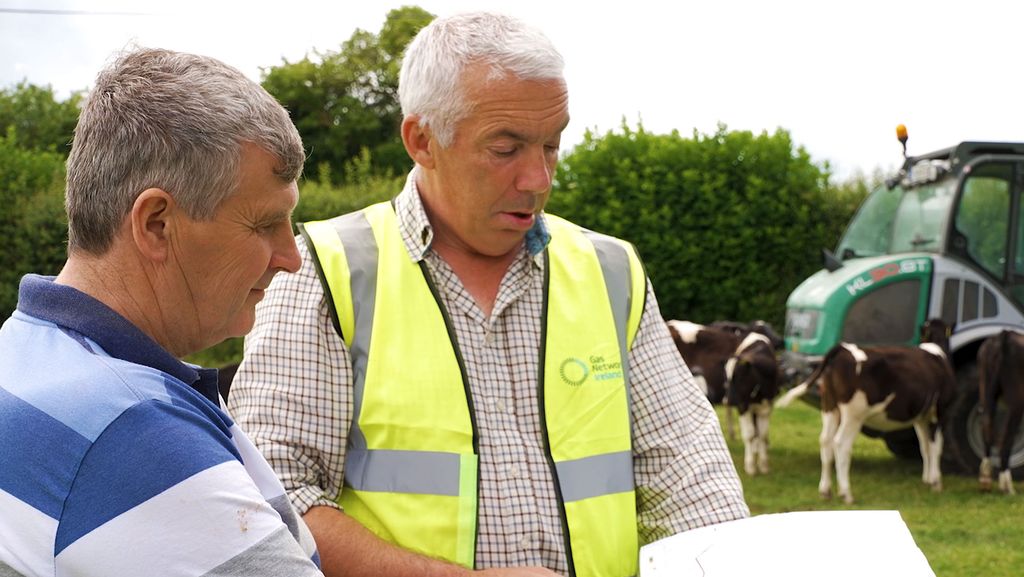
While pipelines are often hidden from view, there are some visible indicators that can help identify their presence.
Marker posts
Marker posts along field boundaries and roadways indicate a high-pressure gas pipeline nearby, especially in open countryside with no other visual cues.
They show the general pipeline route and alert landowners and contractors to underground infrastructure.
However, posts can be moved or damaged, and pipelines may change direction, so never assume a straight line between markers.
The location of the gas main can be confirmed by an onsite inspection. Please contact our Dial Before You Dig service to arrange.

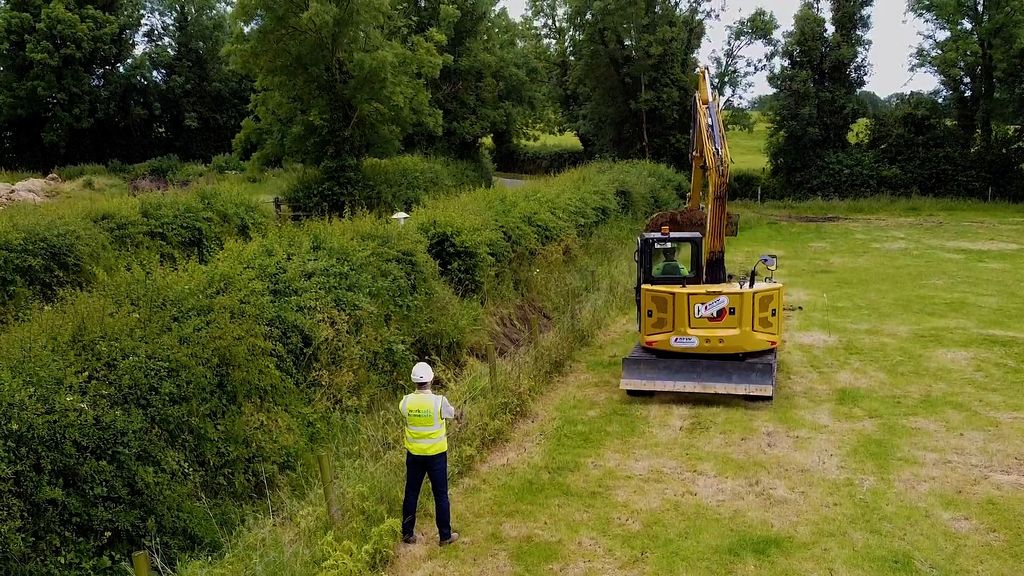
Activities that can put farmers, landowners or agricultural contractors at risk of hitting gas pipelines include:
- Drainage works;
- Fencing (especially driven posts);
- Land reclamation;
- Digging foundations for sheds/outbuildings;
- Trenching for services;
- Creating or cleaning ditches or farm roadways.
Gas Networks Ireland is available to help farmers, landowners or contractors at any stage during excavations; whether that is before a job, during the work, or if an emergency arises.
In addition, using the Dial Before You Dig resource can help avoid costly delays or - in a worst-case scenario - injury or loss of life.
The message is to: ‘Always dial before you dig’.
Other free resources from Gas Networks Ireland include:
- Email ([email protected]);
- Using the Dial Before You Dig contact number, 1800 427 747.
You might also be familiar with its safety campaigns, including its ‘ambadgador’, Keith the Badger.
Gas pipeline on land
If you discover a gas pipeline on your land:
- Stop work immediately and make sure the pipeline is left protected and undisturbed;
- Contact Gas Networks Ireland immediately on 1800 20 50 50 (a 24-hour emergency number).
If there is any sign of damage or gas leak, eliminate ignition risk; do not operate electrical switches, plant/equipment, or even your mobile phone.
Do not attempt repairs - let Gas Networks Ireland handle that.
Dial Before You Dig
Tommy Lee is encouraging people to contact Gas Networks Ireland.
“We're not trying to stop people from enhancing their farm, their land, or their facilities around their farm," the network safety manager said.
“But once they interact with us, we will liaise with them.
"We will ensure that any activity that's pre-planned is done in a safe, controlled manner - controlling and reducing the risk of any harm to any individual, livestock, farm, building, whatever it may be."
Once you engage with the Dial Before You Dig platform, a Gas Network Ireland representative will contact you to make arrangements to identify the location of any pipeline on your land.
They will also advise on what precautions need to be put in place ahead of any planned works, and can also send out an engineer for the duration of a job, if necessary.
Planned visits to farmers are also carried out throughout the year to help with excavation activities on their land holdings.
“That, again, is free of charge," Tommy stressed.
“Pre-plan, be safe, and contact us.”
A moment’s preparation can save you from property damage, injury, or even death.
Remember the simple message to Dial Before You Dig.
It could save a life, or at the very least, costly delays - the number is 1800 427 747.
Sponsored by