Farmland among habitats targeted by Birdwatch Ireland restoration plan

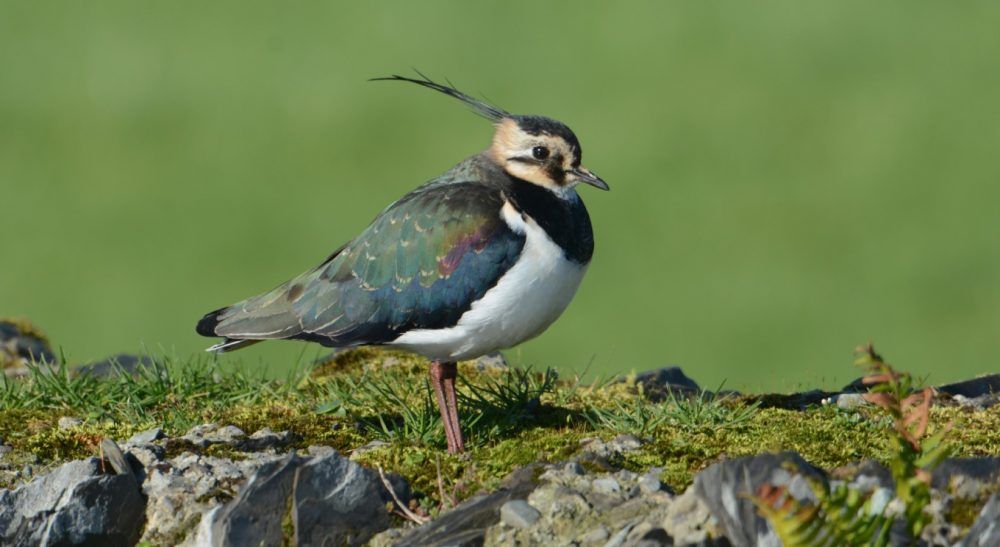
Farmland is among the habitats featured in a BirdWatch Ireland restoration plan aimed at addressing the “alarming and relentless bird population declines” in Ireland.
‘Restoration of Habitats of Red and Amber-listed Birds of Conservation Concern in Ireland’ outlines where restoration efforts for threatened birds should be focused by government to 2030 and beyond.
This coincides with the Irish government’s current open public consultation for Ireland’s national Nature Restoration Plan.
According to BirdWatch Ireland, restoration of wetland habitats will provide the greatest benefit to Ireland’s threatened birds.
The BirdWatch Ireland Plan identifies 71,450ha of protected wetland habitat around Ireland with restoration potential to help 52 key bird species.
Four broad wetland habitat groupings were identified; moorland; lakes and turloughs; estuaries and intertidal habitats; and wet grassland and fens.
An additional 38 areas were identified for habitat restoration for 10 threatened seabird species.
Farmland
Farmland habitat has also been identified for restoration for a range of widespread and scarce species.
Birdwatch Ireland said that areas with higher numbers of the more widespread target species are distributed across Ireland, therefore measures to restore farmland habitats, particularly through agri-environment schemes which focus on measures to support these species, will be generally beneficial.
It added: “Restoration measures for the target farmland bird species in general should focus on maintaining and restoring the ecological support networks that provide sufficient nesting, roosting and feeding areas to allow populations to recover to sustainable levels.
“As most farmland in Ireland is in private ownership, agri-environment schemes are the main way in which farmers can be incentivised to undertake measures to benefit farmland birds.”
For birds of prey such as kestrel and barn owl, this includes measures to provide prey-rich habitats, such as extensively managed grasslands, rough grass margins and high-quality hedgerows, as well as providing "appropriately sited nest boxes".
For small farmland birds such as the yellowhammer, BirdWatch Ireland recommended measures such as leaving winter stubbles or providing cover crops that can provide seeds to help wild birds survive the winter.
These measures, it said, will also benefit stock doves, together with retaining mature trees that can provide nest sites.
‘Dire situation’
Dr. Andrew Kelly, CEO of BirdWatch Ireland, said: “For far too long, BirdWatch Ireland has been calling out the dire situation of most of Ireland’s birds. 63% of Ireland’s bird species are in serious trouble.
“Birds are indicators of the health of our environment and it’s obvious that it is in very bad shape.”
Birdwatch Ireland said that if funded appropriately, restoration of these habitats would be a significant step in the right direction towards address “alarming and relentless bird population declines” in Ireland.
The plan, which is based on a scientific approach, presents the process for identifying species, habitats, areas for potential restoration, maps and the restoration measures for each habitat identified.
Dr. Kelly added: “There is a golden opportunity now for government to develop an ambitious restoration plan for nature in Ireland.
“I call on Minister for Nature Christopher O’Sullivan to integrate the findings of our plan for birds into the National Nature Restoration Plan and to fully fund restoration so that we can offer hope for the future of Ireland’s birds.”
Oonagh Duggan, head of policy and advocacy at BirdWatch Ireland, said: “We identified key threatened bird species and linked them to protected habitats as well as farmland habitat where they occur.
"This allowed us to map areas of opportunity for habitat restoration – an approach which is central to the first phase of national restoration out to 2030. We also have proposed a suite of restoration measures.
"If these measures are funded, incentivised and action is taken, this will be a significant step forward for Ireland’s birds.”
The BirdWatch Ireland Restoration Plan for birds identifies 9,000ha of habitat in public ownership which it said could progress restoration efforts for birds quickly, if state agencies comply.
Duggan said: “In addition to restoring habitats, many of the restoration measures we suggest would also help to improve water quality, mitigate flood risk, help meet climate targets and benefit people.
“This is a plan which gives hope, as well as a practical way forward for government to make progress on restoration, with multiple benefits, especially for the most threatened of our wild bird species.
“Our countryside and skies have gone far too quiet due to the loss of birds. It’s time to bring the birds back to our hills, lakes, farmland, towns and cities.”
The Nature Restoration Regulation is in force across the European Union and requires that Ireland develops a national Nature Restoration Plan for submission to the European Commission by September 2026.
The regulation requires the restoration of sufficient quantity and quality of habitats for birds on terrestrial, coastal, freshwater and marine habitats. It also requires greening of urban centres.