How does feed impact cow performance?

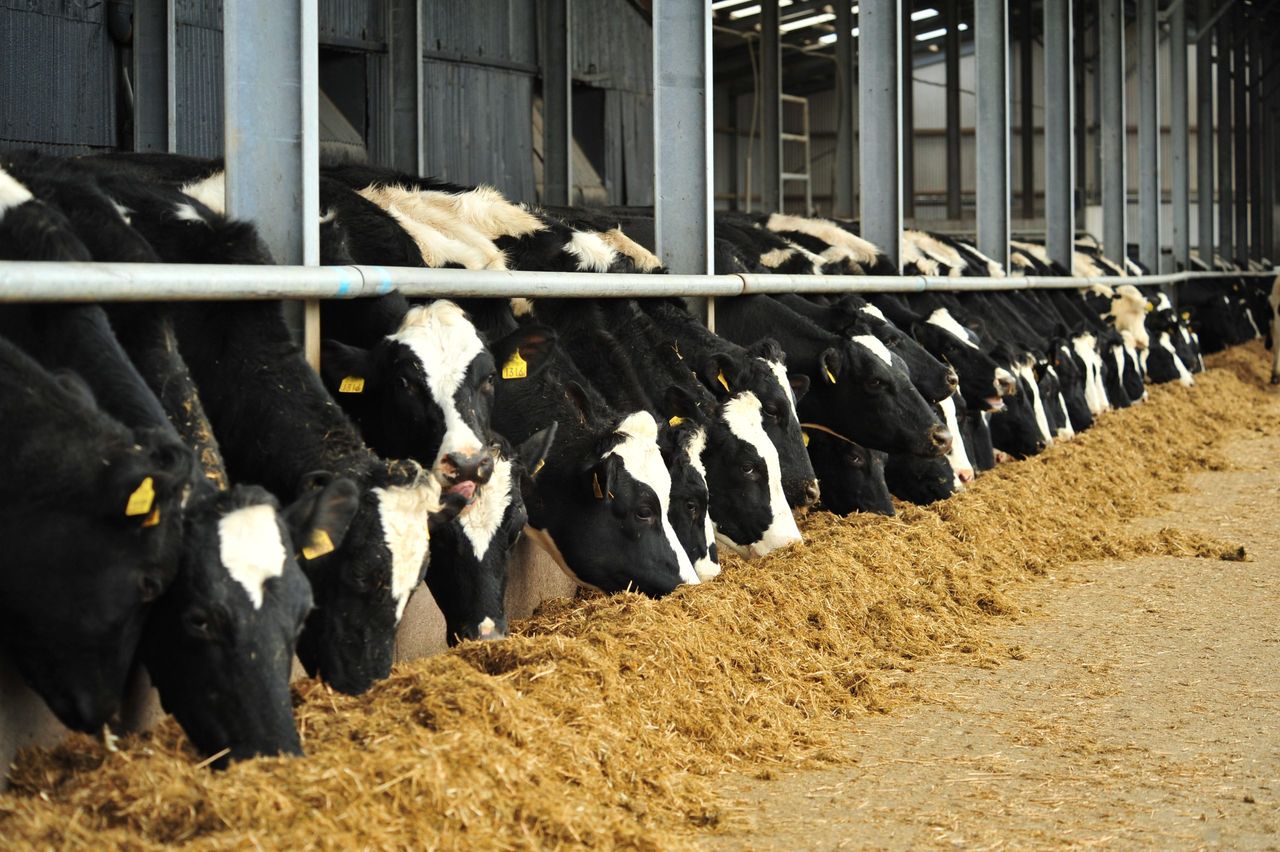
During periods of drought, it may be necessary for dairy farmers to supplement cows' diets with concentrates to maintain production levels.
According to Teagasc, typically, concentrates offered to dairy cows are in the form of cereal grains and residues of oilseed crops.
However, harvest by-products can be an alternative and less expensive option as feed for ruminants.
Teagasc carried out a study of feed supplements during the 2018 drought to compare the impact of various feed supplements on production.
The trial included palm kernel expeller (PKE), soya hulls, beet pulp, and concentrates.
The cows' diet consisted of 2kg feed supplement, 4kg parlour concentrates, 5kg silage, and 6kg grass, fed over eight weeks.
The study found that PKE saw increased milk fat (4.77%) but lowered protein (3.45%), when 2kg of PKE was fed over eight weeks yielding 1.59kg milk solids/cow/day.
On-farm outcomes
One farmer who spoke to Agriland is feeding 3-4kg PKE, 2kg silage, 4kg concentrates and 8kg grass to cows.
The milk docket showed fat had jumped 0.24% and protein remained unchanged as litres remained unchanged.
Interestingly, lactose saw a 0.08% drop with the inclusion of PKE.
PKE as a feed for dairy cattle is often contentious as it can contain elevated levels of minerals and trace elements, beyond recommended limits.
A New Zealand-based study by the Multidisciplinary Digital Publishing Institute (MDPI) found that iron, aluminium, magnesium, and phosphorous were all above the maximum tolerable level (MTL).
Copper was also found to be at 90% of allowable MTL.
These high concentrations risk causing health benefits for cattle such as toxicity and liver damage in certain cases.
The study analysed liver copper levels but could not find a statistically significant difference between cows fed PKE and those not.
However, it advised that further studies with larger sample sizes were needed to determine the potential effects of high PKE.
Teagasc study
Concentrates can also be fed to cows during periods of low grass growth. Many farmers are feeding up to 4-6kgs of concentrates per day currently.
The 2018 Teagasc study found that cows produced milk yields of 1.77kg/cow/day (with fat 4.58% and protein 3.65%) when fed 6kg of concentrates with 6kg of silage and 6kg of grass.
However, farmers need to consider the mineral composition of concentrates.
Many farmers will be supplying the cow with sufficient calcium and magnesium through the meal in the parlour.
If increasing meal allocations, the farmer must ensure that the meal nutrient levels are adjusted, as high calcium or magnesium can result in temporary scouring.
In the 2018 study, Teagasc found that soya hulls feed at 2kg/day resulted in cows producing 21.5kg milk/cow/day at 1.74kg milk solids with 4.70% fat and 3.56% protein.
Beet pulp when fed at 2kg in the same study saw a milk yield of 20.6kg/cow/day and 1.62kg milk solids per cow.
Energy maths
A farmer can follow simple math to work out a cow's energy requirements.
Cows producing 3.6% fat will require 0.44UFL per Litre (energy units equivalent to 1kg of barley).
The maintenance UFL is also added. Housed cows have maintenance UFL of 5 and 6 UFL for grazing cows.
Example: A cow producing 22L will require 9.68 UFL (22L X 0.44) for production. As the cow is still grazing, she needs another 6 UFL for maintenance. Therefore, the total UFL requirement is 9.68+6=15.68 or 16 UFL.
The UFL value of silage varies significantly. Silage with a dry matter digestibility (DMD) of 76% or higher has a UFL of 0.90-0.95/kg DM.
If the silage DMD is between 55-65% (often from old stemmy grass harvested late in season), the UFL is only between 0.7-0.8.
It is Teagasc advice that farmers purchase concentrates with UFL values greater than 0.94, as low levels will result in cows having to consume more or risk relapsing into a negative energy balance.
Good quality concentrates can have a UFL value of 1.1, so cows will require lower quantities than PKE, which typically has a UFL value of 0.8-0.85 for fresh weight (UFL/kg DM of PKE = approximately 0.90).
Soya hulls have a higher UFL of 0.91/kg, and beet pulp is very energy dense with a UFL of 1/kg of feed.
Grass as always is the cheapest form of feed, however drought conditions will significantly impact energy values.
| Grass quality | DMD | UFL |
|---|---|---|
| Green leaf | 80-90 | 0.95-1 |
| Green stem | 60-70 | 0.73-0.80 |
| Mature stem | 40-50 | 0.45-0.55 |
| Dead stem | 35-45 | 0.35-0.45 |
Farmers are advised to continue grazing but move the rotation out to 24-27 days but not beyond 30 days.
Farmers should not be grazing more than 4% of the grazing platform at one time.
Many farmers are reporting grass "melting away" in fields in the current weather, so delaying grazing too long will only increase waste and potentially delay regrowth when soil moisture levels eventually increase.
Brassica options
A small number of farmers have opted to grow brassicas due to their quick growth and ability to produce large volumes of feed.
Brassicas can suit dairy farms prone to summer droughts, as farmers can get potentially two spring grazings and one autumn grazing while reducing supplement costs during summer.
There is limited research into the effects of different supplementation levels on milk production, so each case must be taken on an individual level.
The most common issue is many farmers end up under-feeding, leading to reduced yield. If unsure, farmers should speak to advisers.
Feeding high protein supplements will not directly increase milk protein levels. Energy is the main driver of protein production.
The key takeaway from advisers is to make sure cows are well-fed.