Video: Alan O’Reilly on whether rain is on the way

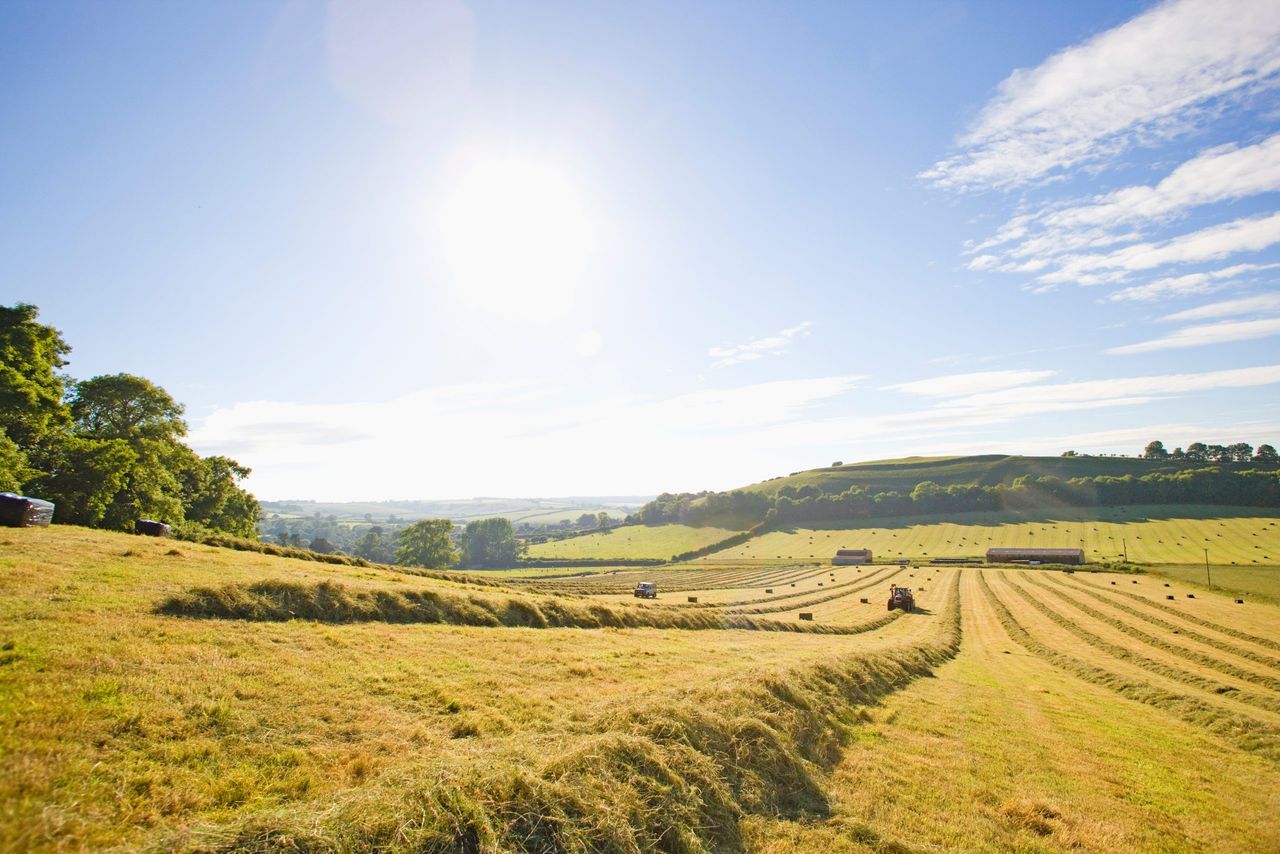
Farmers are being warned to brace for more scorching temperatures and drought-like conditions in the future.
According to Alan O’Reilly, the forecaster behind Carlow Weather, extreme weather could become an increasingly regular feature in the years ahead.
"You're probably talking about something that was a 1/10 or 1/15 years event becoming more like a 1/5 or 1/6 (years event)," he said.
Rainfall
According to O'Reilly, Ireland has seen an average amount of rainfall so far this hydrological year.
O'Reilly said that the hydrological year starts in October and ends in September, and due to the wet Autumn and Winter of 2025, this summer was always going to be drier.
He highlighted that this was amplified through the high evaporation rate that was caused by this summer's heatwave.
According to the founder of Carlow Weather the biggest issue with the current heatwave is the variation in rainfall across regions.
He also outlined the issues around SMD - the amount of water needed to return the soil to the maximum water it can hold.
"The Soil Moisture Deficit (SMD) at Oak Park in Carlow is up to 93mm now, whereas it's only zero on the West coast and in parts of the North coast".
"There has been rain in part of Cork, it got 20mm more than Carlow got.
"Carlow's only got four milimetres of rain for the entire of July and the first 12 days of August.
"So, it's been exceptionally dry, exceptionally warm, very sunny after a very wet start to the year, and that's kind of what climate change is going to bring.
"It's going to bring those heavier rain spells, and then it's going to bring the more extreme droughts" O'Reilly added.
Despite the recent long spell of high temperatures O'Reilly said "we see in and around the same amount of rainfall every year, give 10 or 15%".
He said it is "very likely" there will be rainfall in the autumn and winter that will balance it out over the entire the year.
However, O'Reilly also warned that waterlogged conditions could appear very quickly with too much rainfall.
Europe
While Ireland seen very hot weather spells this summer, according to O'Reilly, Ireland has not suffered as much as some parts of mainland Europe.
"Europe is being hit worse because Europe also had heavy rain -including France, Spain and Portugal early in the year - which created a lot more fuel, and then the fires and the intense heat.
"Northern France, which you wouldn't expect, has broken so many records this summer.
"It's been over 40 degrees, and over 70,000 hectares of land has burnt in France," said O'Reilly.
The European Forest Fires Information System (EFFIS) of the Copernicus Emergency Management Service estimates that a total of 642,692ha has been burned so far this year.
Alan O'Reilly also pointed to the fact that the UK has experienced a worse drought than Ireland.
"We're lucky in some ways that while it is very severe in the southeast at the moment, it could be a lot worse if you were in some other parts of Europe," he said.
Additional reporting by Thomas Maher