European milk output forecast down to 1.3% for 2026


The annual forecast for European milk supplies has been revised downwards from 1.8% to 1.3% for 2026, according to a new report.
Milk flows in both Germany and France saw a fell sharply in late June due to the impact of hot weather on farms.
Ornua's latest Market Report notes while supplies in these countries have since recovered the outlook for European supplies this year has been scaled back.
Overall, EU milk collections rose by 2.5% in May and are expected to rise by a further 2.3% in June.
Milk supplies
In June, collections in Germany were up 6.5%, setting another monthly record, but weekly data shows growth eased in late in the month.
After falling in May, French collections decreased -1% inJune as heatwaves affected late June flows.
On June 23, France recorded its hottest day ever with temperatures climbing as high as 44.3°C in the southwest of the country.
Ornua said Irish output dropped by 3.2% in June, with a further decrease anticipated for July as hot conditions impact grass growth.
Domestic milk intake by milk processors and co-ops was estimated at 1.05 billion litres in June 2026.
This represents a decrease of 35 million litres, according to the Central Statistics Office (CSO).
Following a "robust" first quarter (Q1) in the UK, flows eased in Q2 as weather impacted pastures.
The Netherlands saw milk collections increase by a further 3.2% in June, while in Poland flows were up 2.7% in the month.
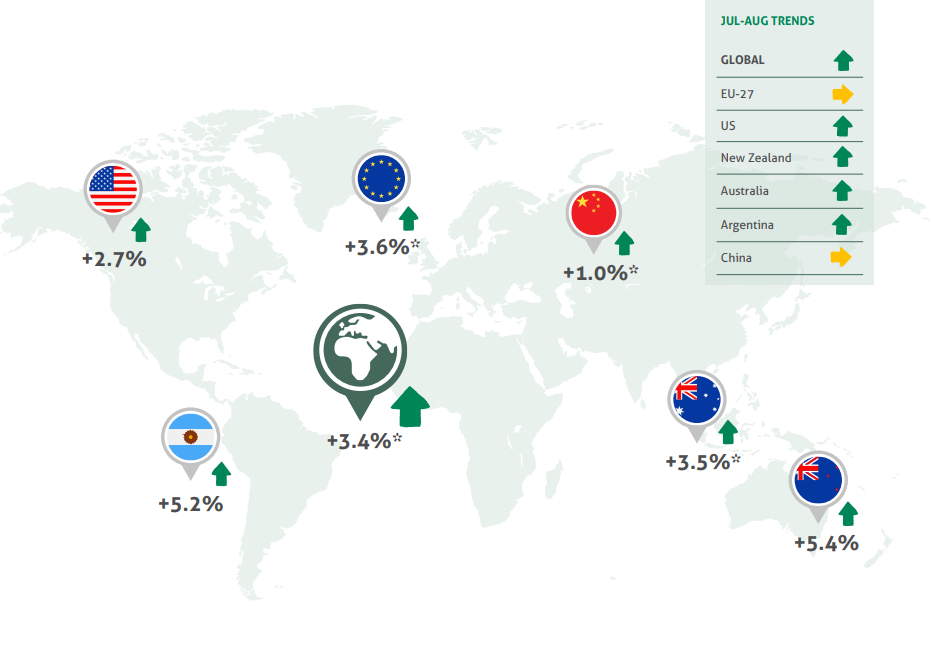
Globally, collections were up by around 2.2% in June, with growth observed in most major regions.
Solids continue to expand at a fast rate in the US where milk supply grew by 2.3% in June.
Production is at record highs in New Zealand and output is better than forecast in Australia.
Ornua said that while there is a "greater likelihood" that hot weather will affect milk flows across the major producers, the annual global forecast remains around +1.7%.
Demand
The report shows that demand "surpassed expectations" in the summer.
The heatwaves led to buyers engaging earlier than usual, which "provided an unexpected boost to commodity pricing".
"It is most likely that the cheese and protein markets can best sustain the July price increases.
"Additionally, commodities usually benefit from a seasonal lift in activity in late August and September.
"However, against a backdrop of solid global milk supply and the likelihood that exports will slow in the second half of the year, we remain cautious about the potential for significant price increases," the report said.
As consumers cut back on discretionary spending, the pressure on foodservice sales continues.
Ornua warned there is "uncertainty" over the US tariff announcement relating to excess capacity and opposition to aspects of the EU’s digital services regulation.