Don't count your chickens before egg emissions are calculated

Contrary to popular belief, free-range eggs may not be more environmentally friendly than 'cage'-produced eggs.
That's according to a new study published by the Royal Society.
Focusing on the production of eggs in the UK, it compared the effects of cage, barn, free-range, and organic free-range production systems on emission levels.
The study,, titled 'The environmental cost of welfare-driven policy changes in UK egg production', also analysed the mortality, slaughter rates and population required to maintain production levels.
Major differences between husbandry systems are found in the space per hen and environmental enrichments. Regulations require cage hens to have at least 750cm² of space.
Barn hens can roam freely indoors but not outside. Free-range and organic free-range both have indoor and outdoor access.
A battery cage system, although legally banned in the UK, was also included for comparative purposes, as it is still used in major egg-producing countries.
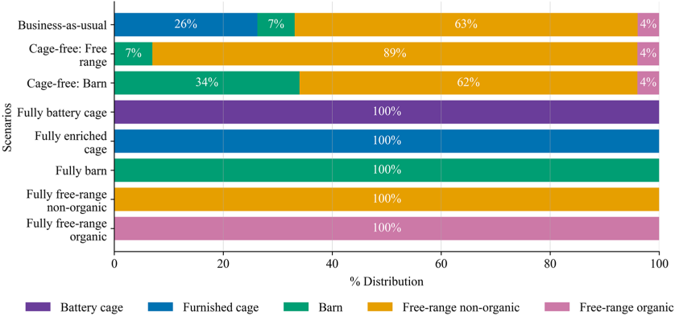
The study analysed the impact of transitioning cage production (27% of production) to a free-range system and to a barn production system based on 2022 production levels.
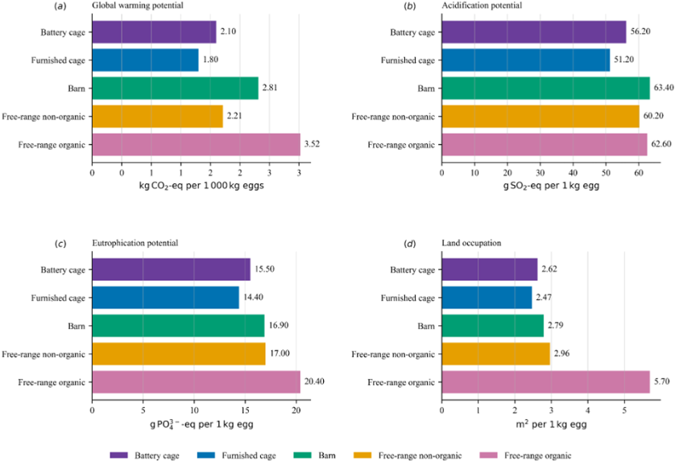
The study found that organic free-range systems had a higher global warming potential per 1,000kg of eggs produced.
This system had a value of 3.52 kilograms of carbon dioxide equivalent per kilogram (CO2-eq kg–1) compared to 1.80 CO2-eq kg–1 for cage systems.
By moving production from cage systems to free-range production, the study found that to maintain production, emissions would increase by 5.84%.
A switch to from cage to barn production would increase emissions by 13.55%.
In a scenario where production moved to an entirely cage-based system, emissions would reduce by nearly 18%.
Meanwhile, a battery system would only reduce emissions by less than 4%.
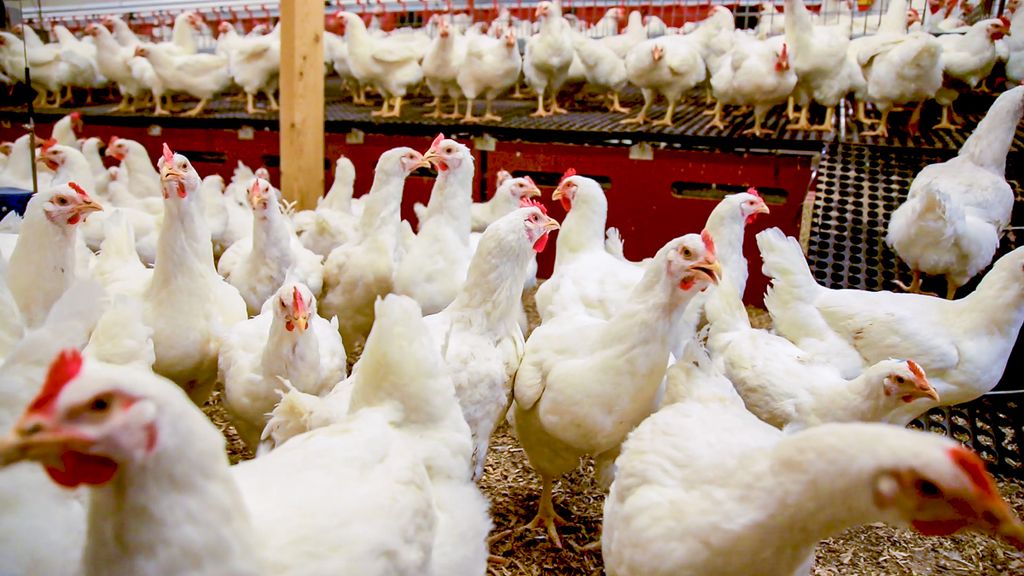
The study was based on a population of 40.44 million laying eggs across all systems, with approximately 74% of production occurring in non-cage systems.
If cage systems moved to a free-range model, the UK would require a 1.01% increase in hen population, according to the researchers.
Moving from cage to barn systems would require a 0.74% increase in laying hen numbers.
The study found that cage systems had lower mortality numbers and hens slaughtered, but also required significantly fewer hens to maintain production levels, hence colonys have lower numbers culled.
The study concluded that environmental impacts must be considered when animal welfare changes are being assessed, if production levels are to be maintained.