Kinisla confirms financial performance for 2025

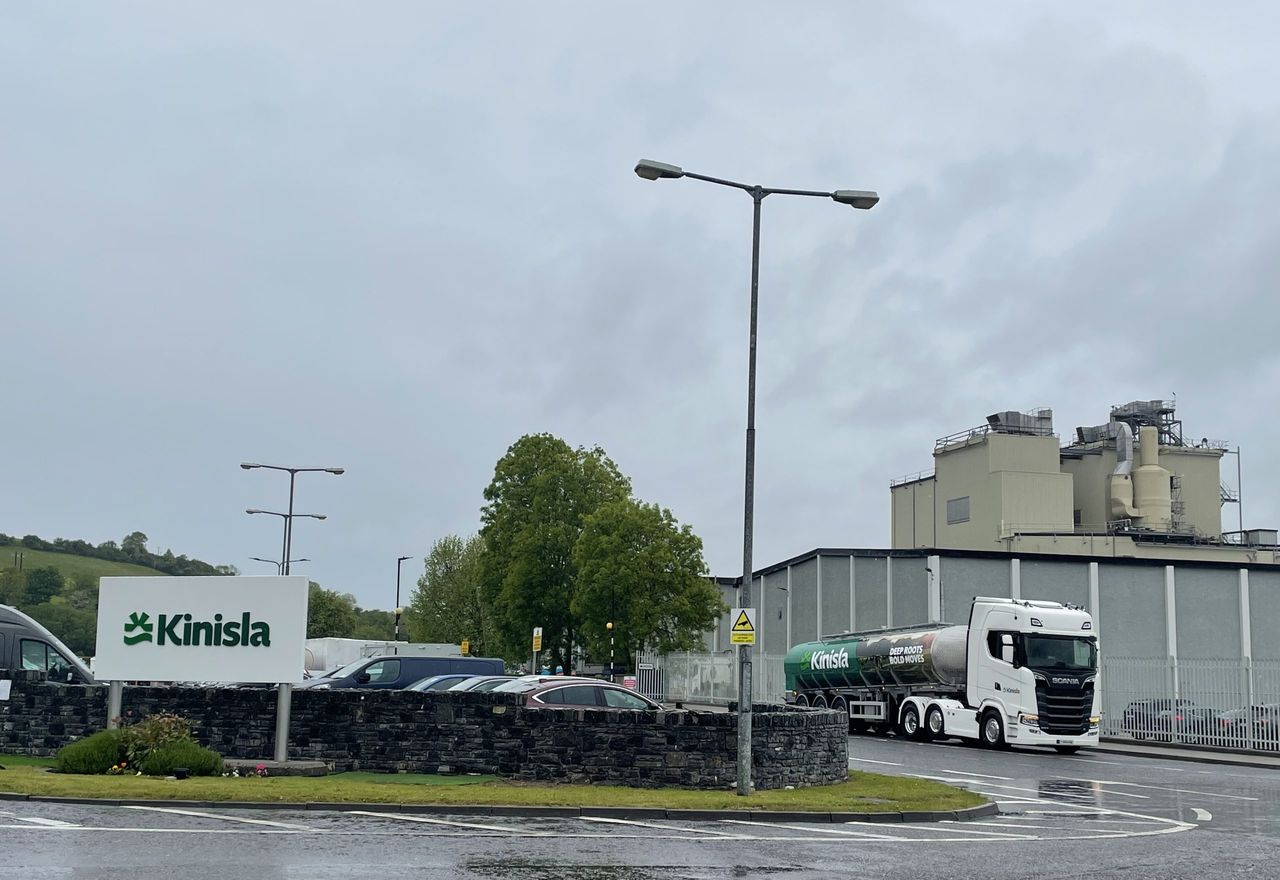
The financial performance of dairy business Kinisla for 2025 has been outlined in a newly published set of accounts.
The annual report of Kerry Co-Operative Creameries, which primarily reflects Kinisla's performance, shows that revenue reached almost €1.4 billion last year.
Kinisla is 70% owned by Kerry Co-op, with the remaining 30% owned by Kerry Group.
According to the financial statements, earnings before interest, tax, depreciation and amortisation (EBIDTA) stood at €81.3 million.
Operating profit was €47.8 million, while profit after tax was recorded at €32 million.
The accounts show that net debt at the end of the year were €69 million.
There had been numerous calls for the accounts to be published ahead of the deadline for suppliers to sign the new milk contract with Kinisla on Tuesday (August 4).
Kinisla
Pat Murphy, chief executive of Kinisla, told Agriland that 2025 was "a very strong year" for the business.
"We turned over €1.4 billion, we made an EBITDA of almost €81.5 million.
"It's a very strong performance in comparison to other cooperatives in the country or even outside the country," he said.
Murphy said Kinisla has “built up a fine business” in recent decades, which includes well-known consumer foods brands such as Cheestrings.
He said the company may have to consider further potential investment in its cheese snaking business to meet demand as processing capacity is running out.
On the nutritional ingredients business, Murphy said that protein demand in Europe and the US is at “an all-time high”.
He believes this situation will continue due to the rising trend of GLP‑1 weight‑loss drugs.
"We are in an ideal position to satisfy that demand over the next couple of years," he said.
Murphy was also positive about Kinisla’s performance in the first six months of 2026, stating the business is “on target to achieve what we set out to achieve at the start of the year".
Investment
In May, Kinisla confirmed plans to invest €300 million in the business over the next five years.
This will be focused on the main growth opportunities in the company, such as the consumer foods, retail and nutritional ingredients businesses.
"We’re going to be very careful how we invest that €300 million, but we have some very strong projects in the pipeline at the moment," Murphy said.
He noted that any project will be subject to board approval over the coming months.
Milk price
Murphy said milk prices in 2026 have been impacted by reduced returns for butter, cheese and skim milk powder compared to previous years.
"Overall it's been a difficult first six or eight months for farmers because the milk price has been quite low in comparison to last year and the cost of production at farm level, we fully understand, has gone very high over the last couple of years," he said.
Murphy said until there is a reduction in milk output across America, New Zealand and Europe milk prices will struggle in the next few months.
However, he said that "things can change fast", citing a rise in butter prices in the past week as customers seek to secure product due to concerns about the potential impact of the heatwave in Europe.
"Hopefully, that the markets will improve in the coming weeks and months so that we can pay a higher milk price to our farmers," he said.