How can the carbon footprint of potato crops be reduced?

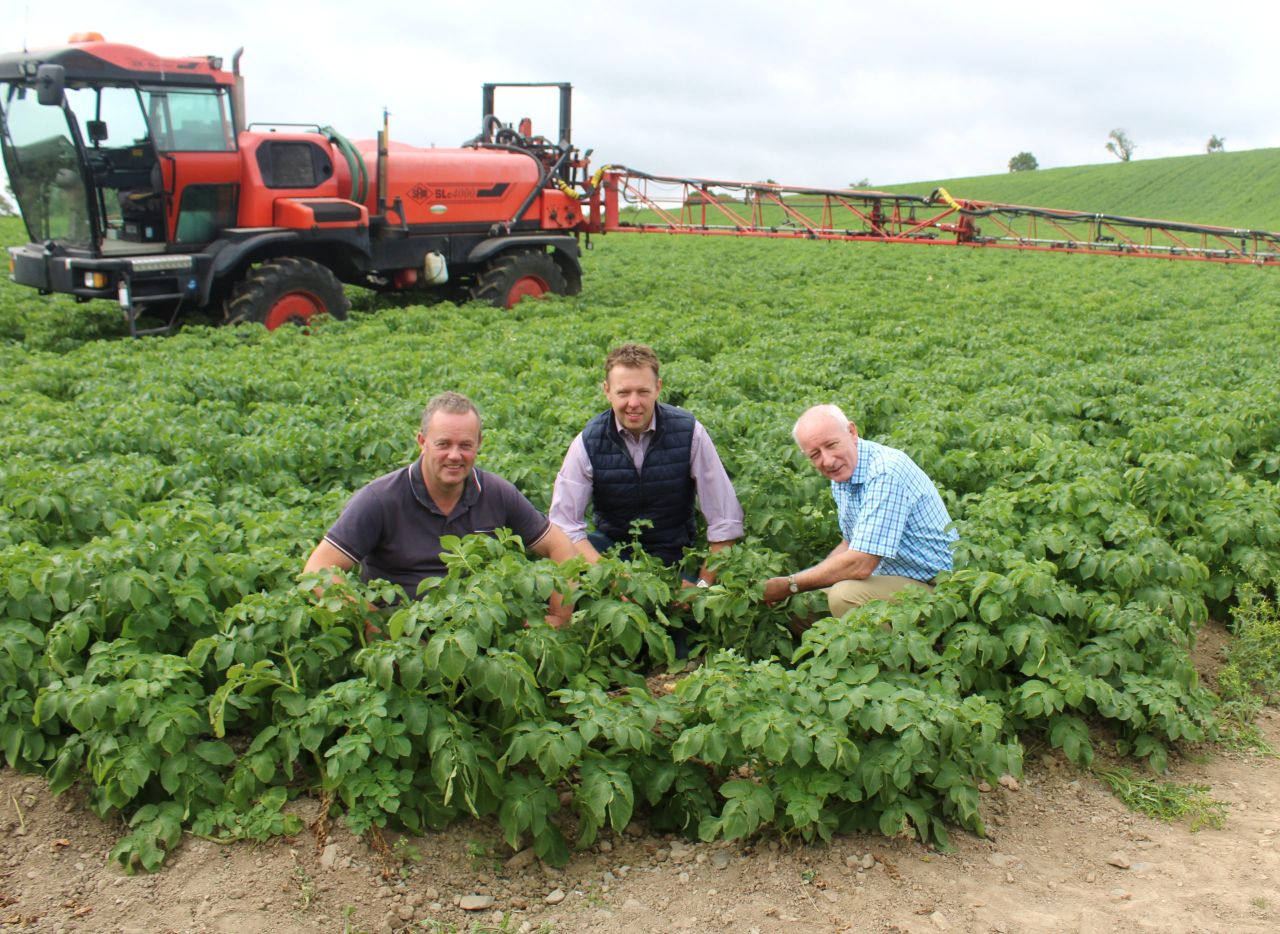
Potato packer and processer, Wilson’s Country is trialling methods of production that result in lower carbon emissions.
The company has secured significant reductions in its carbon footprint in recent years.
However, up to now, its investment in both new technologies and management systems has focussed very much on the company’s processing and distribution operations.
A case in point is the development of an anaerobic digestion (AD) plant that uses waste potato peelings from the business as a key feed stocks.
The digester is now producing almost 60% of the company’s electricity needs.
In January of this year, the company also installed a solar array on their cold store site.
In tandem with this, an agreement with haulier McCulla Ireland ensures that most Wilson’s Country product lines are distributed to customers in lorries that are fuelled by fully renewable bio-methane as opposed to diesel, which was the case a few years ago.
Production footprint
But reducing the carbon footprint of the Wilson’s Country operation as a whole requires the development of a solution that will also encompass the actual growing of potato crops.
And work to this end is now ongoing.
Company managing director, Lewis Cunningham, takes up the story: “This year we initiated a trial using digestate from our AD operation as the main fertiliser source for a potato crop produced under totally commercial growing conditions."
According to Cunningham, the highest contributor by far to carbon footprint of a potato crop is fertiliser.
“We selected the second early variety Manhattan for the purposes of the project.
“The site selected features a high organic matter soil. Prior to ploughing, digestate was applied to the plot. The crop was planted out at the end of April," Cunningham outlined.
It was recognised from the outset that the digestate could not supply all the nitrogen required by the growing crop.
Wilson’s agronomist, Stuart Meredith, commented: “We did not want to use chemical fertiliser as this would simply add significantly to the carbon footprint of the crop.
“So, we took the decision to use a liquid-based mineral catalyst that converts nitrogen oxides and nitrous oxide in the air into plant-available nitrate, which is absorbed through the leaves."
He explained that the new technology delivers two key benefits.
"In the first instance, it can deliver up to 50kg/ha of plant available nitrogen over the course of a growing season.
“And, by virtue of the fact that the process is removing potent greenhouse gases from the atmosphere, the carbon footprint of the growing process is significantly reduced.
“The catalyst is available in liquid form, which is water soluble. It is simply included within the blight control programme and applied to the crop in spray form on a fortnightly basis," Meredith said.
Trial crop harvest
Weather permitting, it is envisaged that the trial crop will be harvested in mid September.
Cunningham added: “The use of the digestate reflects our commitment to the development of a circular economy within the Wilson’s Country operation.
“Manhattan is a second early variety, which should be ready for harvest in mid-September: weather permitting.
“Directly after harvest, we will analyse the results achieved with a clear focus on assessing the carbon footprint of the project in full."
These results will be compared with those achieved from crops of Manhattan produced using a standard fertiliser regime, the Wilson’s Country representative explained.