Sponsored
'Higher welfare hens mean everybody wins'

Sponsored by

The Teagasc National Layer’s Conference in Monaghan last month focused on a range of practical topics around poultry flock health.
One of the speakers, David Hodson from Rosehill Agri, spoke about ‘The Principle of Optimal Poultry Performance’ and the impact effective red mite control can have on production.
He certainly caught the attention of the room when he quoted a return of €1,900 for every €1,000 spent on appropriate treatment.
David explained this figure was generated by monitoring performance post-treatment across millions of hens.
He said: “The important thing is to know whether you have poultry red mite and how bad an infestation is.
“I’ve visited units that have been really badly affected by mites and the farmer is adamant that he doesn’t have a problem.
"I really think the industry needs to educate producers about the problem and how to tackle it effectively, because seeing higher welfare hens means that everybody wins - the farmer, the hen, and the industry as a whole.”
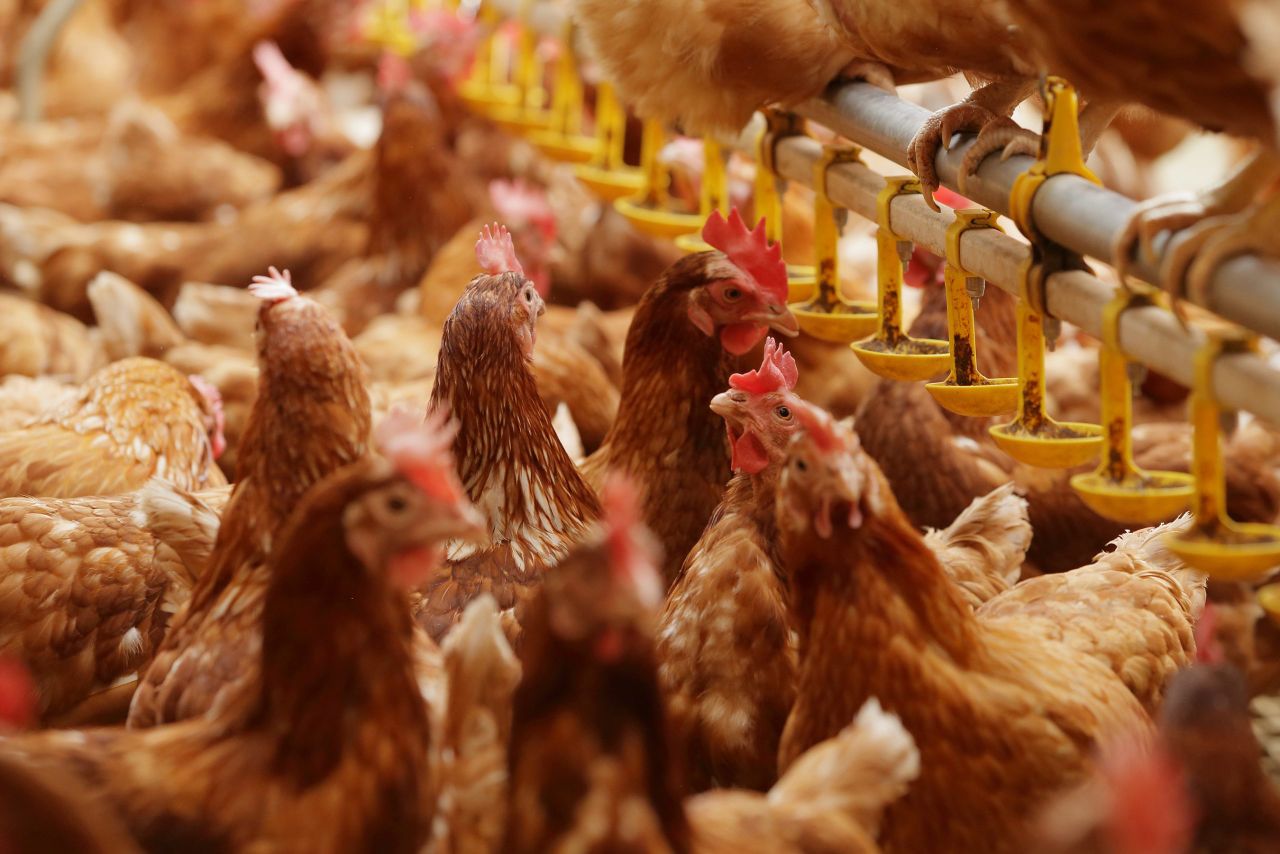
Poultry red mites exist on nearly every farm, living in cracks and crevices within the hen house, emerging at night to crawl onto and suck blood from the birds.
Whilst small numbers of mites may be tolerated by laying hens, heavy infestations result in reduced productivity due to anaemia, decreased quality and quantity of eggs produced, reduced growth in younger birds and reduced immunity leading to the presence of other diseases.
“It helps to understand why red mites have such a profound impact on production," David explained.
"A laying hen needs around 165 calories to make a 63g egg, but if she suffers 5-10% blood loss due to feeding mites, she needs to increase feed consumption as a result.
"Eggs form within the hen overnight, so lack of sleep, irritation and increased stress caused by biting mites has a significant impact on egg size, quality and volume."

Mites are also known to carry a multitude of viral and bacterial pathogens that can be transmitted to both birds and humans, including E. coli, salmonella and listeria.
“Mites spend up to 20 minutes feeding through a spike called a proboscis, before moving on to another hen. The proboscis acts as a vector, transmitting bloodborne diseases.
"I’ve seen farms that have been devastated by erysipelas, losing 300-400 birds per week - it was horrendous for everyone involved.
"Controlling red mites proved to be a crucial part of controlling the outbreak.
“It’s also worth remembering that mites can lay dormant between production cycles and spread these diseases to new pullets," David said.
Treatment
MSD Animal Health markets an effective systemic treatment that contains fluralaner and has been available for the control of poultry red mite since 2017.
It is the first veterinary product centrally registered in the EU to include animal welfare improvement in its licence.
Studies in commercial layer farms demonstrated that the elimination of poultry red mite from infested hens following treatment with the product significantly improved behavioural indicators of animal welfare.
These included the reduction of night-time activity, head scratching, head shaking and preening at night and during the daytime, as well as a reduction of blood corticosterone concentration.
The MSD treatment consists of two applications (via the drinking water), seven days apart, in order to target all stages of the life cycle. The egg withdrawal period is zero days.
MSD also supply free monitoring packs (available from vets) to encourage egg producers to actively monitor the red mite burden on their farms.
David added: “This product is a game-changer.
"The modern laying hen is a performance animal; by effectively controlling red mite, we can keep birds up to 10 weeks longer, which means more first grade eggs, lower mortality and less money spent on clean out.
"Treating before hens reach their peak lay (between 23 and 30 weeks) gives excellent benefits, as can a midpoint treatment at approximately 40-50 weeks if red mites return.
"In longer-lay flocks, there is still return on investment by repeat treatment at 60-70 weeks.”
More information
For information and advice on the threat of poultry red mite and the best control strategy for your farm or smallholding, contact your veterinary practitioner or MSD Animal Health, Red Oak North, South County Business Park, Leopardstown, Dublin 18, Ireland.
MSD Animal Health can be contacted at: 01-2970220 or emailed at: [email protected]
Sponsored by