Farmyard manure: Fastest route to recovering damaged soil structure

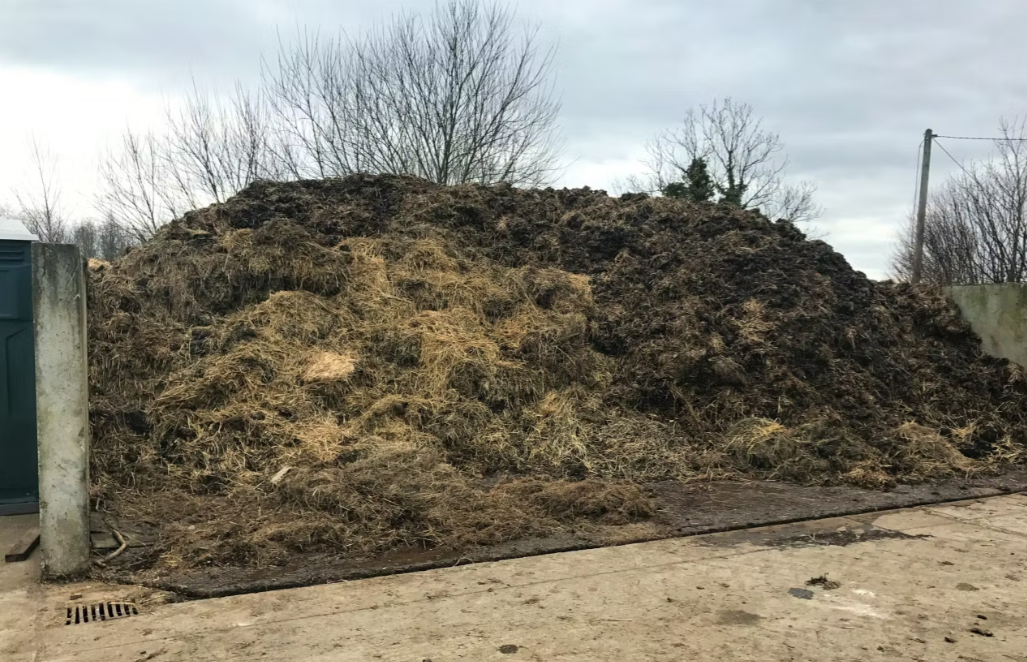
It is often said that slurry is an undervalued nutrient source on some Irish farms, and this too is often the case for farmyard manure (FYM).
Many farmers who use their FYM in a targeted manner will be well aware of its soil health benefits, but other farmers may not be.
The benefits of FYM to soils was one research topic discussed at the recent Teagasc 'Farming For A Better Future' open day at Johnstown Castle, Co. Wexford.
At the soil health and grassland management section of the open day, new Teagasc research (Lepore et al., 2025) exploring the role of slurry, FYM and gypsum in restoring grassland soils degraded by machinery traffic was discussed.
The research was conducted using X-ray CT scanning and physical measurements to test the impact of the different inputs.
Findings
It found that FYM was the most effective amendment, improving bulk density and pore volume within six months of application.
FYM was also found to restore soil structure faster than slurry or gypsum.
The research also found that slurry was effective in moist soil conditions while gypsum enhanced recovery in dry soils over the long-term.
All three amendments (FYM, slurry and gypsum) failed under waterlogged conditions reinforcing the message that timing of application and trafficking matters as much as the product itself.
According to the report: "You can't fix compaction by spreading onto saturated ground."
The relevance of this research to an on-farm scenario would suggest that where soil structure has been damaged, applying FYM or separated slurry solids is the fastest route to recovery, but only when ground conditions allow for it.
The message of the right product, at the right time in the right conditions was also reinforced on the day.