Developing connections between rural Ireland and the diaspora
Two clouds to shroud the heart. The young man from the hill country of north Connemara said goodbye to his mother.
It was the first such parting; it could also be the last farewell.
His venture to the new world would bring him to Oregon, shepherding sheep in the frontier country of that era.
There was no internet, there was no phone or Facetime, and travel was long and arduous.
And as he walked out the door, the dog followed him, his friend who had accompanied him in hills and valleys since he was a boy.The sadness of a parting morning.
The man who told that story at the Emigrants and Diaspora Centre in Carna in Connemara recently had heard it from the parting emigrant of old.
It had stayed with him as his hair turned from grey to white. He was one of the millions who have sown the seeds of Ireland’s diaspora.
Diaspora
The (WDC), which has a remit in the province of Connacht, and in the counties of Clare and Donegal, recently carried out a study regarding the diaspora from this region of Ireland.
Based on the survey carried out by the WDC, 47% of us in Ireland are actively engaged with the diaspora.
The reasons relate mainly to family, descendants and friends. This human aspect of our links to the diaspora supersedes any financial or economic reasons for our relationships with those abroad.
Another 35% of the respondents to the survey said they would like to be more connected with those overseas than they are at present.
The WDC highlighted a number of areas where a strong connection with those overseas has been forged.
They include Inishturk, a small island off the Mayo coast; the Mary from Dungloe Festival in Donegal; and the International Arts Festival in the same county.
The Famine Way in Roscommon, and a number of other projects all along the countryside from Malin Head south to the mouth of the Shannon, also come into the picture.
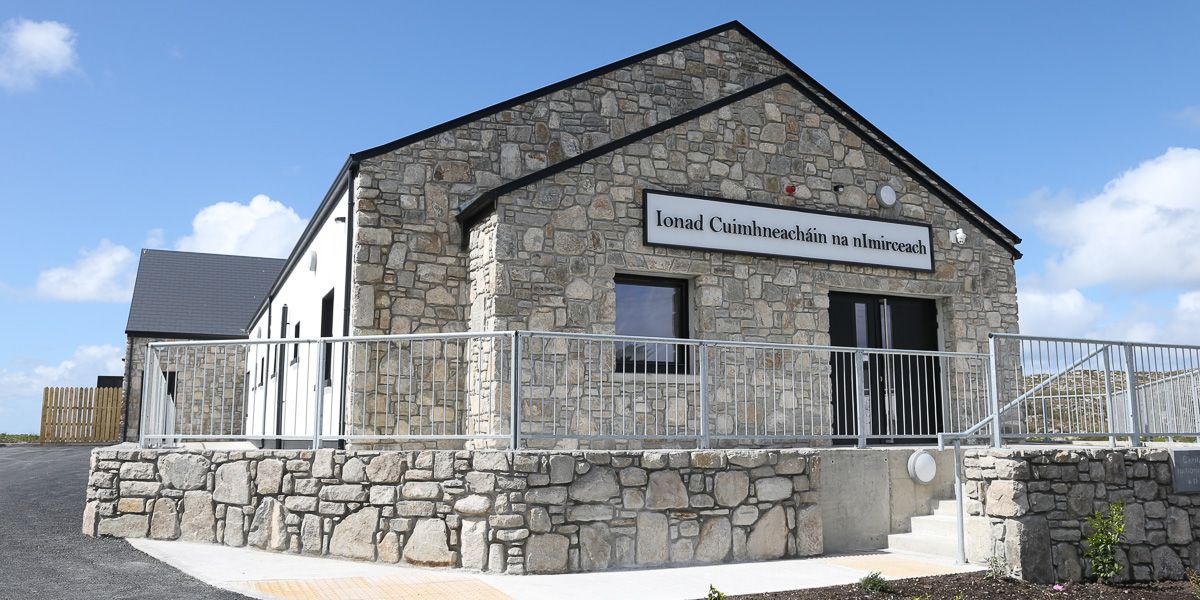
Another project is based in the west Connemara Gaeltacht, known as Ionad Cuimhneachain na nImirceach agus Diaspóra na Gaeltachta – the Emigrants and Diaspora Centre in Carna, Connemara.
This centre is specifically dedicated to the memory of emigrants. It is run by a voluntary board and the project was initiated as result of the publication of a yearbook in the parish, which finds its way to emigrants across the world.
The WDC lauds all of those connections, and apart from the bonds of kinship and history, it is pointed out that there are also very tangible benefits.
These may range from economic, heritage, business, return migration, and various educational and cultural pursuits.
However, the commission calls for better integration and more money. So where does the money come from, and what do we do?
Support
It is more than likely to be a matter of State investment if we want to broaden the diaspora story.
The very worthwhile report from the Western Development Commission does not go deeply into specifics. That is for further discussion.
Is it time to look at a more sustained effort through which young Irish Americans – one possibility – would be brought to Ireland and assigned to work with companies, industries, communities thereby developing a deeper connection with the country?
A number of months would be needed. In so doing, it would be hoped that groups of younger people could be immersed in the country of Ireland, its way of life, particularly its rural life, its culture, history and economic base.
For the relationship with the diaspora must always go to the core of history, and to the heart of that young man - and so many like him – whose memories were shrouded by heart-rending partings.