Watch: Comparing grass growth from different fertiliser types

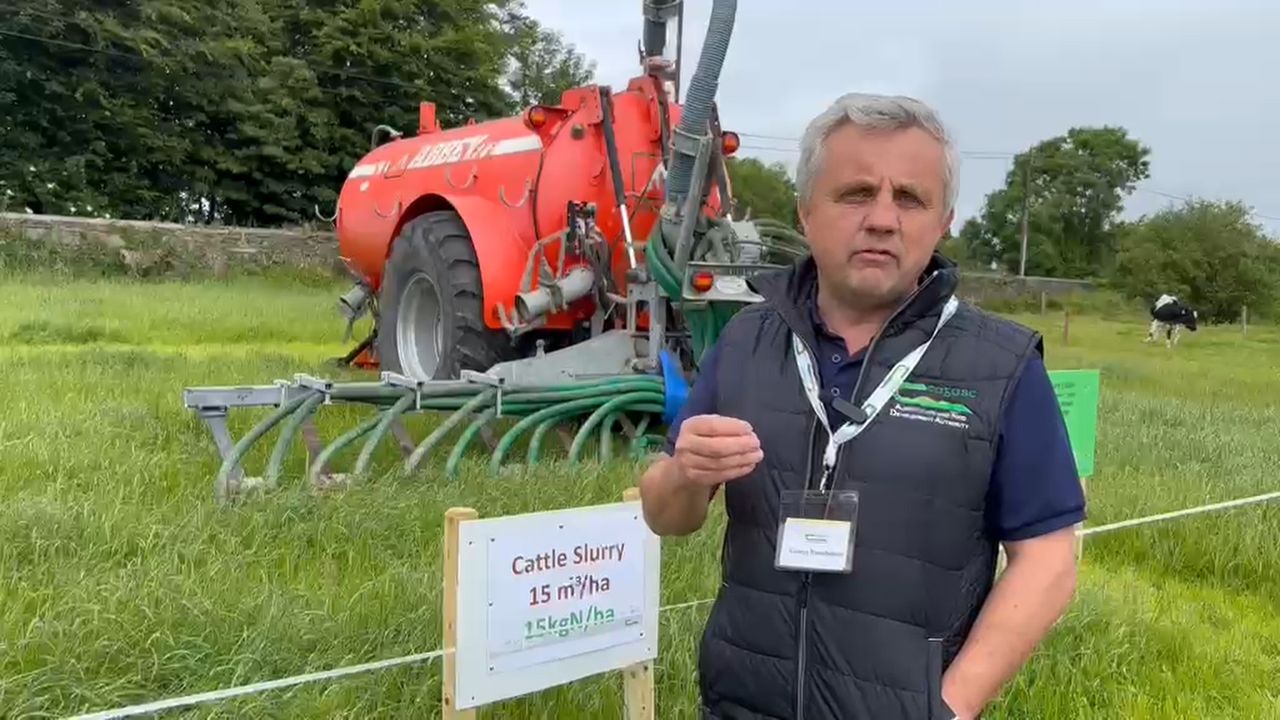
A series of test plots comparing grass growth from different fertiliser types was one of the many interesting demonstrations at the Teagasc 'Farming For A Better Future' open day at Johnstown Castle, Co. Wexford.
Teagasc's George Ramsbottom speaking at the Teagasc Farming For A Better Future Open Day at Teagasc Johnstown Castle, Co. Wexford on Wednesday, June 10.
He explained the demonstration saying: "We're looking at different plots of grass that have been applied with different types of fertiliser."
The first test plot received an application of calcium ammonium nitrate (CAN), which has higher greenhouse gas (GHG) emissions but low ammonia emissions.
The next test plot received an application of conventional urea which the Teagasc adviser noted "is no longer available".
The third test plot received an application of protected urea, which has low GHG and ammonia emissions but also has a high production benefit.
The next test plot in the demonstration received an application of liquid N, which has both low GHG and ammonia emissions.
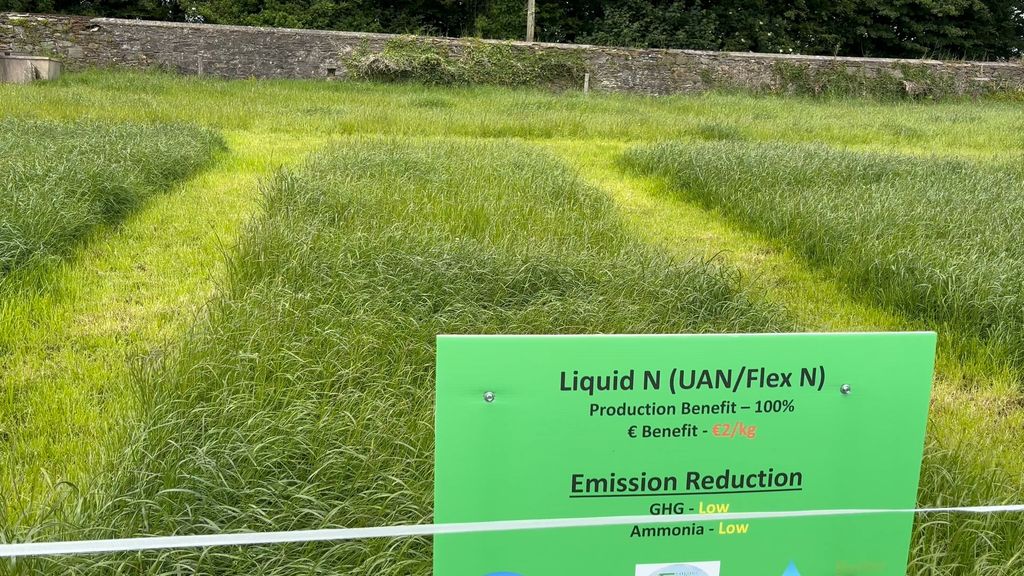
Commenting on the grass growth performance of this sward, the Teagasc adviser noted: "It looks more variable than I would have imagined."
The following plot received an application of protected urea with an additional nitrate inhibitor. According to Ramsbottom, this fertiliser "looks very promising for the years to come".
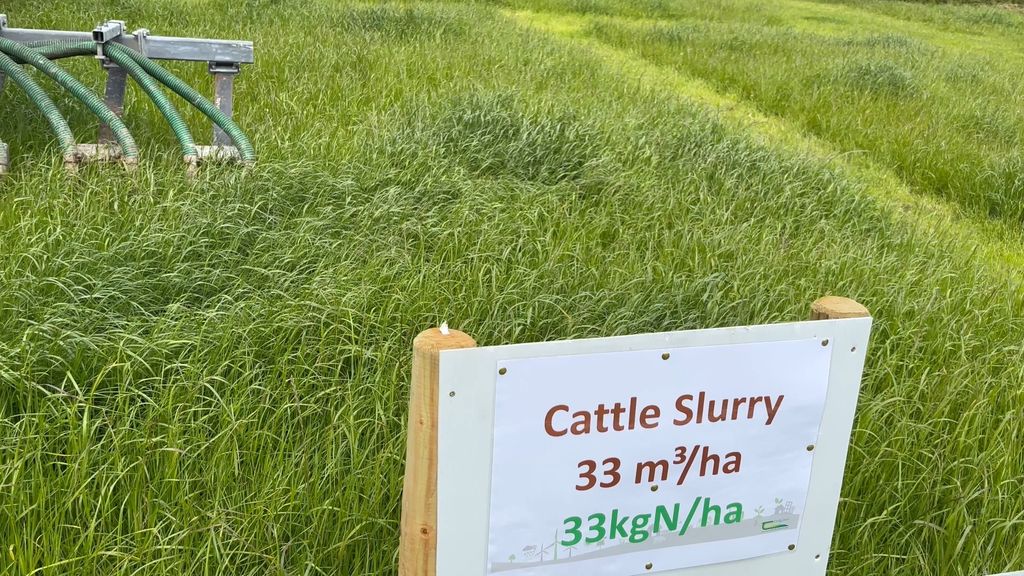
Two trial plots were applied with cattle slurry that received different application rates through low emission slurry spreading (LESS).
The final test plot received no fertiliser as a control plot.
The overall demonstration allowed farmers to see the yield differences between the different fertilisers.
The Teagasc adviser said: "The key messages are to apply the right quantity during the growing season following a nutrient management plan.
"Don't be afraid of the protected ureas, they are working really really well."