Beef kill: Are factory cattle numbers about to become scarce - or not?

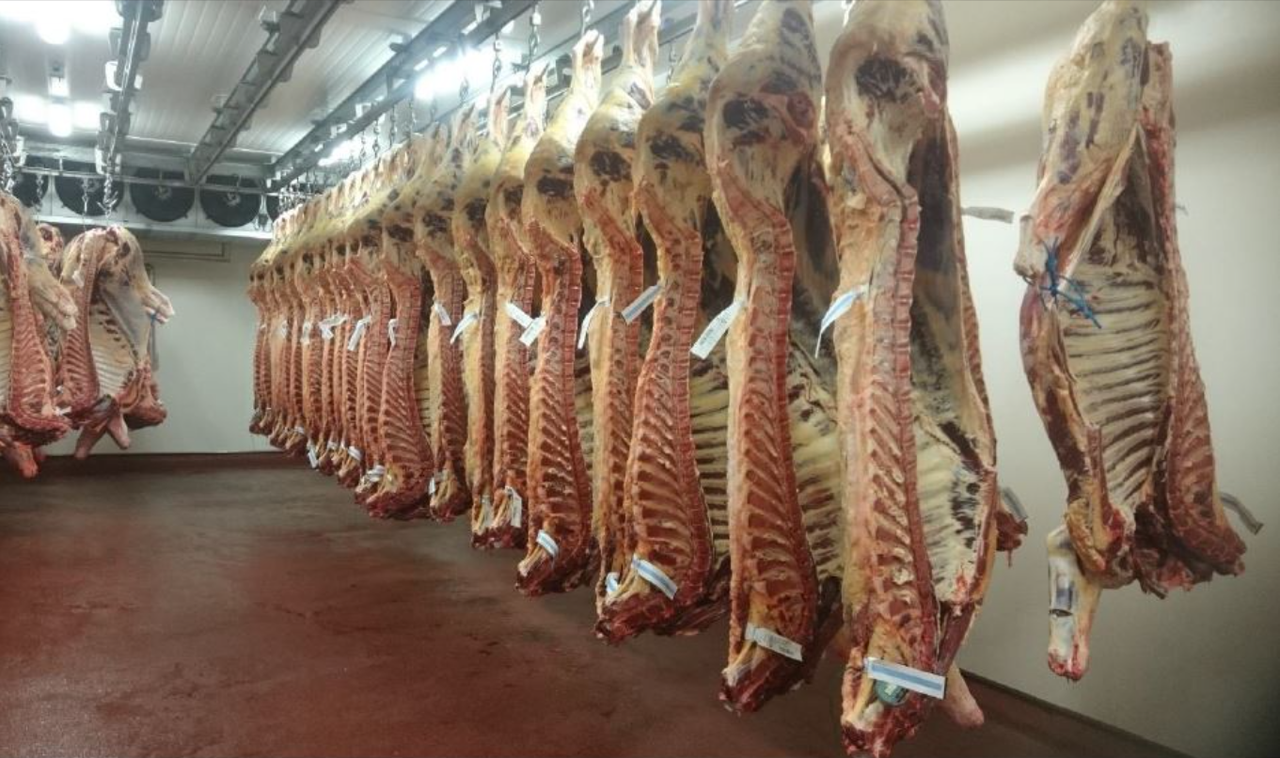
Last week saw the first murmurings of the year from some cattle-trade industry players in relation to reduced cattle supplies.
While several factory outlets cut their price offers for the week following Monday (June 8) and did not rule out further price cuts, other senior cattle procurement players seemed less confident that further beef price cuts were imminent.
The procurement staff who cast doubt on further beef price cuts being implemented cited reduced cattle availability as the reason they do not think prices will fall further.
This sentiment was echoed by Kilkenny Mart auctioneer George Candler on Thursday, June 11, who told Agriland after the weekly general cattle sale that "there was an absence of forward stores and beef-type animals, which could be an indication that these type of animals are not as plentiful as we thought".
This month also sees the 2026 FIFA World Cup kicking off across Mexico, the US, and Canada.
The sporting event traditionally sees a spike in demand for beef globally through increased burger sales and could be of some assistance to drive beef demand, which Irish industry sources have described as 'sluggish' in recent months.
While there are some positive indications for the beef trade, the official kill figures up to Sunday, June 7, give no real indication of any significant waning of factory cattle supplies.
Kill numbers totalled just under 30,000 head last week (ending Sunday, June 7), down only marginally on the previous week's kill of 30,200 head despite last week including the June Bank Holiday Monday and resulting four-day week in most factories.
The table below details weekly beef kill numbers in the week ending Sunday, June 7, versus the same week of last year, the cumulative beef kill-to-date this year versus the same week of last year, as well as the change in numbers and percentage changes:
| Animal Type | Week ending June 7, 2026 | Same week of 2025 | Weekly Change | Cumulative 2026 | Cumulative 2025 | Cumulative Change |
|---|---|---|---|---|---|---|
| Young Bulls | 2,430 | 2,769 | -339 (-12.2%) | 53,376 | 53,542 | -166 (-0.3%) |
| Bulls | 639 | 683 | -44 (-6.4%) | 10,833 | 11,164 | -331 (-3.0%) |
| Steers | 11,932 | 10,252 | +1,680 (+16.4%) | 267,097 | 288,157 | -21,060 (-7.3%) |
| Cows | 5,930 | 6,755 | -825 (-12.2%) | 148,118 | 176,042 | -27,924 (-15.9%) |
| Heifers | 9,055 | 7,960 | +1,095 (+13.8%) | 225,902 | 251,932 | -26,030 (-10.3%) |
| Total | 29,986 | 28,419 | +1,567 (+5.5%) | 705,326 | 780,837 | -75,511 (-9.7%) |
This year, bank holidays have had no major impact on kill numbers as most outlets are not operating at full capacity currently and are not killing cattle five days/week this year.
Looking at the table above, the cumulative kill-to-date this year is down 75,500 head or 9.7% on last year despite Bord Bia forecasting the 2026 factory cattle supply to be largely similar to last year.
According to Bord Bia, 1.59 million cattle were slaughtered in Ireland in 2025 and the 2026 supply forecast is for a beef kill of 1.56-1.6 million cattle.
This supply forecast would suggest finished cattle supplies for the remainder of this year will run above last year overall but there could well be some pinch points along the way.
Beef demand
Cattle supplies have declined in Ireland and are declining across Europe which would indicate there may well be more of a reduced demand issue rather than an over-supply issue affecting the trade currently.
A trip to any supermarket to compare the price of beef to alternative protein sources such as chicken or pork on a per kilo basis will give anyone a better understanding of what protein option a consumer that purchases solely on price will go for - and rule out.
It was outlined earlier this year that Ireland needs to retain its critical mass to remain relevant in key beef markets.
It is a well-known industry fact that rising beef demand generally brings a more sustainable beef price rise than any price rise resulting from a localised, temporary tightness in supply.
According to Bord Bia, the average 'R3' steer price in the final week of May this year was €6.44/kg, down €1.04/kg on this time last year but up a substantial €1.31/kg on this time in 2024.
So while prices are in decline and are well down on this last year, Irish beef price is still at a record-high when 2025 figures are excluded.
In summary, it is not expected that overall cattle supplies will decline to any significant extent this year.
Despite this, some temporary tightness in supplies could well materialise which could help stabilise beef price.
The reality is that Irish beef price is set by a supply-demand dynamic and while it is hard for beef farmers to hear, it does seem to be currently out of kilter.
Strengthening in demand for Irish beef will be the best catalyst for price stability and strengthening in the medium to long term.