Caterpillars affecting crops in south-east identified as Silver 'Y' moth species

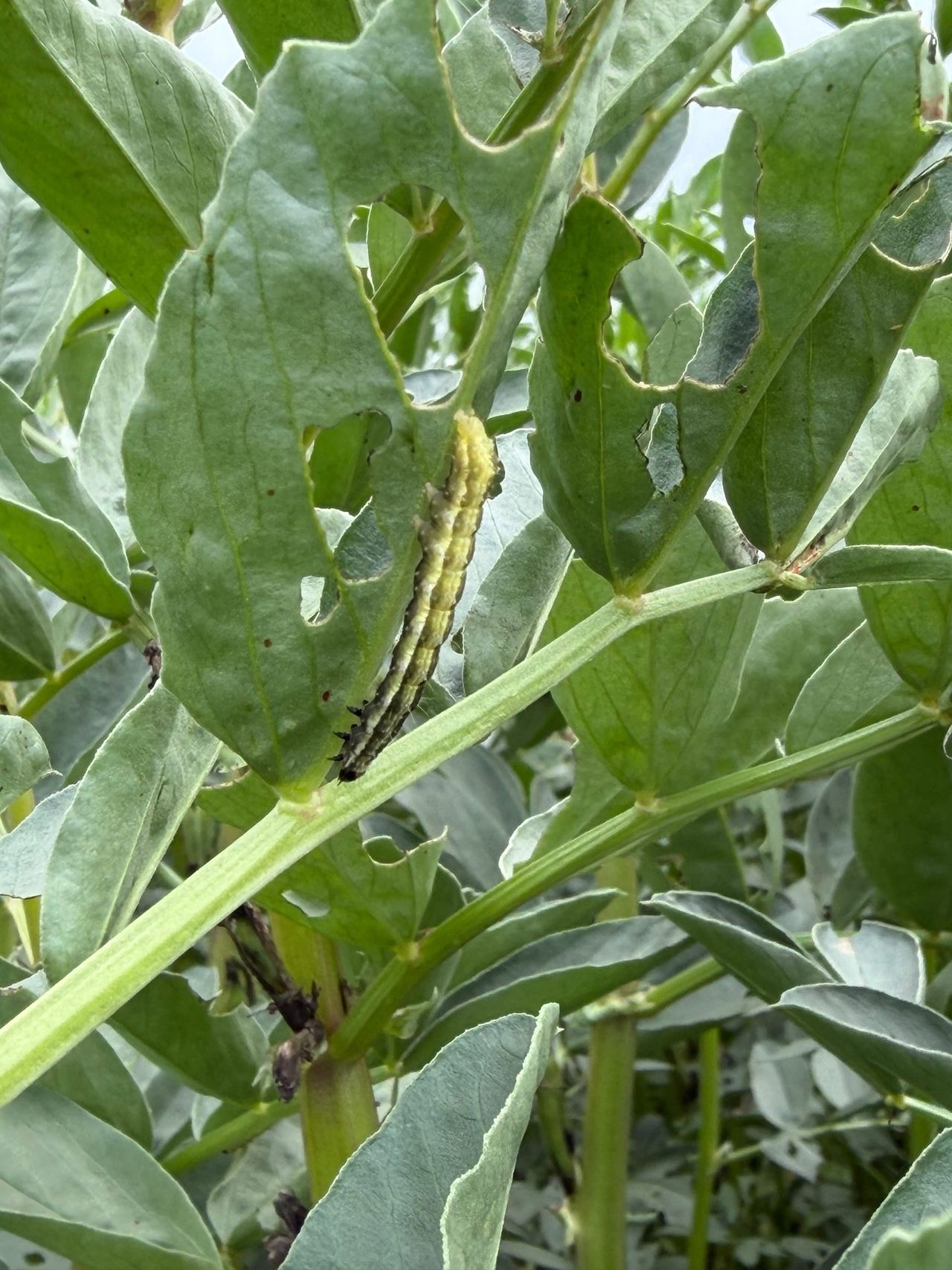
Teagasc is confirming that the species causing damage in crops of fodder beet, fava beans and forage maize across the south-east of the country is the Silver Y moth.
It stated that samples of caterpillars from crops of spring beans and beet examined by Teagasc are consistent with the features of Silver Y moth caterpillars.
Despite some initial concerns based on reported findings in the UK, there are no reports of beet armyworm (Spodoptera exigua) being present in crops to date.
In relation to fall armyworm (Spodoptera frugiperda), while there have been recent findings in Greece and Romania, it has never been detected in northern Europe.
Silver Y moth
Agriland reported a week ago that agronomists had submitted a number of caterpillars to Teagasc for assessment after being asked to walk some crops "where the damage caused caterpillars was noticeable".
The adult Silver Y moth is greyish-brown with a distinctive silver-coloured ‘Y’ marking on each of their forewings.
Silver Y moths are native to southern Europe, North Africa and parts of Asia. Each spring, they migrate northwards into Europe, although they do not usually reach Ireland in large numbers.
However, the warmer weather experienced this season appears to have favoured migration and survival, resulting in higher numbers than are normally seen, similar to the situation experienced in 2018.
While the moth itself causes no damage, its caterpillar is capable of feeding on a wide range of broadleaf crops, including beans, peas, sugar beet and maize.
As the caterpillars grow, they consume leaf tissue, often leaving the veins intact and giving affected leaves a characteristic ‘stripped’ appearance.
In severe infestations, they can also feed on pods.
The caterpillar feeds for up to four weeks before pupating in a silken cocoon.
Adult moths emerge 10 to 14 days later and can live for up to three weeks, allowing two or sometimes three generations to develop during a favourable season.
Identification
Silver Y caterpillars are green with pale side stripes and grow to around 30-35mm long.
They have a distinctive looping movement, making them easier to recognise when inspecting crops.
Another distinguishing feature is the presence of three pairs of prolegs - soft, stubby appendages found on the abdomen. Most caterpillars found in Irish crops will have more than this.
Caterpillars typically have three pairs of true legs just behind its head capsule. At the anterior end, you will often see proleg structures, which look like fleshy legs.
With Silver Y caterpillars you will see two of these prolegs and an additional proleg at the very end called the anal clamper. Caterpillars with more or less prolegs are not Silver Y caterpillars.
As it is an atypical pest in Ireland, there are currently no treatment thresholds for Silver Y moth established to date.
However, applying the guidance from the Processors and Growers Research Organisation, which uses pheromone trap catches to indicate migration into pea crops, the threshold is 50 moths by the first pod stage.
In sugar beet a threshold of five caterpillars per plant is suggested before treatment is considered.
There are currently no thresholds for maize.
Treatment
It is important to note that the presence of caterpillars alone does not necessarily justify an insecticide application.
Most crops can tolerate a degree of leaf feeding without any measurable effect on yield, and unnecessary insecticide use will harm beneficial insects that naturally help suppress pest populations.
In cases of Silver Y caterpillar, Teagasc is advising that the following steps are taken to address the issue:
- Growers should inspect susceptible crops regularly over the coming weeks;
- Where feeding is observed, identify the cause and confirm what caterpillars are responsible before making any treatment decision;
- Revisit affected fields after a few days to determine whether caterpillar numbers or feeding damage are increasing;
- If damage has stabilised or caterpillar numbers have declined, treatment is unlikely to be required;
- Where caterpillar numbers continue to increase and significant feeding is occurring, a pyrethroid insecticide such as Karate or Decis may provide effective control.
As news of the caterpillars emerged last week, Seedtech director, Tim O’Donovan had urged all tillage farmers to walk their crops as a matter of priority.
He said: “At this stage of the year, all disease control programmes will have been completed. As a result, growers may not have planned to be in fields of beans, maize and beet for a week or so.
“What I don’t want to happen is farmers inspecting crops in a fortnight or so and finding they have a real problem at this stage.”