Tillage sector on ‘caterpillar alert’ as fava beans, maize and beet crops hit

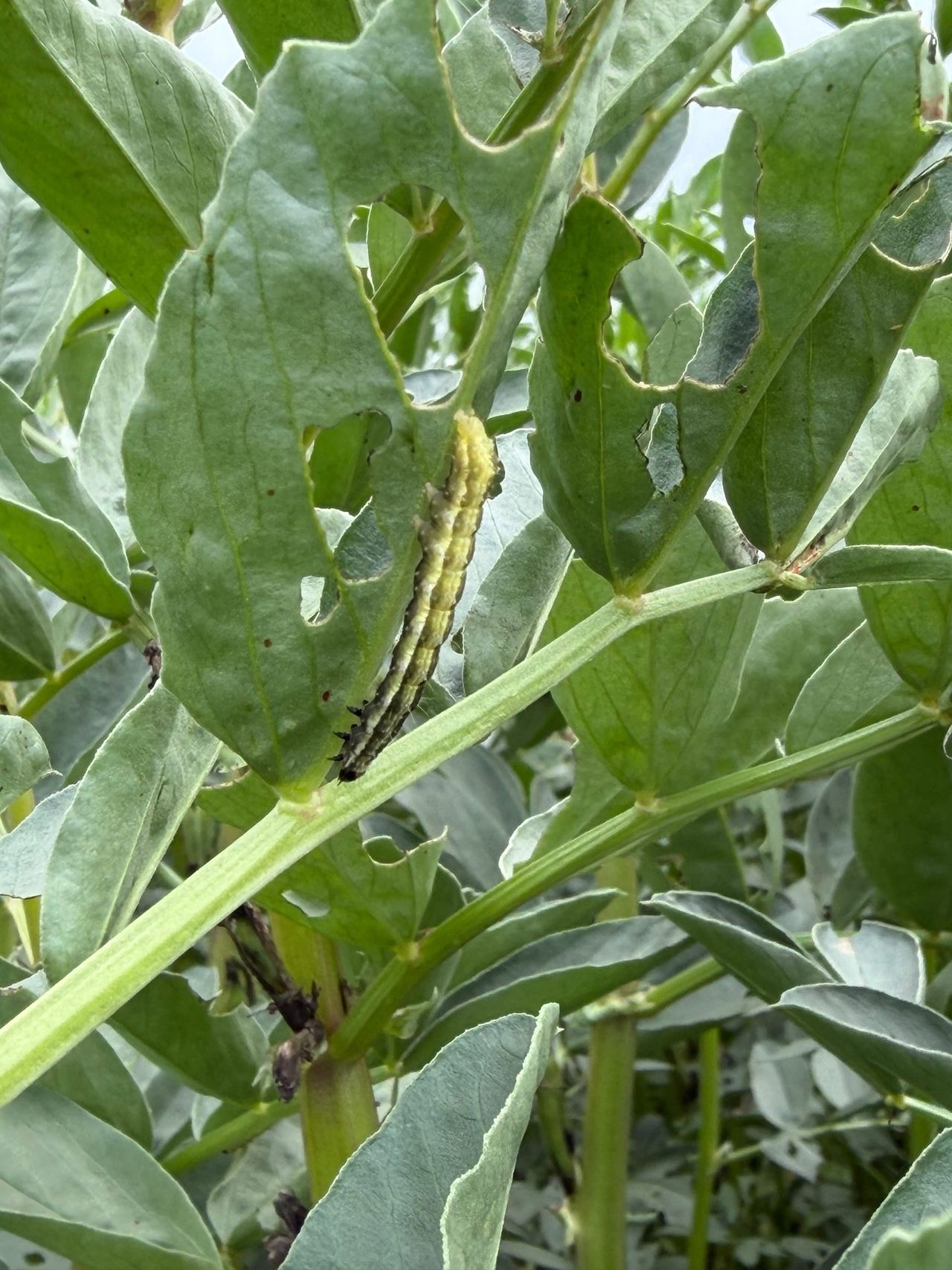
Crops of fava beans, maize and beet have been impacted by the feeding activity of caterpillar populations across the south of the country.
This is according to Seedtech director, Tim O’Donovan.
He explained: “I was asked to walk a number of crops earlier this week, where the damage caused caterpillars was noticeable.
“Problems of this type have arisen within Irish crops of maize and beet before: but never in beans, where damage has been caused to both leaves and seed pods."
According to O'Donovan, this is a multi-faceted issue.
"First-off, we do not know the scale of the problem. So I am urging farmers with potentially impacted crops to walk all of their fields as a matter of priority," he continued.
“At this stage of the year, all disease control programmes will have been completed. As a result, growers may not have planned to be in fields of beans, maize and beet for a week or so.
“What I don’t want to happen is farmers inspecting crops in a fortnight or so and finding they have a real problem at this stage.”
Species identification
Meanwhile, the race is on to identify the species of moth or butterfly that created this problem in the first place.
O’Donovan said he has submitted a number of caterpillars to Teagasc for assessment by entomologists.
“Identification of the moths or butterfiles involved is critically important in determining the control steps that tillage farmers can take," he said.
“But, again, we need to know the extent of the challenge we are dealing with, which is why all relevant crops should be inspected as a matter of priority.”
The Seedtech representative is attributing the source of the problem to the very warm spell of weather that impacted the entire island of Ireland at the end of May past.
“Record temperatures were recorded at that time. Winds were also blowing from the south," he explained.
“Under such circumstances, it is not unknown for significant numbers of moths and butterflies to be transported from mainland Europe into the south of England and, from there, on to the island of Ireland."
According to O’Donovan, weather extremes are bringing new challenges for tillage farmers to cope with.
“As the momentum behind climate change continues to build, the prospect of such scenarios becoming more common-place is a very real one," he said.