New Pollinator Plan ‘benefits farmers in particular’ - minister

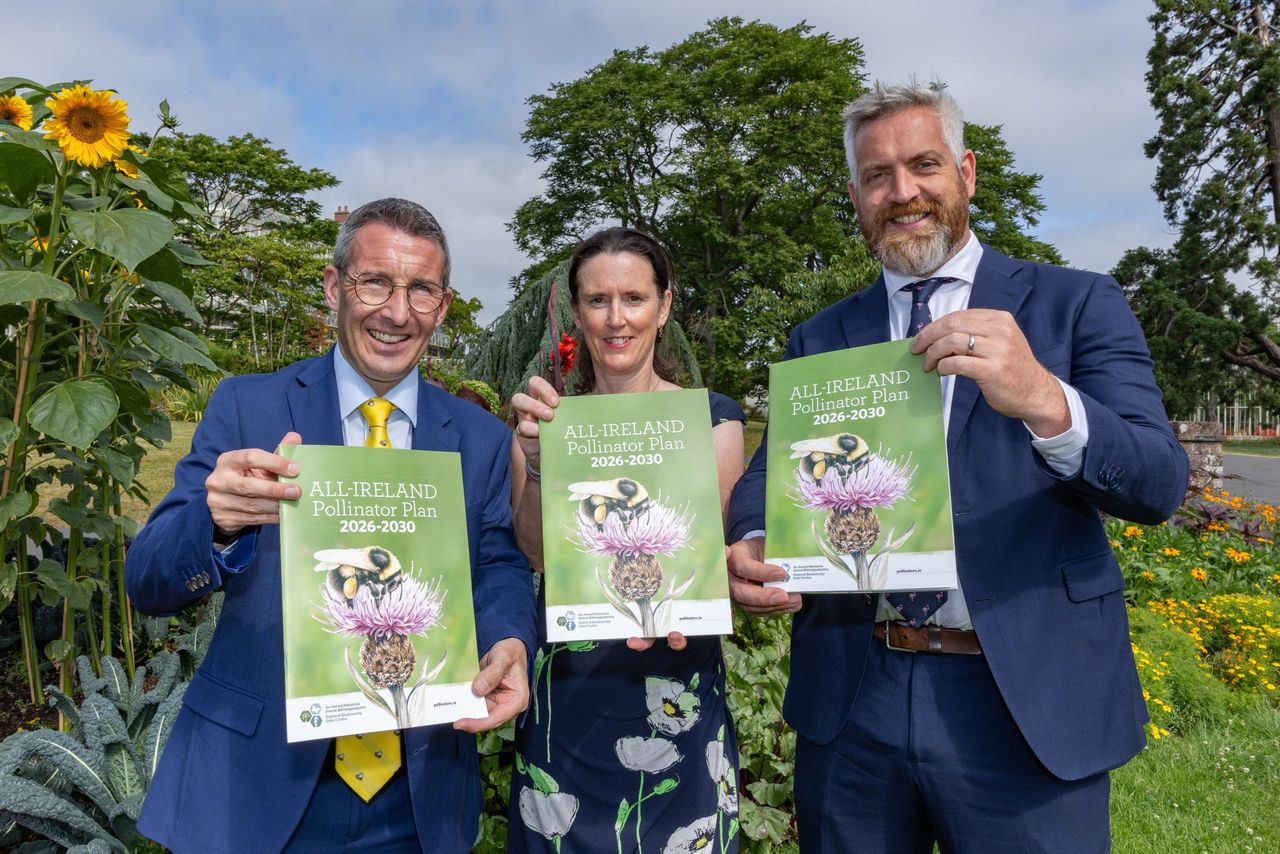
A new five-year, all-Ireland pollination plan will benefit farmers in particular, according to Minister for Nature, Heritage and Biodiversity, Christopher O’Sullivan.
The minister told Agriland: “Obviously we know pollinators are incredibly important for food production.
"It doesn't just have benefits for biodiversity for nature but there's obviously the wider food production connotations as well so we think this is great for farming organisations as well and for farmers."
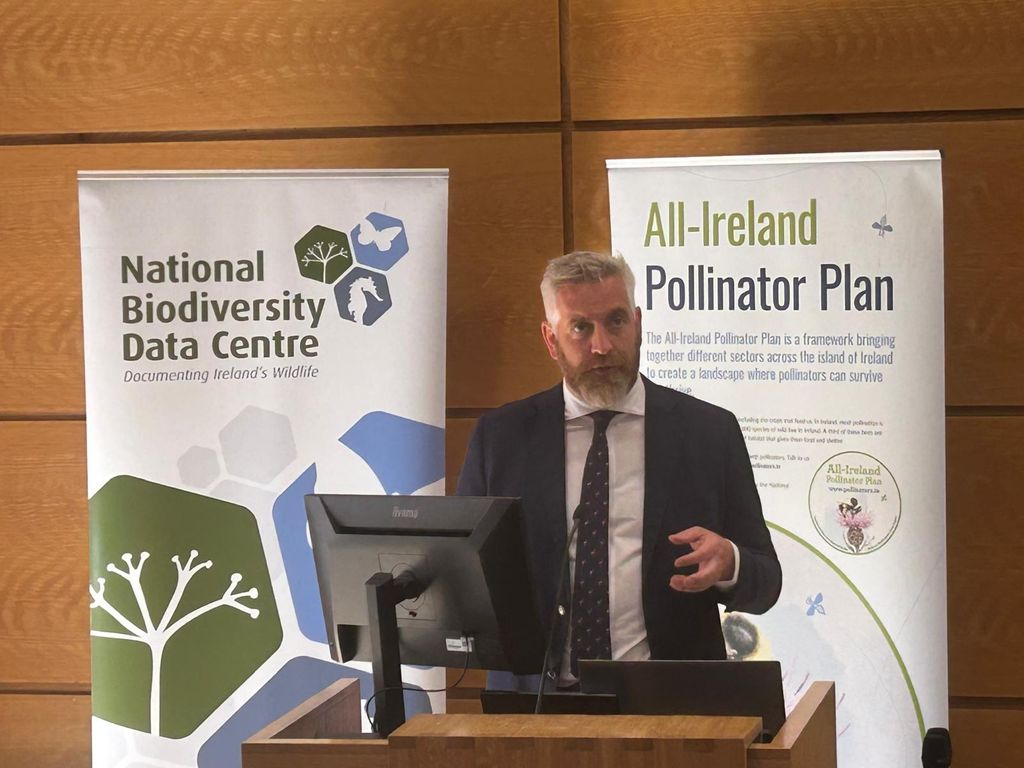
The new All-Ireland Pollinator Plan (AIPP) 2026-2030 was launched today (Thursday, July 9) at the National Botanic Gardens, Dublin by Minister O’Sullivan and Andrew Muir, Minister of Agriculture, Environment and Rural Affairs for Northern Ireland.
“It's all voluntary and what we're saying to all organisations and individuals, local authorities but also to the farmers is that if you become part of this, it benefits everybody," O'Sullivan said.
“It benefits society, it benefits wildlife, it benefits farmers in particular.”
The plan is a voluntary framework coordinated by the National Biodiversity Data Centre and supported by a wide network of partner organisations across both jurisdictions.
According to the plan, pollinators enable plant reproduction, support biodiversity, and underpin agricultural productivity and food security.
Speaking at the launch, Minister O’Sullivan, said: “Bees, hoverflies and other pollinating insects play a vital role in our food systems and in the health of the wider natural environment.
“That’s why the All-Ireland Pollinator Plan is such an important initiative, because it makes it easy for everyone to get involved and take action to reverse their decline – no matter where they live, how young or old they are, or how much they know about pollinators.
“Through outreach, education and partnerships, the AIPP team has developed a network of allies across the island to help these amazing insects, including all 42 councils, over 120 organisations and more than 400 businesses."
The minister added that he was proud that the funding from the Government of Ireland’s Shared Island initiative will support this work.
Vision
The vision of the All-Ireland Pollinator Plan 2026–2030 is to create a landscape that provides food and shelter for insects every 200m.
It includes 50 strategic aims and 75 success metrics, which will be reported annually to ensure accountability and transparency.
Its 10 work packages cover sectors such as farmland, public land, transport networks, communities, and businesses.
Together, these work packages aim to drive landscape-scale change, connecting individual actions into a coherent ecological shift towards an island where pollinators can survive and thrive.
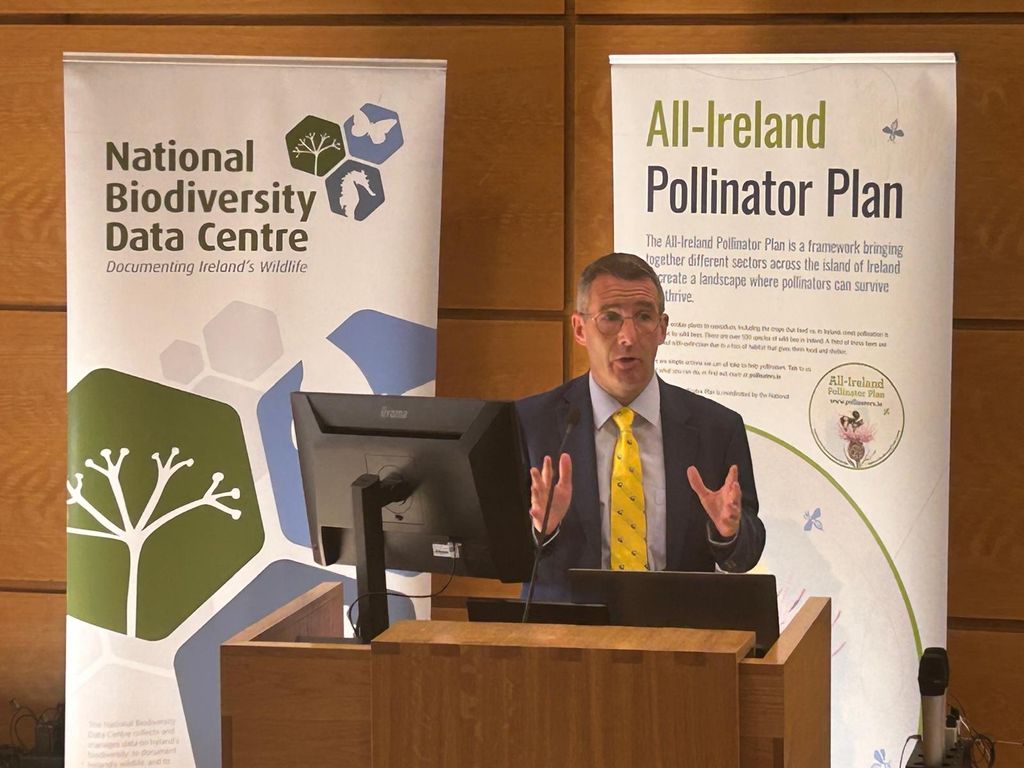
Minister Andrew Muir told Agriland: “This is all about delivery, and there are 10 work strands, of which one of the key ones is in relation to farmland pollinators.
"We're delighted to be able to support that through Farming with Nature, which is a replacement for our schemes when we're in the European Union. We want to be able to scale that up.
"So we're able to give that support to farmers because they're absolutely key to this as custodians of the countryside. They're doing good work and we want to be able to support them in that journey ahead."
The minister added that pollinators don't respect borders, which makes collaboration between governments important.
In his launch address, Minister Muir said: “By working together, across all landscapes, it is possible to restore pollinator populations and create an island that is richer in biodiversity, more resilient to climate change, and better for people and nature alike.”
'Enormous success'
In a statement marking the launch of the plan, Taoiseach Micheál Martin said: “The All-Ireland Pollinator Plan has proved an enormous success over the last decade in bringing together farmers, local communities, public bodies and businesses to help conserve and create a landscape where pollinators can survive and thrive.
"I look forward to seeing the All-Ireland Pollinator Plan expand and continue this crucial work in protecting sustainable agriculture, food security, and benefitting the island’s unique and precious biodiversity.”
The statement also quoted Minister for Agriculture, Food and the Marine, Martin Heydon, who highlighted that the Department of Agriculture, Food and the Marine is funding two farmland pollinator officers under the new plan.
He said: "Agriculture and farmers are key in this wide-scale societal effort to reverse the decline of these important insects.
"We look forward to supporting the next ambitious phase of the All-Ireland Pollinator Plan."
The 2026-2030 phase of the Pollinator Plan is supported through funding from the Government of Ireland’s Shared Island Fund, the National Parks and Wildlife Service, the Department of Agriculture, Food and the Marine, and the Northern Ireland Environment Agency (NIEA).