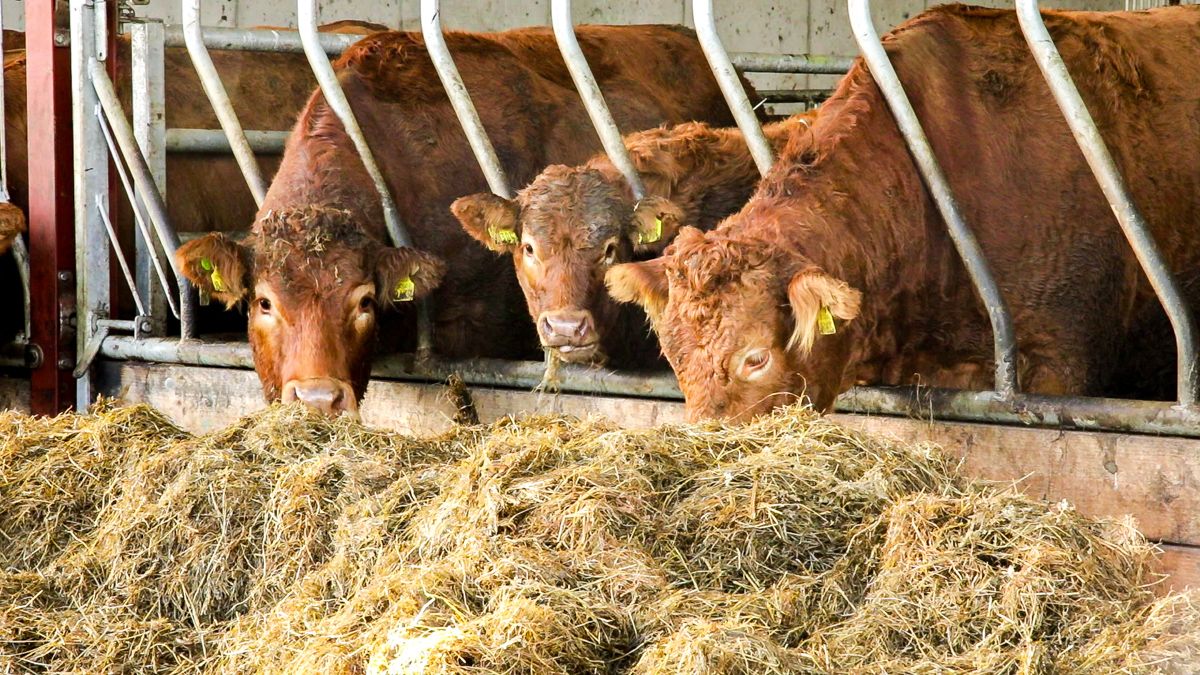
BSE rears its head in a cow in Scotland

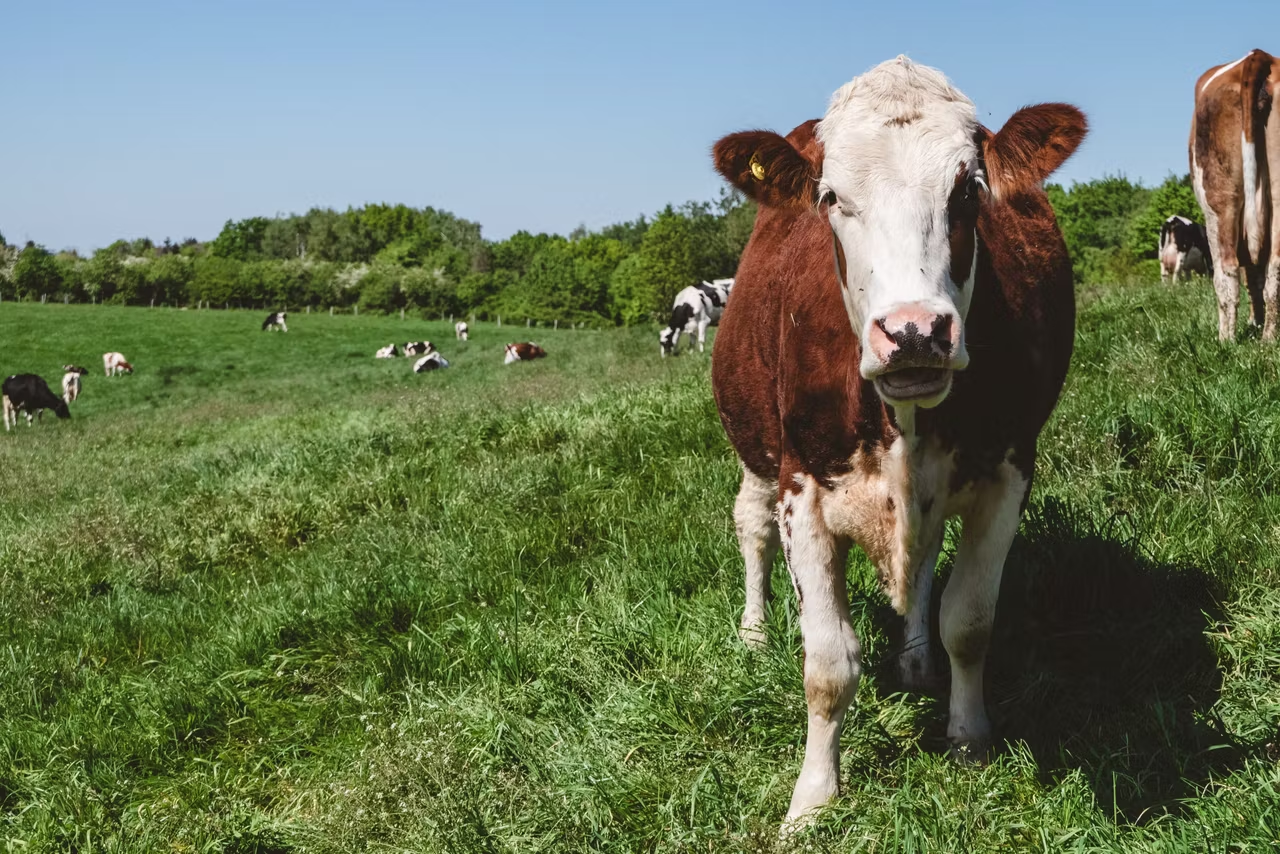
A case of classical bovine spongiform encephalopathy (BSE), also known as 'Mad Cow Disease' has been confirmed in a cow on a farm in Dumfries and Galloway in Scotland.
Precautionary movement restrictions have been put in place on the offspring of the animal and its ‘cohort’ at the impacted premises.
According to the Scottish Government, further investigations to identify the origin of the disease are ongoing which is standard procedure for a confirmed case of classical BSE.
The case was identified as a result of routine intensive BSE surveillance and stringent control measures that are in place.
BSE
The animal did not enter the human food chain and Food Standards Scotland has confirmed there is no risk to human health as a result of this isolated case.
It's understood that the owners of the affected animals are working with authorities on next steps.
Agriculture Minister Jim Fairlie said: "Following confirmation of a case of classical BSE in Dumfries and Galloway, the Scottish Government and other agencies acted swiftly and decisively to protect the agriculture sector.
"The fact we identified this isolated case so quickly is clear proof that our surveillance system for detecting this type of disease is working effectively.
"I want to thank the animal's owner for their diligence. Their swift action allowed us to identify and isolate the case immediately, minimising its impact on the wider industry."
The Animal Plant and Health Agency (APHA) is investigating the source of the disease.
All animals over four-years-of-age that die on farm are routinely tested for BSE under Scotland’s surveillance system.
While the disease is not directly transmitted from animal to animal, its cohorts including offspring, have been traced and isolated, and will be destroyed in line with legal requirements, according to the government.
In addition to the measures in place for fallen stock and animal feed, there is a strict control regime to protect consumers.
This includes the removal of specified risk material such as the spinal column, brain and skull from carcasses destined for human consumption.
NFU Scotland president Andrew Connon said: “While disappointing, and clearly a huge concern for the farmer involved, the identification of an isolated BSE case demonstrates that the stringent surveillance and control measures we have in place are working effectively.
“Our thoughts are first and foremost with the farmer affected.
"They will be doing everything they can to assist the veterinary authorities with their investigation, and NFU Scotland stands ready to support them in any way we can.
“Scotland has robust measures in place to identify and deal with cases such as this, and the swift detection of this case shows those controls are doing their job.”
Signs and symptoms
Affected cattle do not usually show signs of BSE until they are at least four- or five-years-old.
Cattle with the brain disease, BSE, may slowly develop some of the following signs over a period of weeks or months:
- Change in behaviour;
- Apprehension or nervousness (flighty);
- Repeated, exaggerated reactions to touch or sound;
- Weakness or high stepping of the legs, particularly the hind legs;
- Reluctance to cross concrete or drains, turn corners or enter yards or go through doorways;
- Aggression towards humans or towards other cattle;
- Manic kicking during milking or reluctance to allow milking;
- Head held low;
- Difficulty in rising, progressing to recumbency (downer cows);
- Tremors under the skin;
- Loss of body condition, weight or milk yield;
- Excessive nose licking.
Late last year, the Department for Environment, Food and Rural Affairs (Defra) confirmed that the UK had been recognised as having the lowest possible BSE risk status - ‘Negligible Risk’ - by the World Organisation for Animal Health (WOAH) and the European Union.
Orkney and Shetland MP, Alistair Carmichael said: “It is to be hoped that this is a one-off case.
"I remember when the BSE crisis was at its height and we do not want to go back to those days again.
“At a time when we are already dealing with other animal diseases this shows the importance of high-quality surveillance and swift responses by government agencies.
"It reinforces the need to ensure that the Animal and Plant Health Agency is fully funded in its work.”