Autonomous tractors: Which brands are pushing the boundaries?

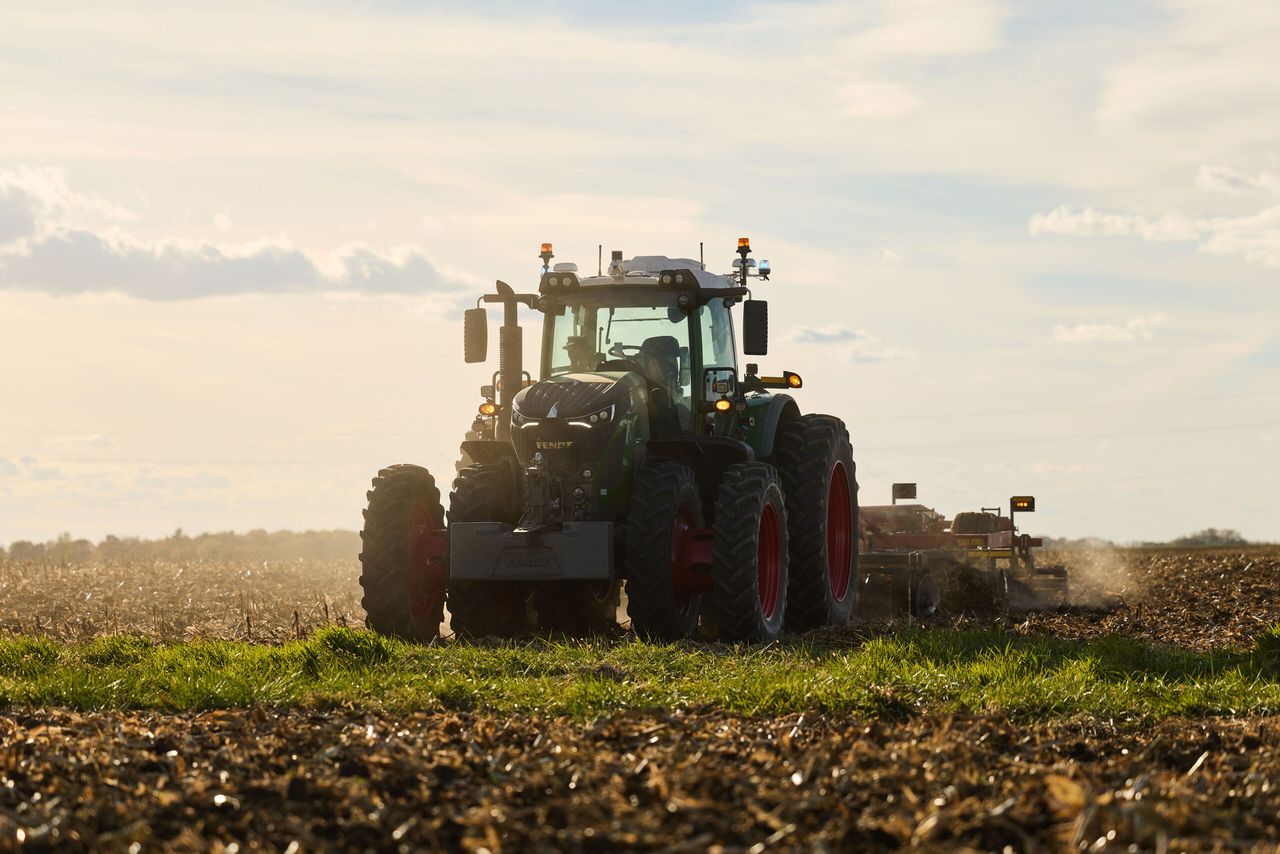
Fendt has claimed it can achieve level 4 autonomous driving with its PTx retrofit kit, OutRun.
Level 4 requires an automated driving system (ADS) to complete an entire driving task with a sustained operational design domain (ODD)-specific performance without any expectation that a user will need to intervene.
Fendt claims that the PTx OutRun retrofit kit with the Tillage and Grain Cart applications "shows how Level 4 can be used in practice".
This allows the driverless, autonomous use of a tractor equipped with sensors, connectivity, and autonomous controls to draw a grain cart during harvest.
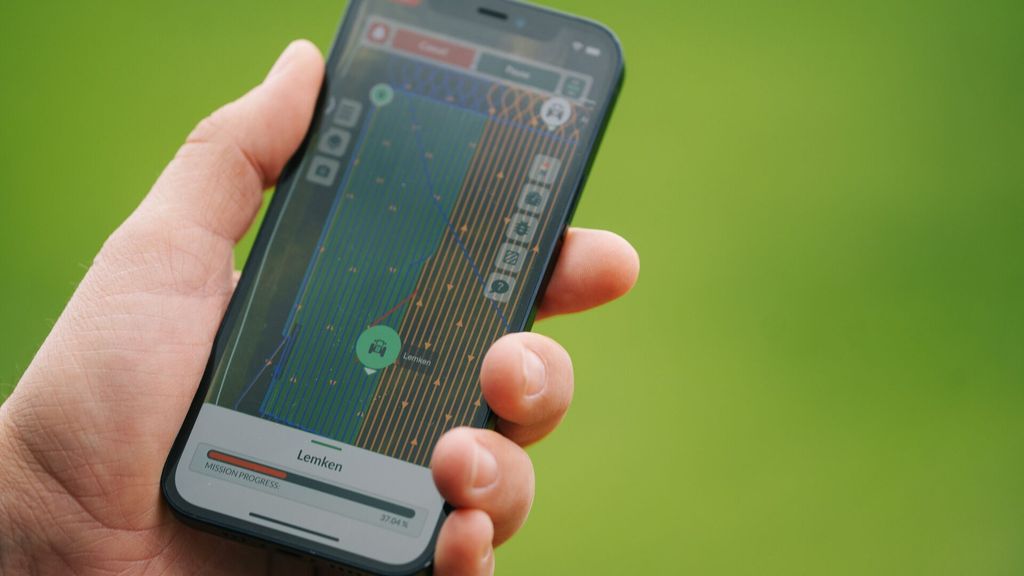
The operator of the combine harvester can request the tractor fleet to drive from the edge of the field to the harvester directly from the cab via a tablet or iPad.
Once the process has been completed, the combine harvester can assign new tasks to the fleet or send it to a defined transfer point.
According to Fendt, the system supports both front and rear approaching to the combine harvester as well as automatic alignment.
Since July 2026, the OutRun platform has been expanded to include autonomous soil cultivation with OutRun Tillage.
The retrofit solution will be available in certain regions for the Fendt 900 Vario and Fendt 1000 Vario series in the future.
Basic autonomy
The measures of how autonomous machinery is has been standardised by SAE International (formerly the Society of Automotive Engineers), a global standards organisation for engineering professionals in the aerospace, automotive, and commercial-vehicle industries.
While SAE's set of standards for autonomous driving is generally applied to cars, Fendt has applied it to its tractors.
The standardised system is scaled from level 0-5, with 0 indicating the driver is performing the entire driving task, even when enhanced by active safety systems.
Level 1 consists of the ADS controlling either the lateral or longitudinal vehicle motion in specific scenarios (such as cruise control or lane centring, but not both simultaneously), with the driver controlling the remainder of the driving task.
According to Fendt, its FendtONE operating platform combined with the the onboard workstation, Fendt Guide guidance system and ISOBUS-based control of implements fall into Level 1.
Level 2 essential combines both lateral and longitudinal vehicle motion into one, however, the driver is still responsible for the vehicle, and must remain vigilant behind the wheel.
Fendt said the combination of guidance systems Fendt Guide and Fendt TI Headland (the automatic headland management application) achieve this level.
Advanced autonomy
At Level 3, the vehicle becomes responsible for steering, accelerating, and braking.
The driver does not need to constantly monitor the vehicle once it is inside the ODD, however, they must keep an eye on the process, environments, and results of the machine and intervene if necessary.
The ODD is the set conditions that the machine can autonomously operate within: for example, when the weather is okay, the machine can operate up to a certain speed in certain environments.
The machine must also have effective object and event detection and response, meaning that the system takes steps when it encounters an obstacle, such as a person standing in the way.
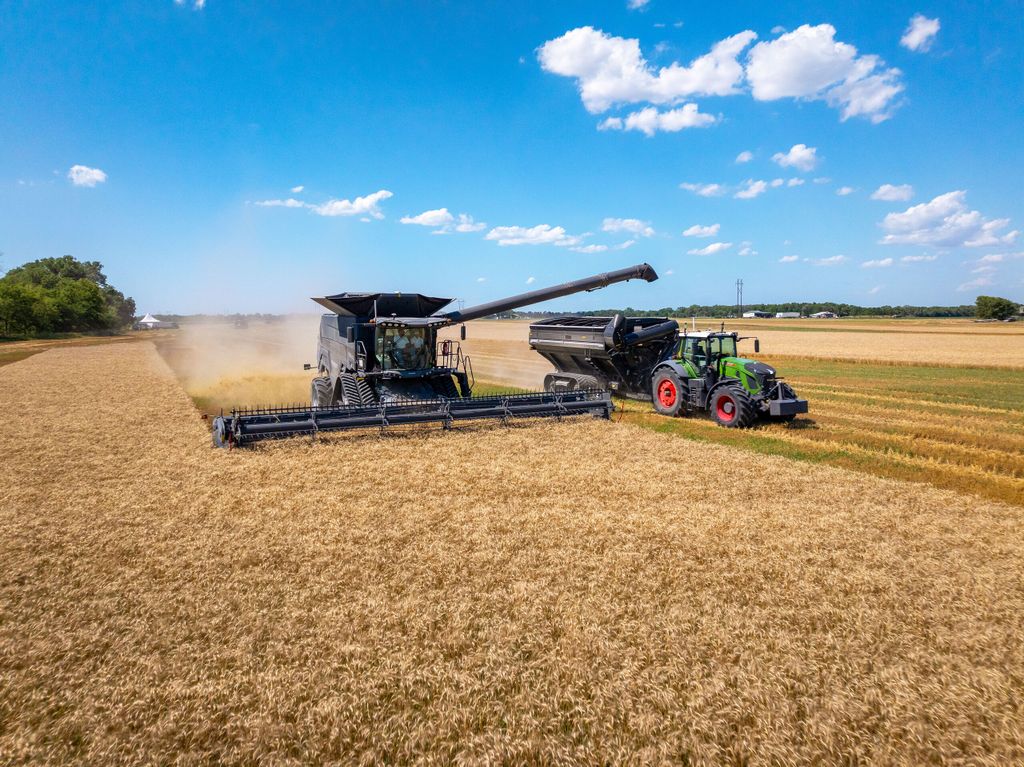
One example Fendt provided for Level 3 was spot spraying - the precise application of pesticides in combination with the guidance system combined with headland management.
According to Fendt, its tractors can combine the guidance system, automatic headland management, and partial area-specific processing work under the supervision of the driver.
John Deere's autonomy
Fendt are not the only agricultural machinery company to currently be working with autonomous technology.
John Deere can also achieve high levels of autonomy with its tractors, pushing for Level 4 with a combination of different in-house technologies.
John Deere's StarFire positioning, with a well-defined ODD, Operations Centre and artificial intelligence (AI)-powered cameras allow the company to hit a Level 4-like autonomy.
The American brand's tractors have also been used by other autonomous machinery companies, such as Autonomous Solutions, Inc. (ASI), using a fleet of unmanned John Deere tractors in south Florida working US Sugar's 255,000ac farm.
ASI's autonomous fleet management system, Mobius, allows the tractors to run with oversight from a single operator from a central command station.
Kubota autonomy
Last month, Kubota announced that it will be launching its new Agri Robo Tractor MR Series in April 2027 in Japan.
Kubota claims these machines are the first tractors manufactured in Japan that are capable of unmanned autonomous operation under remote monitoring.
The Ministry of Agriculture, Forestry and Fisheries of Japan is leading initiatives to promote smart agriculture in the country, as farmers are having issues with sourcing skilled agricultural workers to operate machinery and maintain their land.
According to Kubota, the unmanned models' remote monitoring function allows users to leave the worksite and devote their time to "higher-value activities", such as other tasks and farm management decision-making, while the tractors perform agricultural tasks autonomously.
While autonomous operations under visual supervision has enabled labour savings, the manufacturer noted that operators have not been able to leave the vicinity of machinery during operations that require a high degree of precision.
According to Kubota, the tractors are connected to a remote monitoring tablet, allowing operators to assess the conditions of the tractor and issue commands to start and stop autonomous operations.
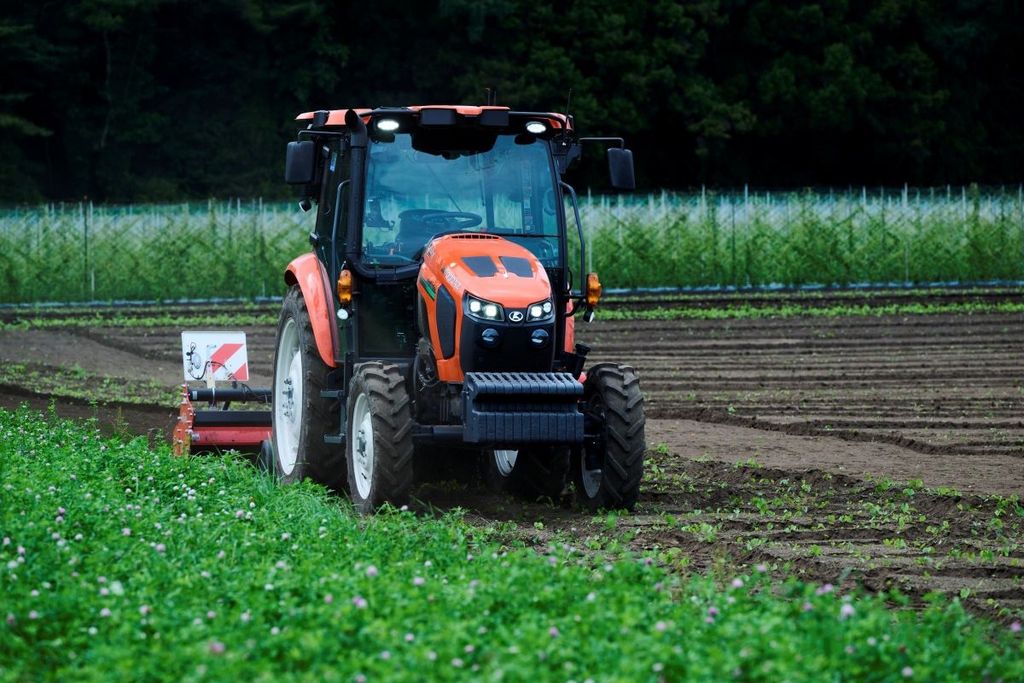
Alerts are sent in the case of an abnormality, such as the tractor coming to a halt.
Operators can check conditions surrounding the tractor and if they determine there is no danger, they can issue a restart command remotely.
Cameras on the tractors use AI-based image recognition to detect people in the surrounding area while 5mm-wave radars detect obstacles, with the machine designed to immediately come to a halt if it detects a person or obstacle.
According to Kubota, the lineup also includes "affordable manned models" that can work autonomously, with them steering themselves and controlling implements.
This "enables even inexperienced users to accomplish high-precision work".
Kubota has currently no plans to sell the Agri Robo Tractor MR Series outside of Japan.
Level 5
Level 5 has not yet been achieved by any company, whether that be a car manufacturer or precision agriculture company.
Level 5 would be the equivalent of instructing a vehicle to drive from inner city Dublin to a farm in Co. Offaly, navigating any challenges it could face, such as extreme weather, difficult roads, and temporary diversions.