Average grass growth rebounds to 63kg DM/ha

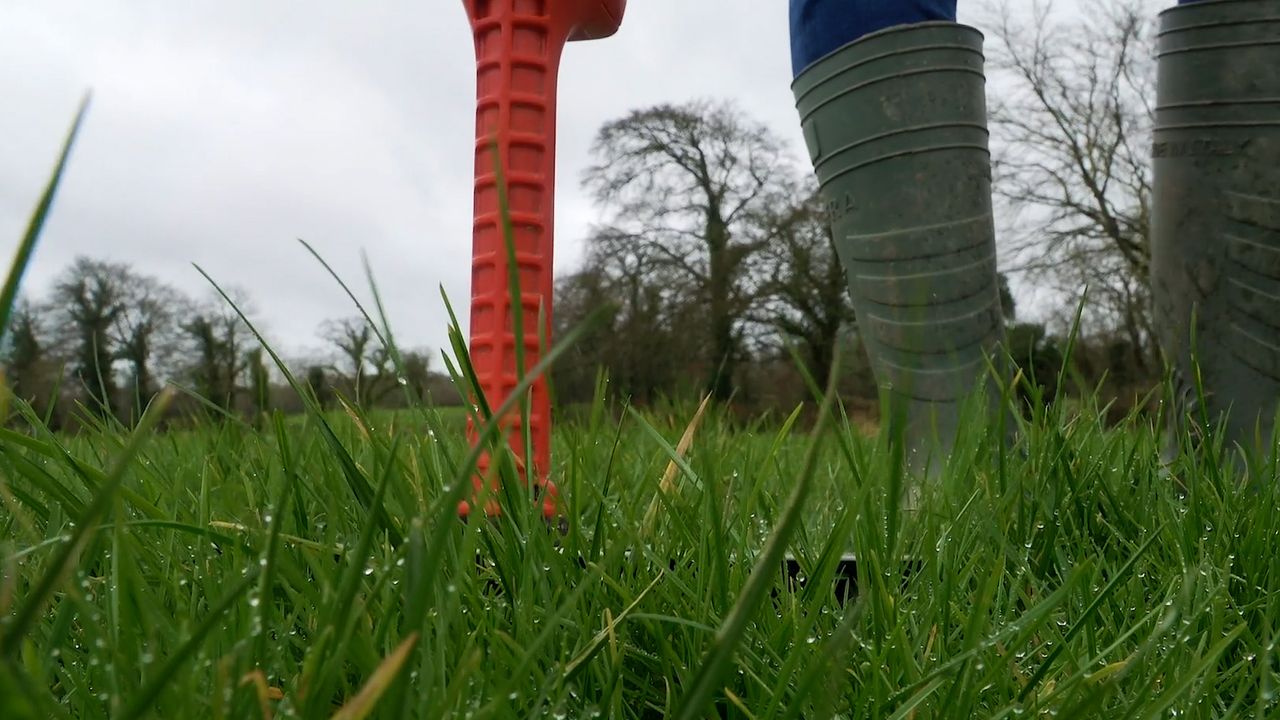
The story for most of the summer growing season has been that the south and south-east of the country has been struggling with soil moisture deficits.
However, with recent rainfall, these farmers are beginning to build covers and the aim now is to hold the grazing rotation to 35 days and keep grass in the diet.
Some poorly drained areas are back to being waterlogged, but in general, soil moisture deficits are now back to anywhere between 0mm and 35mm.
This has seen the average national growth rate climb back up to 63kg of dry matter (DM)/ha, according to Pasturbase Ireland.
There were average highs of 71kg DM/ha recorded in the north west and lows of 53kg DM/ha in the south-east.
Despite a decent level of rainfall during the week, these growth rates will be expected to stall and even fall back between 45-60kg DM/ha as the evenings close in.
Grass covers
Average farm covers (AFC) have improved significantly over the last week, as the average across the country increased to 798kg DM/ha.
This has allowed the national average pre-grazing yield build up to 1,574kg DM/ha.
The average diet for the week still sits at 12.5kg of grass, 4.5kg of meal, and 2kg of silage.
However, the majority of farms with silage in the diet will be looking to get back on a full grass diet this week.
Meanwhile, farms already on full grass diets may be able to reduce meal rations to improve cash flow ahead of the winter.
Utilisation
All farms should be looking to move the rotation length out to 35 days from now on to ensure the rest of this years growth is properly utilised.
Implementing a 12-hour strip wire may be necessary to allocate grass correctly and can be effective for slowing down the rotation but also for ensuring decent post-grazing residuals.
If growth stays above 50-55kg DM/ha, farms should achieve their target AFCs of 950-1,000kg DM/ha by October 1.
This is important to remember as realistically there is only two weeks left of good grass growing weather and this needs to be exploited.
Farms should then start their final rotation on October 10 to ensure the farms has enough grass for next spring.
Although the chemical nitrogen (N) and phosphorus spreading period is closed, farmers can still get nutrients out to the ground in the form of slurry up until October 1 and dairy washings up until December 1.
Applying dairy washings to paddocks can make a significant N contribution this autumn, targeting about 2,000gals/ac.
Meanwhile slurry should be spread at a rate of 2,500gal/acre on pastures with low phosphorus (P) and potassium (K) indexes.
Lime can be spread all year round, and autumn is often a great opportunity to get it done, targeting paddocks that have a low pH - ensure that paddocks are well grazed or spread after a cut of silage.