Duffy: 'Skin test is nonsense when we know there's TB in an area'

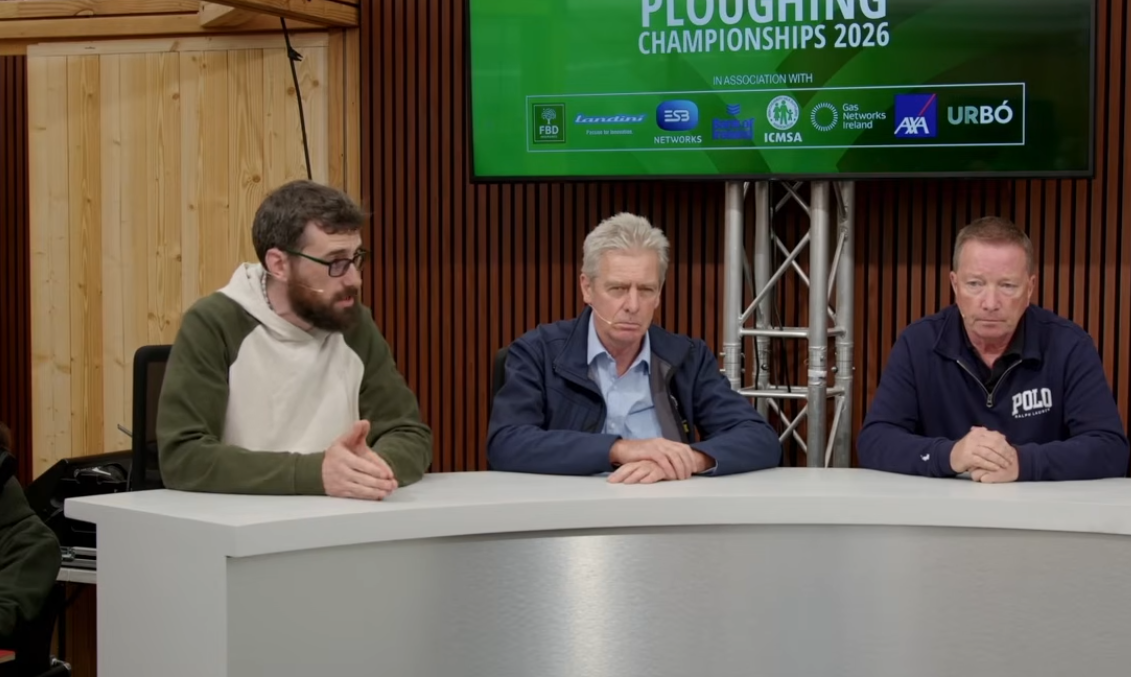
Former Macra president Thomas Duffy has raised several questions over aspects of Ireland's TB regime, including the skin test.
Duffy was a guest on a panel discussion as part of Agriland's live stream from the 2026 National Ploughing Championships, where he made an impassioned contribution, reflecting his own recent experience with TB on his family farm.
He told Agriland editor Stella Meehan: "We went down in March this year, and essentially, it's a perfect example of trying to do everything right, the mental strain of it, and getting nowhere."
He explained that, following a skin text, six animals showed up as inconclusive. A blood test was then carried out on the entire herd, including year-old heifers.
"At the end of that we lost 24 animals in total. Of that, six were the inconclusives. We never even had a full reactor in our first test," Duffy said.
"The real strain came on us only last week when we retested again. We've gone down again. Another six animals on the skin test
"It has unquestionably shaken my confidence in the TB regime in general, the testing, the way it's being managed," Duffy said.
The Co. Cavan-based farmer said that he had been proactive and the Department of Agriculture, Food and the Marine "responded well to that".
However, he added that there was "bureaucratic nonsense in the way".
"Of the six animals that we tested...they're still on my farm. I said to the department I wasn't going to challenge the compensation, I want these animals gone," Duffy said.
"The strain of not only dealing with that as a problem, not only having to disinfect the [milking] robot, wash the robot...feed those animals; I won't lie it's very hard looking at those animals on the farm," he said.
"If we're dealing with this disease for what it is, a highly infectious disease, we need to see better commitments for moving these animals."
Duffy said he was aware of some farmers who were waiting weeks to get reactor animals off the farm.
Duffy also spoke about advice that farmers with reactors are getting, such as putting reactors out on paddocks.
"If you put them out to a paddock, the advice is that TB can last for three months out there, so you should be reseeding that paddock," he said.
Duffy went on to highlight the issue of wildlife, particularly badgers.
"There have been campaigns around the 'fluffy badgers' and the 'not guilty'... The reality is there are sick badgers being left behind because we are not eradicating it properly, and we need to see an all-of-politics approach to this," he said.
'No magic bullet'
Duffy said there is "no magic bullet" to tackling TB in Ireland, but added: "What we can do is go hard".
"I want to be very clear: I don’t believe we will ever achieve eradication with the skin test," he said.
He added: "Our skin test that we went down on in March was actually department administered. The vet who was doing it, a very precise women, took her time, went through every single cow...and in that only six inconclusives.
"[Of] 11 animals that were identified on the blood test, eight had lesions. They had TB at the skin test, 100%... [The blood test] was only two weeks later. They had TB," Duffy said.
"The skin test is nonsense when we know there's TB in an area. What we need to do is blood test."
He also criticised the different rules for herd sizes and types.
"My herd is obliged to do it because we were at 94 cows. If I had 79 cows I'm not obliged to do it... If I have a herd of 120 suckler cows, or if I have a herd of 120 beef cattle, I don't have to do blood testing. It's fundamentally the same disease circulating in the same animal," he said.
"Blood testing should be required where there is a confirmed breakdown area.
He called for the government to "go hard" on addressing TB.
"They talk about the cost rising to €200 million. How many billions have we wasted now with this piecemeal, piecemeal, piecemeal approach," Duffy said.
"Australia went hard, eradicating the disease completely. It was led by farmers. We need to go hard on testing, and yes, we do need to consider the wildlife. We're not giving any advantage to badgers by letting one fifth [of them] get sick," he added.
He called for an improvement in advice for farmers; he spoke about receiving advice to clean out water troughs, but highlighted that it is implausible for farmers to do this after each individual animal drinks from a trough.
He also called for better monitoring, including PCR testing and monitoring bulk tanks; and for farmers to be able to volunteer their herds for more frequent blood tests.